HONOLULU, Hawaii — Lockheed Martin and the U.S. Navy demonstrated a rapidly retrainable artificial intelligence and machine learning (AI/ML) sonar system during the Rim of the Pacific (RIMPAC) 2026 exercise off Hawaii.
Known as SensorMAX, the system is designed to analyze subsurface acoustic data and assist crews in identifying underwater threats. The demonstration took place during RIMPAC 2026, which ran from June 24 to July 31. The U.S. Navy said the exercise involved 30 nations, more than 30,000 personnel, 30 surface ships, five submarines and more than 197 aircraft.
AI-Based Acoustic Analysis
SensorMAX is built on Lockheed Martin’s Spectral Foundation Model, which is designed to interpret spectral energy in a way similar to how large language models process language. The system can process data from different types of sensors, including acoustic sensors.
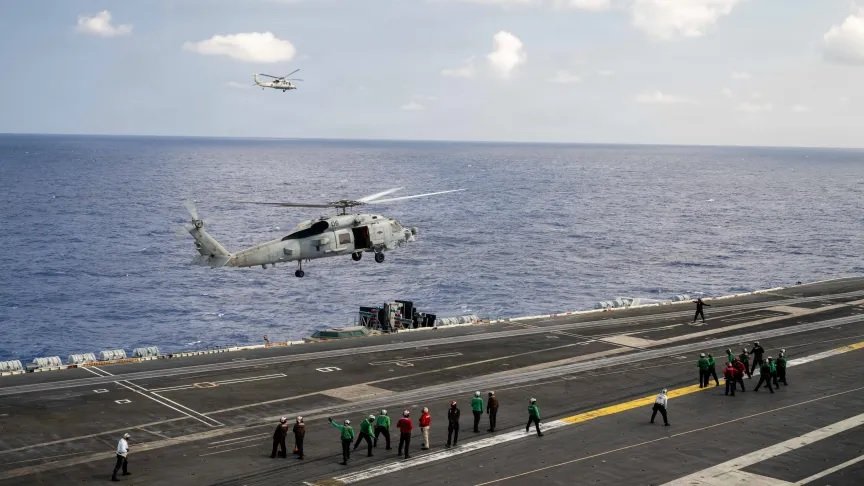
During the RIMPAC demonstration, two MH-60R Seahawk helicopters equipped with the system conducted antisubmarine warfare missions against an undersea threat. The helicopters deployed sonobuoys, which collected acoustic information from the underwater environment and transmitted the data to SensorMAX.
The system continuously monitored the sonobuoy data and provided information to the helicopter aircrews while also sending information to a ground station. Each aircrew could manage up to eight simultaneous sonobuoy surveillance feeds, which Lockheed Martin said was twice the capacity of legacy capabilities.
Retraining the AI During Missions
One of SensorMAX's main features is its ability to retrain its AI model when new acoustic signatures are identified.
The process consists of four steps: capture, label, retrain and deploy. When a new sound is identified, operators label the acoustic signature and retrain the model using the new data. The updated model is then transmitted back to the aircraft as a small update package.
Lockheed Martin said the retraining process takes less than five minutes per iteration. The company also said the classifier models are smaller than one megabyte, allowing them to be transferred rapidly.
The system supports over-the-air (OTA) model updates through an encrypted data link. Lockheed Martin worked with FUSE Inc. on secure software delivery so trained models and mission software can be updated on deployed aircraft without interrupting operations.
Portable and Platform-Agnostic System
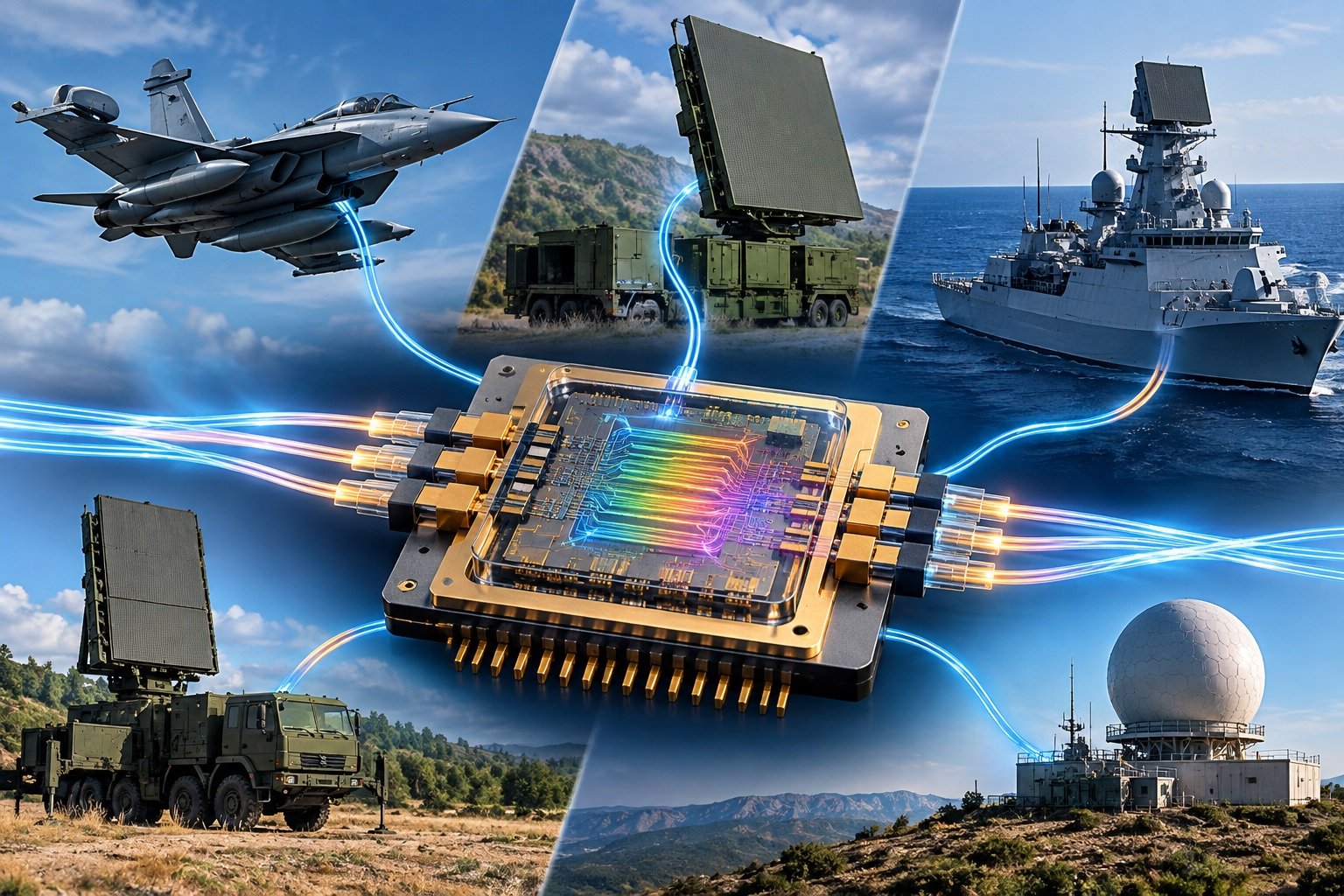
Lockheed Martin describes SensorMAX as lightweight, portable and capable of operating across different platforms. The company says the same processing capability can be used on aircraft, ships or land-based systems.
The system is also designed for edge retraining. Lockheed Martin says new energy signatures can be used to train models on edge devices using consumer-grade GPUs, without requiring a large data center.
The company said the RIMPAC demonstration showed how AI-based acoustic classification could support the Navy's efforts to use different sensors for underwater detection and provide crews with updated information during missions.
Lockheed Martin Statement
Devon Rodgers, vice president and general manager of Undersea Mission Systems at Lockheed Martin, said the RIMPAC demonstration showed the company's approach to combining commercial technology with defense engineering to accelerate capability development.
“Today’s battlespace requires the defense industry to accelerate capability delivery and seamlessly integrate commercial technology; at RIMPAC 2026 our mission-focused engineers demonstrated exactly how we are meeting that challenge,” Rodgers said.
The demonstration adds an AI-based acoustic analysis capability to the MH-60R's antisubmarine warfare mission and shows how models can be updated while deployed rather than relying only on pre-existing acoustic signatures. Lockheed Martin said the capability is intended to support faster detection and tracking of underwater threats and the Navy's broader work on crewed and uncrewed teaming.
——— End of Article ———