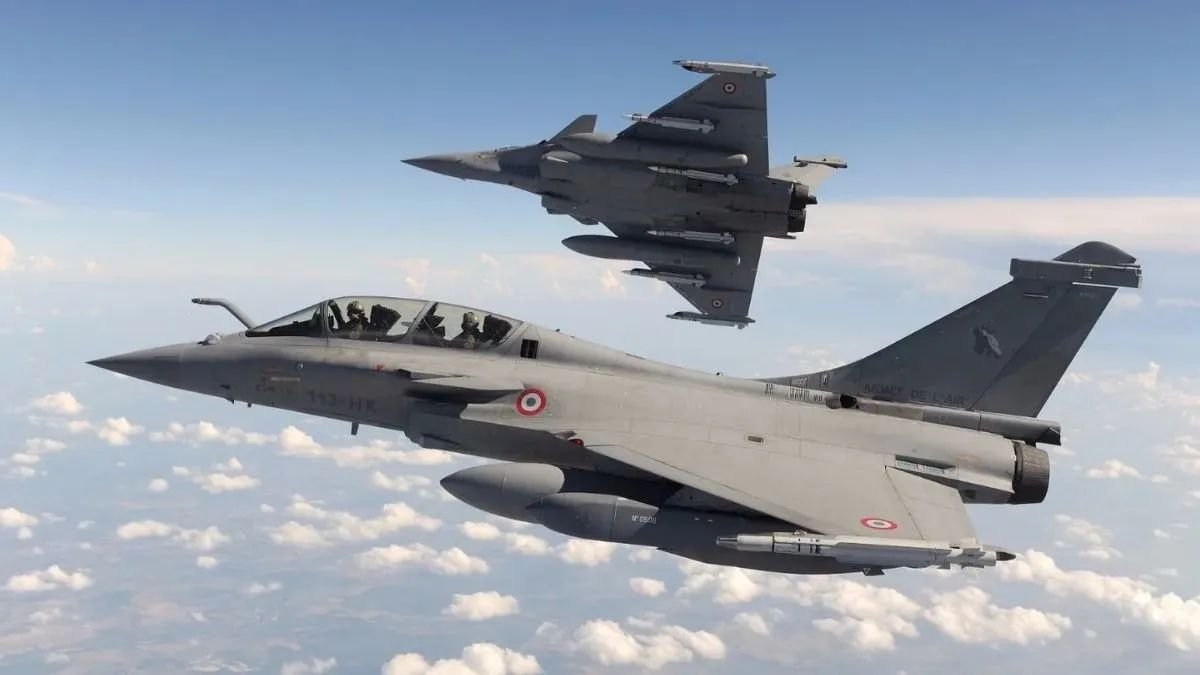
New Delhi — France has officially submitted its detailed technical and commercial proposal to India for the acquisition of 114 Rafale multirole fighter aircraft under a government-to-government (G2G) agreement, marking a significant step forward in one of the Indian Air Force's (IAF) largest fighter procurement programmes.
The proposal was submitted to the Acquisition Wing of the Ministry of Defence and the Indian Air Force after India issued a Letter of Request (LoR) to France in May this year. Defence officials are now evaluating the proposal before the programme advances to formal commercial and technical negotiations.
Deal Estimated at Around Rs 3.25 Lakh Crore
The proposed acquisition is estimated to be worth around Rs 3.25 lakh crore (approximately $39 billion). A key feature of the French offer is its emphasis on manufacturing the majority of the aircraft in India.
According to defence sources, 94 of the 114 Rafale fighter jets are proposed to be produced in India through a partnership with a local industry partner, while the remaining aircraft would be supplied in fully built condition.
The production programme will involve Dassault Aviation along with its major partners, including Safran for engines, Thales for avionics and electronics, and MBDA for missile systems.
Focus on Indigenous Manufacturing
The proposal places strong emphasis on increasing indigenous manufacturing and expanding India's aerospace industrial base.
Indian officials are closely examining the French offer, particularly the provisions related to integrating indigenous weapons such as variants of the Astra air-to-air missile into the aircraft. The level of indigenous content and local manufacturing commitments is also a major part of the ongoing evaluation.
If implemented, the programme is expected to generate business opportunities worth around Rs 1.6 lakh crore for Indian companies, including Tata Advanced Systems, Larsen & Toubro, and several other domestic defence suppliers.
Addressing IAF's Fighter Shortfall
The procurement is intended to help address the Indian Air Force's declining fighter squadron strength.
The IAF is gradually retiring older aircraft, including Russian-origin MiG variants, while the induction of indigenous fighter programmes such as the LCA Mark 1A and LCA Mark 2 has faced delays.
The Air Force currently operates around 32 fighter squadrons, compared with an assessed requirement of about 40 squadrons for a two-front operational scenario.
According to the proposal, aircraft delivered under this programme are expected to begin entering service from 2029–30.
Rafale to Remain a Key Part of Future Fleet
The Rafale was selected by the Ministry of Defence in 2012 following a global competition and is expected to remain a major part of the Indian Air Force's future combat fleet.
The Defence Acquisition Council (DAC) approved the proposal for the procurement of 114 Rafale aircraft about five months ago. The acquisition forms part of broader efforts by the Ministry of Defence to strengthen the Air Force following a capability study initiated under Defence Secretary Rajesh Kumar Singh after he assumed office in 2024.
India's Rafale Fleet Could Exceed 200 Aircraft
India has already placed orders for 62 Rafale aircraft, including 36 aircraft for the Indian Air Force and 26 Rafale Marine fighters for the Indian Navy.
If the proposed purchase of 114 additional aircraft is approved, India's Rafale fleet would increase to 176 aircraft.
The Indian Navy has also indicated its interest in acquiring 31 additional Rafale Marine aircraft for maritime operations. If that requirement is approved in the future, India's total Rafale inventory could exceed 200 aircraft.
First Rafale Production Line Outside France
The proposed programme would also mark the first time Rafale fighter aircraft are manufactured outside France.
Earlier Indian contracts for 36 Rafale fighters for the Air Force and 26 Rafale Marine aircraft for the Navy involved fully built aircraft manufactured and delivered from France.
With France's detailed proposal now submitted, the process will move toward formal commercial and technical negotiations as India continues its evaluation of the offer. If approved, the programme would combine a large-scale fighter acquisition with expanded domestic manufacturing involving both French and Indian defence industries.
——— End of Article ———