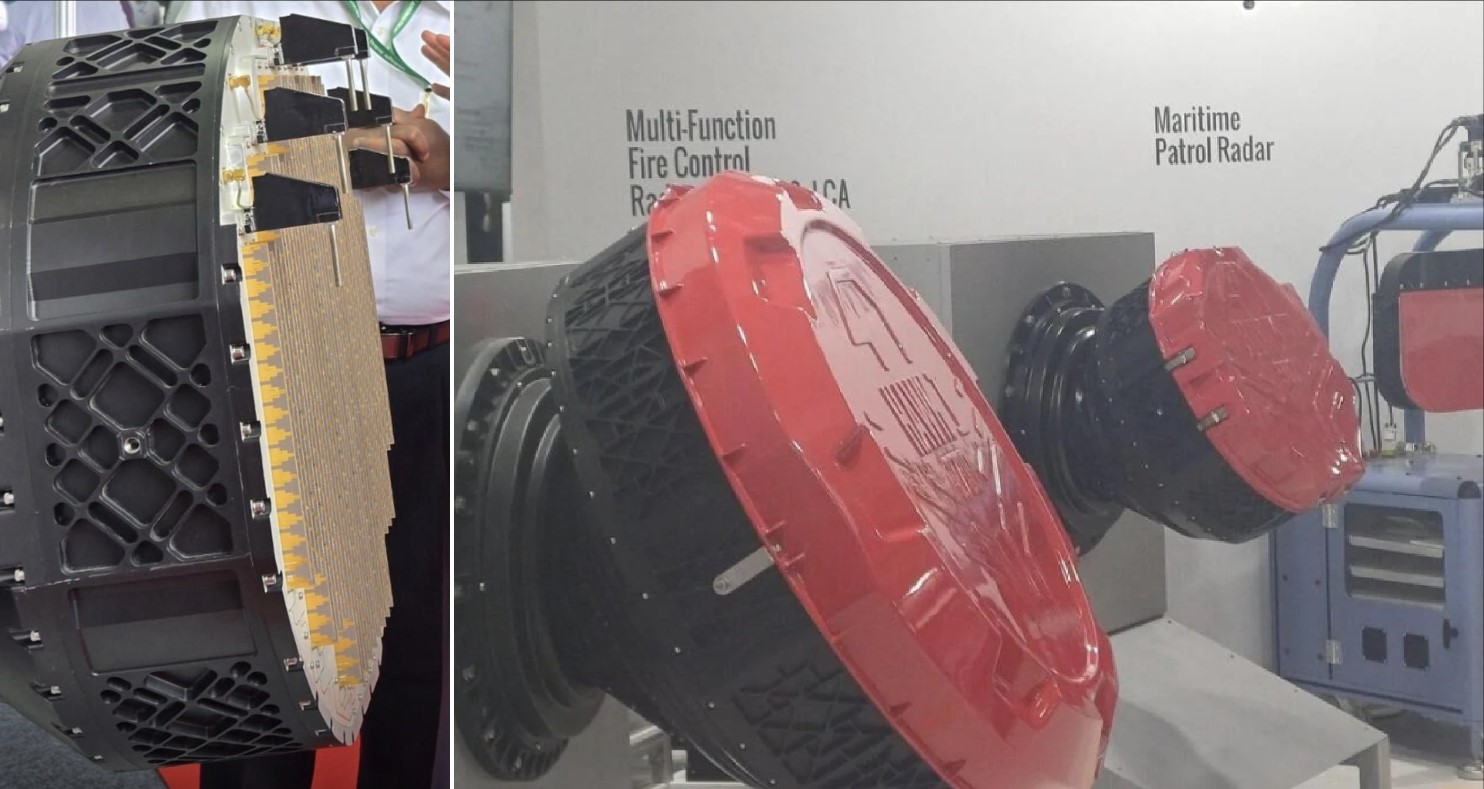
NEW DELHI — Chennai-based defence technology company Data Patterns has unveiled the Hawk-I 900, an indigenous Gallium Nitride (GaN)-based Active Electronically Scanned Array (AESA) radar prototype designed for lightweight fighter aircraft. The radar is intended for integration into the Indian Air Force's MiG-29UPG, the Indian Navy's MiG-29K, and future upgrades of the LCA Tejas Mk1.
The Hawk-I 900 expands India's indigenous fighter radar portfolio and is being developed as a modern replacement for ageing imported radar systems used on legacy fighter aircraft.
Designed for Multi-Role Operations
The Hawk-I 900 is an X-band AESA radar equipped with approximately 876 Transmit/Receive Modules (TRMs). According to Data Patterns, it can detect fighter-sized targets at ranges exceeding 150–200 kilometres, while simultaneously tracking and engaging more than 20 targets.
The radar supports air-to-air, air-to-surface, and maritime missions and is designed for all-weather operations. It also incorporates a swashplate mechanical repositioner, combining mechanical and electronic steering to provide wider scanning coverage.
Data Patterns has positioned the Hawk-I 900 as a plug-and-play replacement for the Russian-origin Zhuk-ME radar used on India's MiG-29UPG and MiG-29K fleets. The older radar has faced reported reliability issues, including overheating, lower mean time between failures (MTBF), and reduced performance in hot and humid maritime conditions.
GaN Technology
The Hawk-I 900 uses Gallium Nitride (GaN) semiconductor technology instead of the older Gallium Arsenide (GaAs) technology found in many legacy radar systems.
GaN technology enables higher power output from each Transmit/Receive Module (TRM), improving detection range and target resolution. It also offers better thermal management, allowing the radar to operate more efficiently under demanding conditions while requiring less cooling.
In addition, the radar is designed with Low Probability of Intercept (LPI) capability, advanced frequency hopping, and improved resistance to electronic jamming. As an AESA radar, it also eliminates mechanically moving antenna components, improving reliability and reducing maintenance requirements.
Part of a Broader Indigenous Radar Family
The Hawk-I 900 has been developed alongside the larger Hawk-I 2700 AESA radar, which features approximately 2,400–2,700 TRMs and a reported detection range of around 350 kilometres. The larger system is being positioned for the Indian Air Force's Su-30MKI Super Sukhoi upgrade programme.
Together, the two radars provide indigenous AESA solutions for both lightweight and heavy fighter aircraft, supporting India's efforts to expand domestic defence manufacturing and reduce dependence on imported combat sensors.
The Hawk-I 900 is also being considered as a domestic radar option for future LCA Tejas Mk1 upgrades alongside the DRDO Uttam AESA radar.
Ground Testing Completed
Data Patterns has completed ground testing of the Hawk-I series, including evaluations of signal processing, thermal management, and electromagnetic compatibility.
The company has requested aircraft from the Indian armed forces, including a MiG-29K, to begin airborne trials. These flight tests will assess the radar's performance during real-world operations, including high-G manoeuvres.
According to industry estimates, an indigenous radar solution could reduce fighter upgrade costs by 30–40% compared with imported alternatives while reducing dependence on foreign spare parts. If flight testing is successful, the Hawk-I 900 could support the continued modernisation of India's MiG-29 fleet and strengthen indigenous capabilities in airborne radar technology.
——— End of Article ———