NEW DELHI : India’s long-range air combat capability is entering a new phase as the Defence Research and Development Organisation (DRDO) advances the Astra missile family toward full operational deployment, significantly enhancing the Indian Air Force’s (IAF) Beyond Visual Range (BVR) combat reach.
Defence officials confirmed that the Astra Mk2, a 240-kilometre-range BVR air-to-air missile, has completed its primary developmental trials and is on course for operational readiness by the end of 2026. Development of the Astra Mk3, codenamed Gandiva, is progressing in parallel, with a projected range of 350 kilometres and a targeted induction timeframe of 2028–2029. Together, the two missiles place India’s indigenous BVR capability in the same performance category as the AIM-120D AMRAAM, China’s PL-15, and Europe’s Meteor.
The Astra Mk2 represents a substantial upgrade over the in-service Astra Mk1, offering both extended range and improved terminal-phase performance. According to DRDO sources, the missile has cleared aerodynamic, propulsion, and guidance evaluations, confirming its suitability for long-range, high-altitude engagements. The missile is powered by a dual-pulse solid rocket motor, enabling sustained energy during the end phase of flight and improving effectiveness against maneuvering targets. It is equipped with an indigenous Active Electronically Scanned Array (AESA) seeker and electronic counter-countermeasure (ECCM) systems, supported by a two-way data link for mid-course guidance updates.
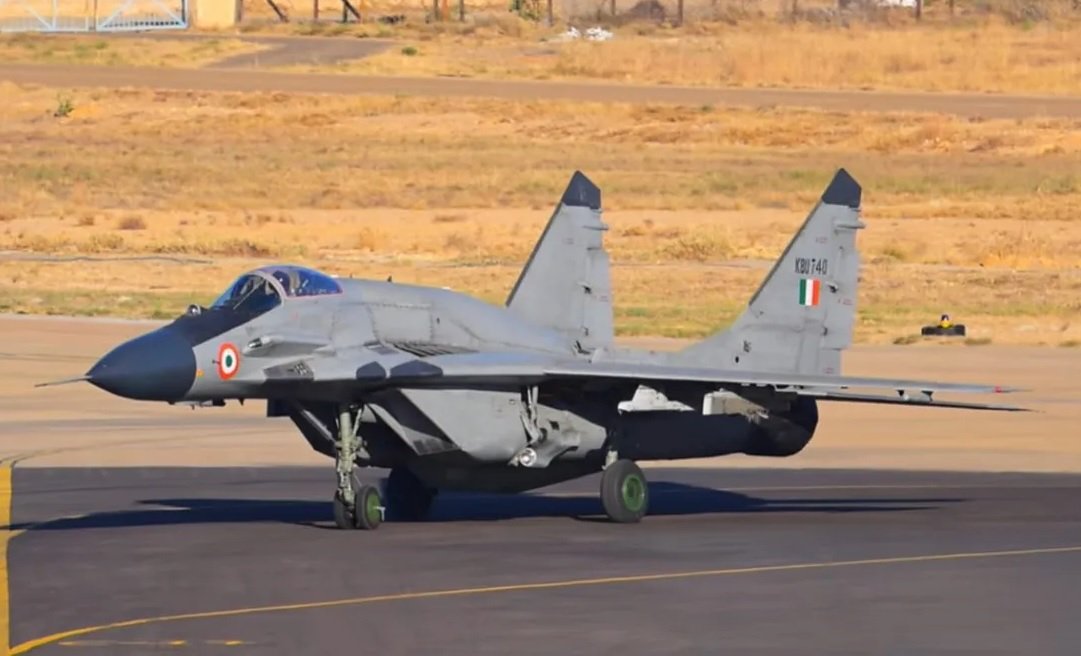
Integration of the Astra Mk2 with the Su-30MKI has been completed, including captive carriage and systems compatibility trials. The Su-30MKI, which forms the backbone of the IAF’s air-dominance fleet, will serve as the missile’s initial operational platform. Integration with the LCA Tejas Mk1A is continuing and is expected to be completed before fleet-wide clearance, allowing deployment across lighter, network-centric fighter formations. Once inducted, the Astra Mk2 is expected to expand the IAF’s engagement envelope, enabling stand-off engagements against hostile aircraft.
The induction of the Astra Mk2 comes amid growing emphasis on long-range BVR weapons across the region. China has deployed extended-range PL-15 variants on frontline fighters, while Pakistan operates Chinese-origin BVR missiles, increasing the importance of long-range air combat capability in regional deterrence planning. Indian defence planners view the Astra Mk2 as a means of reducing dependence on imported munitions while retaining operational flexibility in electronically contested environments.
Alongside the Mk2, DRDO is accelerating work on the Astra Mk3, officially designated Gandiva, which is being developed as a ramjet-powered BVR missile using Solid Fuel Ducted Ramjet (SFDR) propulsion. Unlike conventional rocket motors that exhaust their fuel early in flight, the SFDR system allows sustained thrust throughout the missile’s trajectory, increasing both effective range and the size of the no-escape zone. With an estimated reach of 350 kilometres, the Astra Mk3 is intended to match or exceed the performance of the most advanced BVR missiles currently in service.
The Astra Mk3 will share much of the Mk2’s avionics architecture, including its seeker and guidance systems, a design approach intended to reduce development risk and speed up operational induction. Current timelines indicate that the missile could be combat-ready within two years of the Astra Mk2’s entry into service.
The steady progression of the Astra programme reflects India’s broader push to establish independent, end-to-end air-to-air missile capabilities. With the Astra Mk2 nearing operational deployment and the Astra Mk3 under development, the Indian Air Force is expected to field a layered, indigenous BVR missile inventory that strengthens long-range air combat capability in the coming decade.
——— End of Article ———