India has achieved a significant technological breakthrough with the Defence Research and Development Organisation (DRDO) successfully developing the country's first Photonic Radar—a cutting-edge system that uses light instead of traditional radio waves for object detection. The radar is expected to begin trials in the coming months, marking a major leap in indigenous sensing and surveillance capabilities and potentially placing India among a very exclusive group of nations exploring or fielding this futuristic technology.
What is Photonic Radar?
A photonic radar uses optical or photonic technologies (typically lasers or modulated light waves) to detect objects, unlike conventional radars that rely on microwave radio frequency signals. It integrates optical fibers, lasers, and high-speed modulators to generate, transmit, and receive electromagnetic signals across much higher frequencies—typically in the millimeter wave or even terahertz ranges.
This allows photonic radars to offer:
-
Higher resolution
-
Improved target detection
-
Lower electromagnetic interference
-
Stealthier emissions (harder to detect by adversary systems)
Why This Is a Major Achievement for India
-
Strategic Capability Development:
With China, the US, and some EU countries already pursuing or testing photonic radar tech, DRDO’s prototype places India firmly in the global race for next-generation radar superiority. -
Indigenous Innovation:
According to officials familiar with the project, DRDO’s radar uses domestically developed photonic components, including high-speed optical modulators and fiber-based signal processing chains. This reduces dependency on imports in a domain traditionally dominated by Western defense industries. -
Military and Civilian Utility:
This radar could revolutionize Indian platforms across sectors—fighter jets, naval destroyers, missile defense systems, and even air traffic control could benefit from its ultra-resolution and low latency capabilities.
How It Differs from Current Radars
| Feature | Traditional Radar | Photonic Radar |
|---|---|---|
| Transmission Medium | Radio/microwave signals | Modulated light via photonics |
| Frequency Range | Up to ~100 GHz | 100 GHz to several THz |
| Size & Weight | Bulkier | Compact due to photonic integration |
| Resolution | Limited | Extremely high (sub-millimeter level possible) |
| Resistance to Jamming | Moderate | Very high |
| Signal Leakage | Detectable by EW systems | Much lower and stealthier |
Traditional radars, including AESA (Active Electronically Scanned Array) radars, are already highly advanced, but photonic radars have the potential to outclass them in performance, especially in cluttered environments or under electronic warfare conditions.
Global Landscape: Who Else Is Developing It?
-
United States – Agencies like DARPA and companies like Raytheon and Lockheed Martin are exploring photonics for radar and LiDAR hybrid applications, including stealth aircraft tracking.
-
China – Chinese military institutions have reported prototype demonstrations with photonically generated signals that can detect stealth aircraft.
-
European Union (notably France and Germany) – Focused on dual-use photonic radar systems for both aviation safety and defense.
-
Japan – Actively pursuing photonics in radar signal processing, particularly in maritime defense.
India’s DRDO joins this elite circle, but unlike most of these nations which rely heavily on defense corporates, India’s project is publicly funded and state-developed, making the achievement even more notable.
Applications of Photonic Radar
-
Detection of Stealth Aircraft:
Traditional radars struggle with stealth platforms like the F-35. Photonic radar, due to its high resolution and broader spectrum, can detect subtle electromagnetic reflections stealth aircraft emit. -
Space Surveillance:
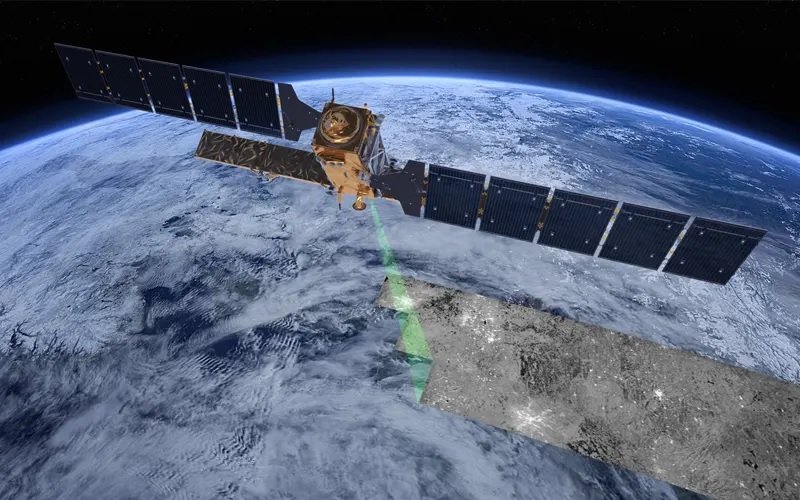
Ideal for tracking small objects in space due to precise resolution and low latency. -
Missile Tracking and Air Defense:
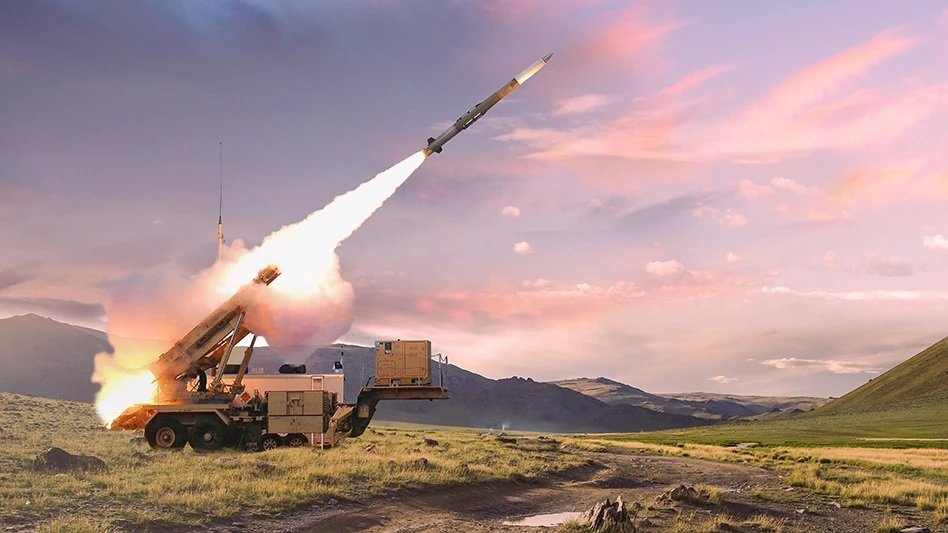
Can track hypersonic or maneuverable missiles in cluttered or ECM-heavy environments. -
Maritime Surveillance:
For detecting low-observable vessels or submarines’ periscopic radar cross-sections. -
Civilian Applications:
Can be used in autonomous vehicles, weather forecasting, and disaster monitoring, especially where high imaging fidelity is critical.
What’s Next?
According to DRDO insiders, the radar is currently at Technology Readiness Level (TRL) 6, meaning that a working prototype is ready for real-world demonstration. The next phase will involve integration with test platforms, including a stationary testbed and later UAV or naval platforms, possibly starting with light surveillance aircraft or naval corvettes.
DRDO is also collaborating with Indian startups and academic institutions under the DRDO Young Scientists Lab (DYSL-QT) to further miniaturize the radar components and explore adaptive uses in both land and space domains.
DRDO’s indigenous development of a Photonic Radar is not just a technological innovation—it’s a strategic move toward future-proofing India’s defense systems. As warfare grows more electronic and stealth-focused, such high-end sensor capabilities will be crucial to detect, deter, and defeat advanced threats. With trials on the horizon, this could soon be another jewel in India’s growing arsenal of indigenous high-tech defense solutions.
——— End of Article ———