WENCHANG, HAINAN — China’s Long March 7A rocket failed shortly after liftoff from the Wenchang Space Launch Site on Monday, resulting in the loss of the ChinaSat-4B communications satellite.
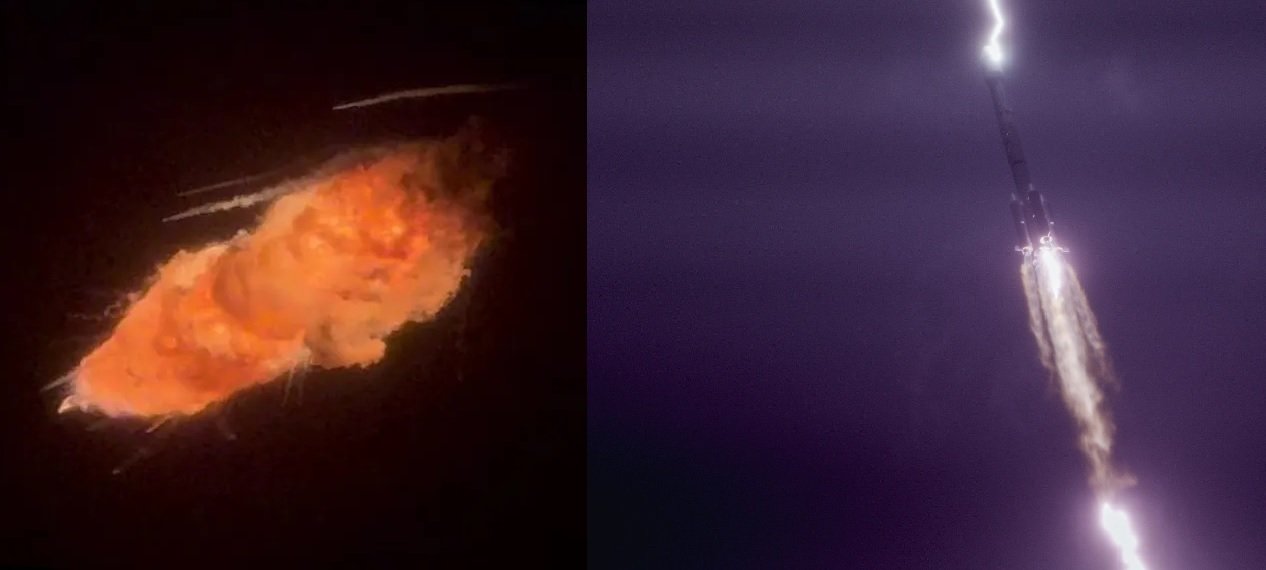
The rocket lifted off from Launch Complex 201 at 8:02 p.m. Beijing time (12:02 UTC), according to China’s state news agency Xinhua. The launch vehicle experienced a flight anomaly shortly after liftoff, and the cause is being further analyzed.
Reuters witnesses reported seeing a bright flash in the night sky after the launch, followed by what appeared to be multiple glowing fragments. The observations are consistent with the reported failure of the launch vehicle, although Chinese authorities have not yet released details on the specific technical cause.
ChinaSat-4B Lost in the Failed Launch
The payload aboard the Long March 7A was ChinaSat-4B, also known as Zhongxing-4B. The satellite was intended for geostationary orbit and was designed to provide radio, television and communications services.
The loss means the satellite did not reach its planned orbit. Further information about the spacecraft and its intended operational role has not been released in detail by Chinese authorities following the failed mission.
Second Long March 7A Failure
Monday’s failure is the second known failure of the Long March 7A. The rocket made its maiden flight in March 2020, but that mission also failed after the vehicle experienced a malfunction. Chinese space engineers subsequently investigated the cause.
The Long March 7A returned to flight in March 2021 and successfully placed the Shiyan-9 satellite into orbit. It then completed a series of successful missions before Monday’s failure.
The Long March 7A is a three-stage variant of the Long March 7 designed for missions to higher orbits. Its configuration uses four strap-on boosters and a third stage that allows it to conduct missions involving geostationary transfer orbits. The vehicle has previously been used for a range of satellite missions.
YF-100 Engines Used on the First Stage and Boosters
The Long March 7A’s first stage and four boosters use YF-100 liquid-oxygen and kerosene engines. The same engine family is also used on several other Chinese launch vehicles, including the Long March 5, Long March 6 and Long March 8.
However, Chinese authorities have not said that an engine problem caused Monday’s failure. The investigation remains underway, so the exact source of the anomaly cannot yet be established.
Investigation Underway
Xinhua reported that the cause of the failure is being further analyzed. No official explanation identifying a particular engine, stage, component or system as responsible for the anomaly has been released so far.
The failure will therefore be subject to a technical investigation before the Long March 7A returns to flight. Any decision on future launches involving the vehicle or related hardware will depend on the findings of that investigation.
Monday’s incident represents a failure after the Long March 7A had established a record of successful missions following its 2020 debut failure. The immediate impact on China’s wider launch schedule will depend on the results of the investigation and any corrective measures announced by Chinese authorities.
——— End of Article ———