Huntsville, Alabama — Boeing has completed a series of tests of its newly developed Ultra Low-Cost Seeker (ULCS), an active radar seeker designed to provide lower-cost precision guidance for a range of offensive and defensive weapon systems.
The company announced the testing progress this week as the Space and Missile Defense Symposium opened in Huntsville, Alabama. Boeing is evaluating the ULCS for possible integration into its direct-attack, cruise missile, and integrated air and missile defense portfolios.
Testing Across Multiple Environments
The latest test campaign concluded earlier this summer and examined the seeker's detection and tracking performance as well as its ability to withstand the physical stresses associated with flight.
Testing included an anechoic chamber, captive-carry flights and a surrogate rocket launch.
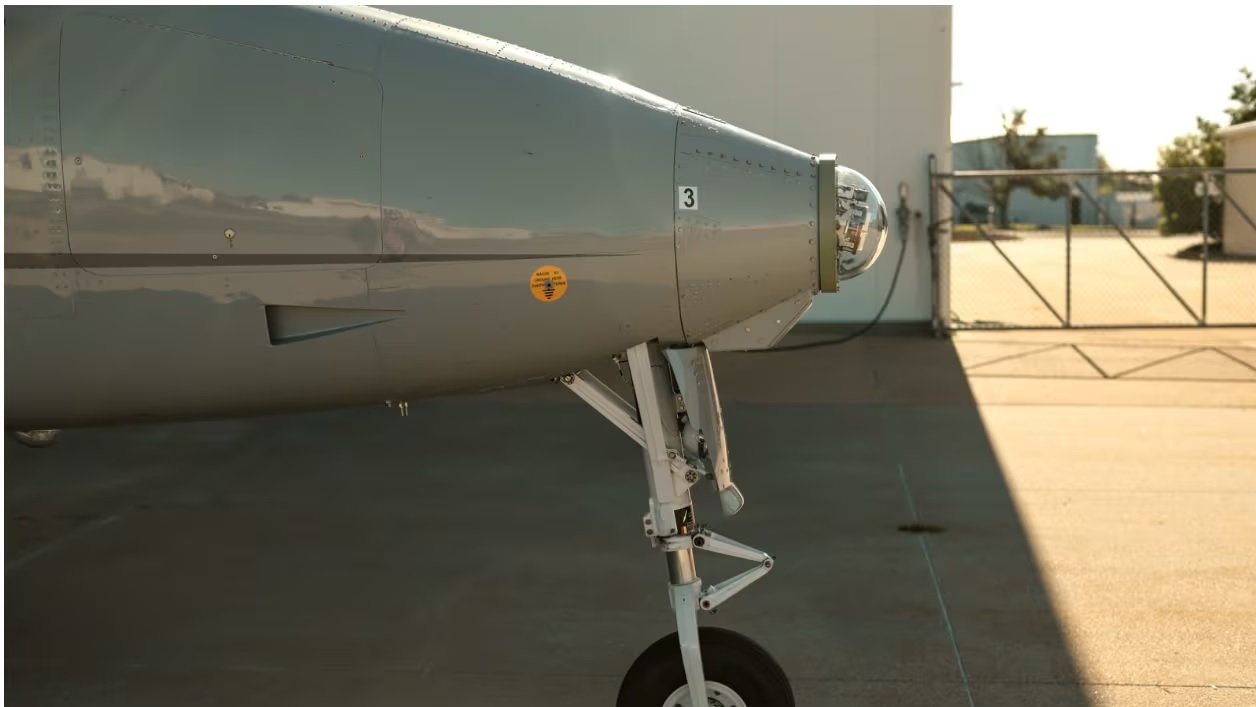
During captive-carry testing, the ULCS was mounted on the nose of a Beechcraft 1900 aircraft. The aircraft operated over both land and maritime environments to evaluate the sensor's ability to detect and track targets.
At Spaceport America in New Mexico, Boeing also tested the seeker from a fixed ground position. The ULCS successfully tracked a passing unmanned aerial vehicle (UAV).
Boeing then mounted the seeker on a surrogate rocket. During the flight, the sensor tracked a secondary drone equipped with a radar reflector to represent a larger target. According to Boeing, the seeker detected and tracked its targets in each test and survived the acceleration and vibration associated with the rocket launch.
Commercial Components and Open Architecture
The ULCS is an active radar seeker built primarily from commercial off-the-shelf components that Boeing has adapted for military applications.
Boeing is using a modular, open-systems architecture for the seeker. The company says this approach is intended to support high-volume production and allow a common sensor architecture to be used across several weapons programs.
The effort also draws on Boeing's experience producing the active radar seeker used by the Patriot Advanced Capability-3 Missile Segment Enhancement (PAC-3 MSE). Boeing currently produces PAC-3 seekers in Huntsville, Alabama, as a subcontractor to Lockheed Martin.
Unlike the more sophisticated PAC-3 seeker, the ULCS is being developed for lower-complexity threats where a lower-cost seeker could support larger production quantities.
Potential Applications
Boeing is evaluating the ULCS for use across several weapon categories, including direct-attack weapons, cruise missiles and integrated air and missile defense systems.
The company describes the seeker as being intended to support weapons capable of operating in all weather conditions and engaging moving targets.
Bob Ciesla, vice president of Boeing Precision Engagement Systems, said the company wants to use a common sensor architecture across several programs.
“We are developing ULCS with the goal of sharing a common sensor architecture across several of our programs. It is modular, producible and built with Weapons Open Systems Architecture to speed integration and future changes,” Ciesla said.
Boeing's broader air and missile defense portfolio already includes PAC-3 seeker production and other missile-defense systems. The company says its PAC-3 seekers provide active guidance data for target acquisition, aim-point selection and terminal guidance.
Further Flight Testing Planned
Boeing engineers are now analyzing data collected during the latest test campaign to refine the ULCS design.
The company plans to conduct additional advanced flight tests in 2027 using configurations that more closely represent the seeker's intended end-use applications.
Steve Wright, Boeing's senior manager for weapon sensors and advanced guidance, said further development work remains but described the recent testing as evidence that the ULCS concept is viable.
“We still have more work to do but the rapid testing our teams have completed prove that this capability is real and will fundamentally change how we look at seeker affordability across our programs,” Wright said.
Boeing has not provided a specific unit cost for the ULCS. The company is instead focusing on its use of commercial components, modular design and open-systems architecture as the basis for developing a seeker that can be produced in larger quantities and integrated into multiple weapons programs.
——— End of Article ———