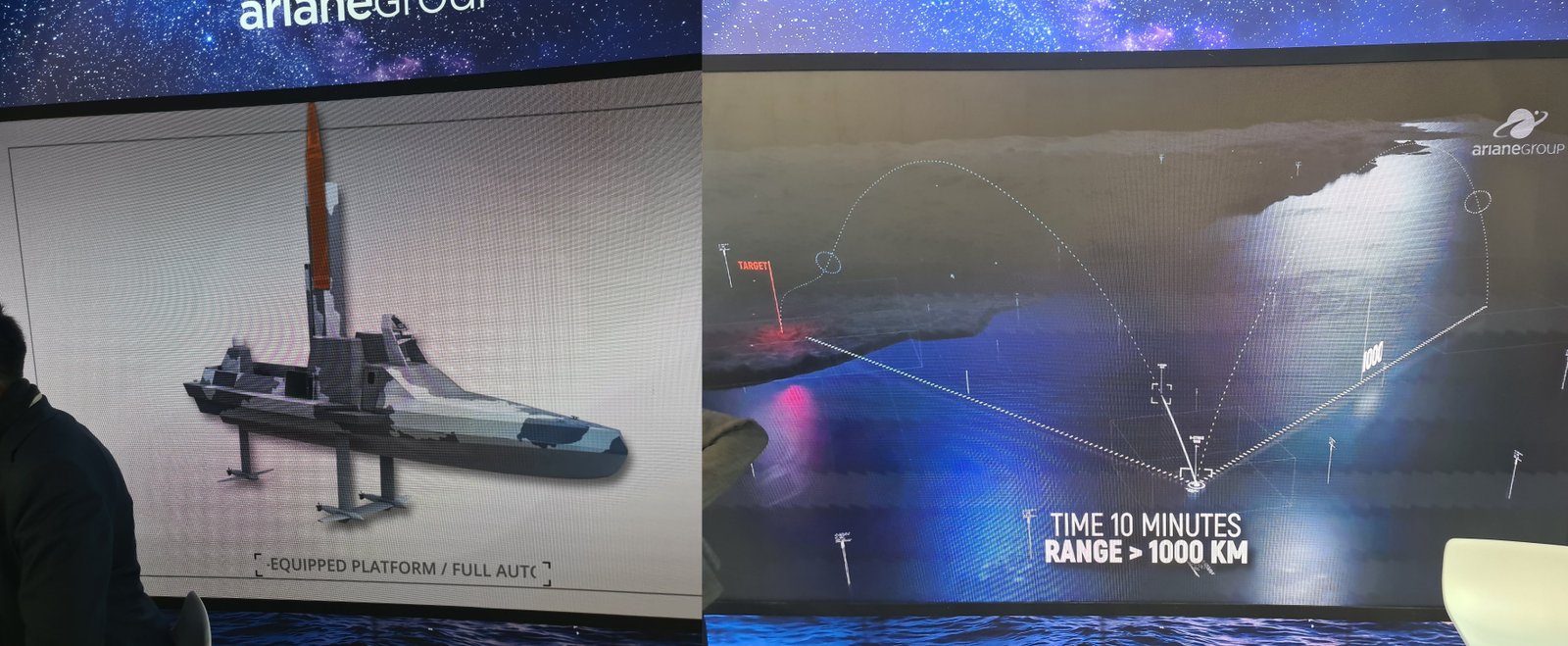
Paris, France – ArianeGroup has presented a naval version of its B-STRIKE 1000 ballistic missile at Euronaval 2026, proposing a potential long-range anti-ship capability for European navies. The concept is based on the land-based B-STRIKE programme, developed with Thales and Soframe to strengthen Europe's long-range strike capabilities.
The B-STRIKE family was first unveiled at Eurosatory 2026. It includes proposed variants with ranges from several hundred kilometres to approximately 2,500 km. The B-STRIKE 1000 is a single-stage missile with an expected apogee of around 120 km and a flight time of less than 10 minutes.
1,000 km Range and Manoeuvrable Warhead
The naval variant retains an estimated 1,000 km range and uses a Maneuverable Reentry Vehicle (MaRV). It is designed to make trajectory corrections during flight, complicating interception by ship-based air defence systems. Its stated terminal accuracy is less than 10 metres, with terminal speeds exceeding Mach 5.
The guidance system is designed to resist GNSS jamming. Satellite-based maritime tracking data would support mid-course targeting, while an onboard seeker would provide terminal guidance. The concept references space-based radio-frequency detection technology similar to that used by French company Unseenlabs, which tracks ships, including vessels without active AIS transmissions.
The missile would also retain land-attack capabilities against infrastructure and hardened targets. Its proposed multi-function warhead supports airburst and delayed-detonation modes.
Naval Launch Options and Chinese Comparison
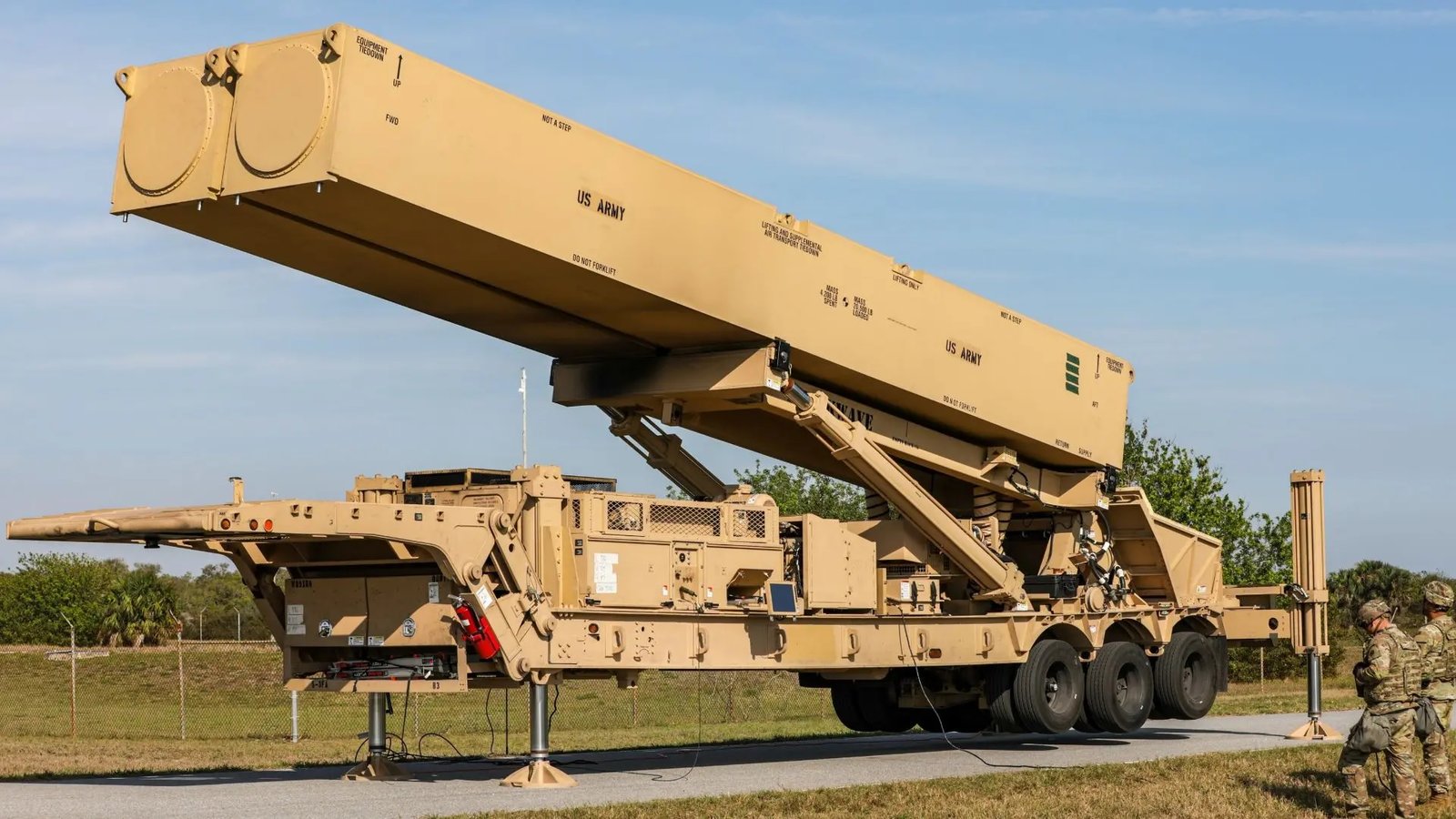
ArianeGroup has proposed launching the missile from future 25-inch vertical launch system (VLS) cells or deck-mounted launchers derived from its land-based version. The latter could potentially replace existing Exocet anti-ship missile launchers.
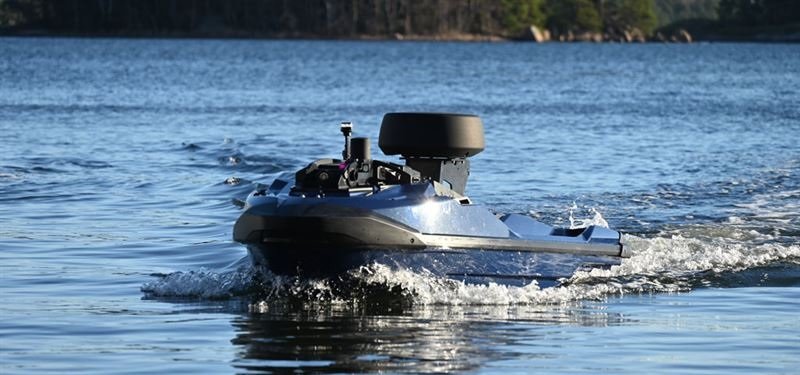
Another option involves integration with hydrofoil unmanned surface vessels (USVs) for discreet and rapid deployment in coastal waters. ArianeGroup has indicated potential interest in this concept from Nordic countries.
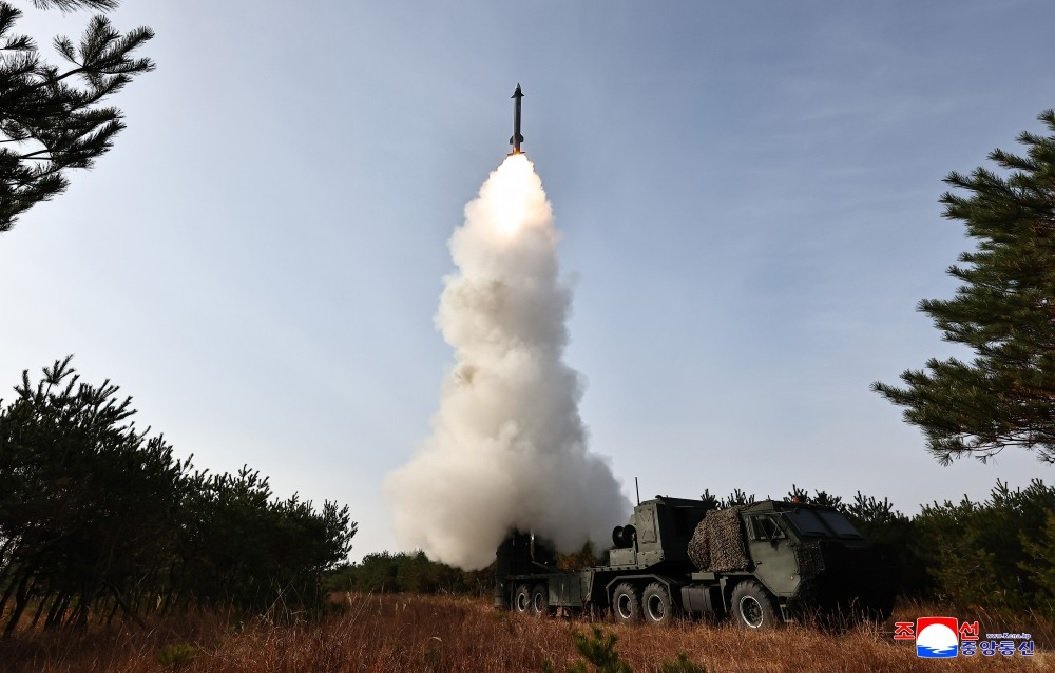
The proposed missile draws comparisons with China's YJ-20 anti-ship ballistic missile, publicly displayed during Beijing's military parade on September 3, 2025. It is reported to equip the Chinese Navy's Type 052D destroyers and Type 055 cruisers.
At Euronaval 2026, MBDA is also presenting naval applications for its deep-strike weapons, including the DELUGE one-way effector, Naval Cruise Missile (NCM) and STRATUS-RS supersonic cruise missile. Together, these systems could provide complementary strike capabilities against heavily defended targets, alongside Europe's broader response to Chinese anti-ship weapons such as the YJ-15, YJ-17, YJ-19 and YJ-20.
Development Depends on French Defence Funding
The B-STRIKE programme has so far been self-funded by its industrial partners. ArianeGroup is ready to develop a demonstrator and begin flight testing once it receives a contract from France's Directorate General of Armaments (DGA).
France's military programming plans include studies and funding for a conventional land-attack ballistic missile with a range of approximately 2,500 km, targeting initial operational capability in the mid-2030s.
However, development of the B-STRIKE family, including its naval variant, will depend on government contracts and available defence funding. The Euronaval presentation represents a proposed capability, not an operational anti-ship ballistic missile.
——— End of Article ———