AUSTIN, Texas — April 9, 2026 : U.S.-based defense technology startup Aeon has introduced Zeus, a software-defined, modular guided missile system designed to address longstanding gaps in tactical infantry munitions. Founded in 2023 and led by CEO Naweed Tahmas, the company is positioning the system as a new approach to precision weapons, emphasizing affordability, scalability, and adaptability for modern combat environments.
The Austin-based firm has secured $18.6 million in venture capital funding from Quiet Capital, Silent Ventures, and 1789 Capital. Aeon’s entry into the tactical weapons market reflects a strategic shift within the defense startup ecosystem, which has largely focused on drones and loitering munitions, while infantry-carried precision weapons have remained largely unchanged for decades.
System Design, Weight, and Cost Structure
The Zeus system is designed within the same physical class as the AT4 unguided anti-tank rocket, weighing approximately 20 pounds and measuring about 30 inches in length. Despite its comparable size, Zeus delivers guided precision capabilities closer to systems such as the FGM-148 Javelin.
Aeon has priced Zeus at approximately $50,000 per unit. This positions the system significantly below the cost of traditional guided missile systems, which can reach several hundred thousand dollars per unit, while offering greater capability than unguided rocket-propelled weapons.
The system has been engineered for high-volume production, with Aeon targeting output exceeding 10,000 units annually. This production goal was incorporated during the initial design phase to ensure manufacturability at scale.
ODIN Software Architecture and Targeting Capabilities
At the core of Zeus is Aeon’s proprietary ODIN software-defined targeting architecture. The system enables multiple targeting modes, including automatic threat identification and persistent tracking that allows reacquisition of targets after temporary concealment.
Zeus supports beyond-line-of-sight engagements and integrates with battlefield command-and-control networks, including compatibility with the Android Tactical Assault Kit (ATAK). The architecture allows operators to perform field-level software updates, enabling rapid adaptation to new mission requirements without the need for new hardware development programs.
Through a partnership with webAI, Zeus incorporates “Field AI” capabilities, enabling node-to-node federation and distributed model sharing. This allows units to exchange encrypted operational insights locally and maintain functionality in contested or electronically degraded environments without transmitting raw data externally.
Modularity and Multi-Platform Integration
The system is built around a modular design that allows operators to swap sensors and payloads without tools. This enables Zeus to engage a wide range of targets, including main battle tanks, armored vehicles, unmanned aerial systems such as the Iranian-designed Shahed series, small tactical targets, buildings, and patrol boats.
Zeus can be deployed by dismounted infantry using a shoulder-mounted configuration or integrated onto various platforms. Operators can switch between roles by attaching or removing the shoulder mount.
Aeon has established multiple integration partnerships to expand the system’s operational flexibility. The company is working with a major Ukrainian drone manufacturer to enable Zeus launches from quadcopter unmanned aerial vehicles, extending engagement range beyond that of individual soldiers. A separate Ukrainian partnership focuses on integration with unmanned ground vehicles and surface vessels.
Additionally, Aeon has collaborated with Moog Inc. to integrate Zeus into turret and remote weapon station platforms. The company has completed guided flight tests with Moog systems ahead of schedule.
Manufacturing Strategy and Supply Chain Approach
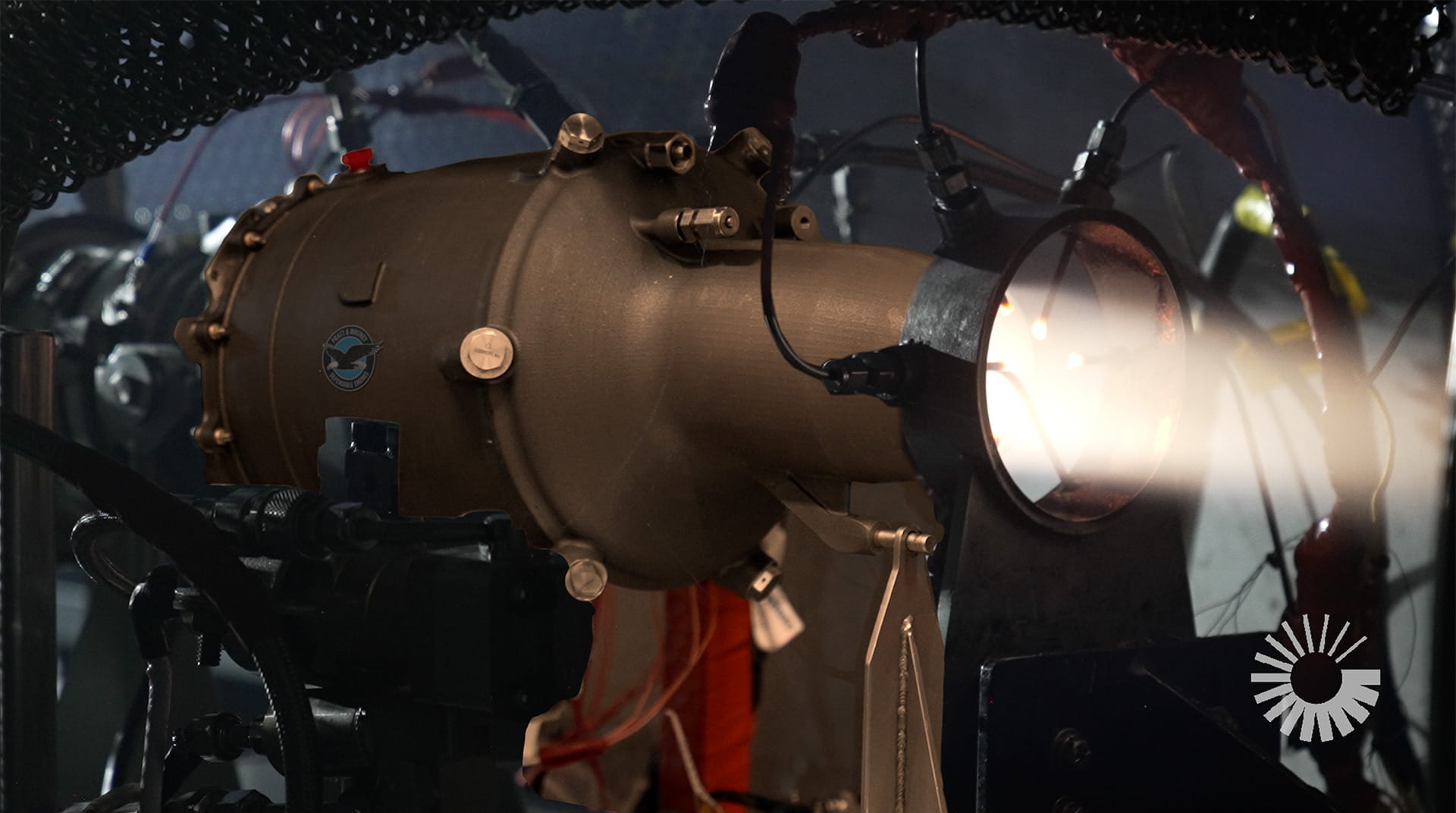
Aeon has adopted a vertically integrated manufacturing model, producing key components in-house, including solid rocket motors, propellants, fuzes, igniters, and control actuation systems. The system also incorporates low-signature propellants designed to reduce visible launch signatures.
According to Tahmas, this approach is intended to control production costs and mitigate supply chain disruptions that have affected larger defense programs. The system relies on American-made commercial components and was designed from inception with manufacturability as a primary consideration.
Operational Context and Development Drivers
The development of Zeus was influenced significantly by observations from the ongoing conflict in Ukraine. Tahmas stated that the conflict demonstrated the high consumption rates of precision munitions in modern warfare and highlighted limitations in existing procurement models.
He noted that current systems are often based on designs that are 30 to 40 years old, while threats and operational requirements are evolving more rapidly. Aeon’s design philosophy emphasizes systems that can adapt through software updates and modular changes rather than requiring entirely new weapon programs.
Contracts and U.S. Army Engagement
Aeon has secured eight-figure contracts with the U.S. Department of Defense for the production and fielding of Zeus. These include agreements with the Army Applications Laboratory, Army Futures Command, and a Cooperative Research and Development Agreement (CRADA) with the U.S. Army DEVCOM Aviation & Missile Center.
The company has been selected under U.S. Army programs aimed at enhancing lethality for dismounted soldiers through rapid payload adaptability across multiple target sets. Aeon has conducted live-fire and jump tests with U.S. Army units, including evaluations involving the Forward Observations Group, with deliveries completed ahead of schedule.
Additional testing activities have included shoulder-fired launches at a ranch in East Texas and guided flight tests from integrated turret platforms.
System Positioning
Tahmas has stated that Zeus is not intended as a direct replacement or copy of existing systems such as the Javelin or France’s Akeron missile. Instead, he described it as a system designed specifically for current operational demands, focusing on cost efficiency, production scale, and adaptability.
Aeon’s Zeus program reflects a broader shift toward software-defined weapons systems that can evolve alongside changing battlefield conditions while maintaining compatibility with existing operational frameworks.
——— End of Article ———