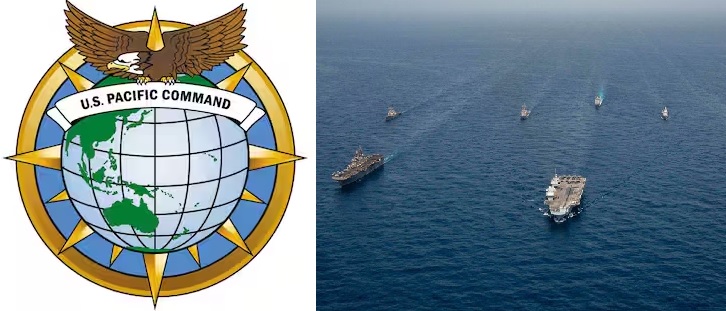
CAMP H.M. SMITH, Hawaii, — June 17, 2026 : The U.S. Department of War has announced that the U.S. Indo-Pacific Command (USINDOPACOM) will officially revert to its historic name, the U.S. Pacific Command (USPACOM), ending the designation adopted in 2018. The move restores the title under which the command operated for more than seven decades and reflects what officials describe as a return to the command’s historical identity and military heritage.
The command was originally established on January 1, 1947, by President Harry S. Truman and is recognized as the oldest and largest of the United States’ unified combatant commands. Headquartered at Camp H.M. Smith, Hawaii, the command oversees approximately 375,000 military and civilian personnel across a region covering nearly 52 percent of the Earth's surface, stretching from the western coast of the United States to the western border of India.
Return to a Historic Designation
According to the Department of War, restoring the USPACOM name honors the command’s long-standing legacy and its contribution to regional security since the end of World War II. Officials stated that the designation carries decades of military history and reflects the command’s role in shaping the post-war security framework across the Pacific region.
The department noted that USPACOM coordinated joint military operations during the Korean War, the Vietnam War, and numerous humanitarian assistance and disaster-relief missions throughout the region. Officials said the restored name is intended to reinforce institutional continuity and foster a sense of shared identity among service members.
Despite the change in designation, the department emphasized that the command’s area of responsibility, mission, force structure, and partnerships remain unchanged. USPACOM will continue to oversee military operations across the same geographic region and maintain its commitment to working with allies and partners to support regional stability and security.
Background of the 2018 Renaming
The command was renamed U.S. Indo-Pacific Command in May 2018 during the first Trump administration. The change was announced by then-Defense Secretary Jim Mattis during a ceremony in Hawaii.
At the time, the addition of “Indo” was intended to recognize the increasing strategic linkage between the Indian Ocean and Pacific Ocean regions and acknowledge India's growing role in regional security and defense cooperation. The Indo-Pacific concept subsequently became a central element of U.S. strategic policy and was incorporated into cooperation frameworks involving partners such as India, Japan, and Australia.
Diplomatic Discussion Following the Decision
The decision to remove the “Indo” designation has generated discussion among diplomatic and defense observers. The announcement comes shortly before Indo-U.S. discussions taking place on the sidelines of the ongoing G7 Summit, leading some analysts to examine whether the timing carries broader strategic significance.
Additional attention has been drawn to the issue following criticism in India over an incorrect representation of India's borders on an updated USPACOM website map. Some Indian political figures and commentators questioned whether the renaming could signal changes in Washington’s approach toward regional security arrangements, including the Quad partnership.
However, the Department of War has stated that the decision is primarily symbolic and focused on restoring historical tradition rather than altering strategic priorities. Officials reiterated that cooperation with India and other regional partners remains unchanged.
Iran Ceasefire Agreement and Strategic Context
The renaming also comes shortly after the United States and Iran reached a preliminary Memorandum of Understanding (MoU) aimed at ending months of regional conflict.
The agreement, reportedly brokered with the assistance of Pakistan and Qatar, was announced on June 14 and includes a ceasefire arrangement, the lifting of the U.S. naval blockade, the reopening of the Strait of Hormuz to commercial shipping, and the start of a 60-day period for nuclear negotiations before a planned formal signing in Geneva.
While U.S. officials have not linked the two developments, some defense and foreign policy analysts have noted that the timing has prompted discussion regarding broader American strategic priorities.
Analyst Perspectives
Several analysts have suggested that the restoration of the USPACOM name may reflect a renewed emphasis on the Pacific theater following the reduction of immediate tensions in the Middle East.
One interpretation is that the United States is seeking to concentrate more clearly on long-term strategic competition in East Asia following the easing of the Gulf crisis. Analysts note that the return to the Pacific Command designation may symbolize a more focused geographic identity rather than a two-ocean framework.
Others argue that the change aligns with the Department of War’s emphasis on historical military traditions and institutional continuity. Under this view, the restoration of the USPACOM title represents a preference for a long-established command identity rather than a shift in military posture.
Some observers also suggest that reduced immediate security pressures in the Gulf region have lessened the need to emphasize the Indian Ocean within the command’s title, although no operational adjustments have been announced.
No Operational Changes Planned
The Department of War has emphasized that the renaming does not involve any changes to military deployments, command structures, force posture, or operational responsibilities.
USPACOM will continue to conduct deterrence missions, security cooperation activities, crisis response operations, and humanitarian assistance efforts throughout its vast area of responsibility. Existing alliances and defense partnerships across the region will remain in place.
Officials stated that the restoration of the USPACOM designation is intended to highlight the command’s historic legacy while maintaining continuity in its mission and regional commitments.
As implementation of the new designation proceeds, the command will continue operating from Hawaii under the restored U.S. Pacific Command (USPACOM) name, while preserving the same strategic responsibilities it has carried in recent years.
——— End of Article ———