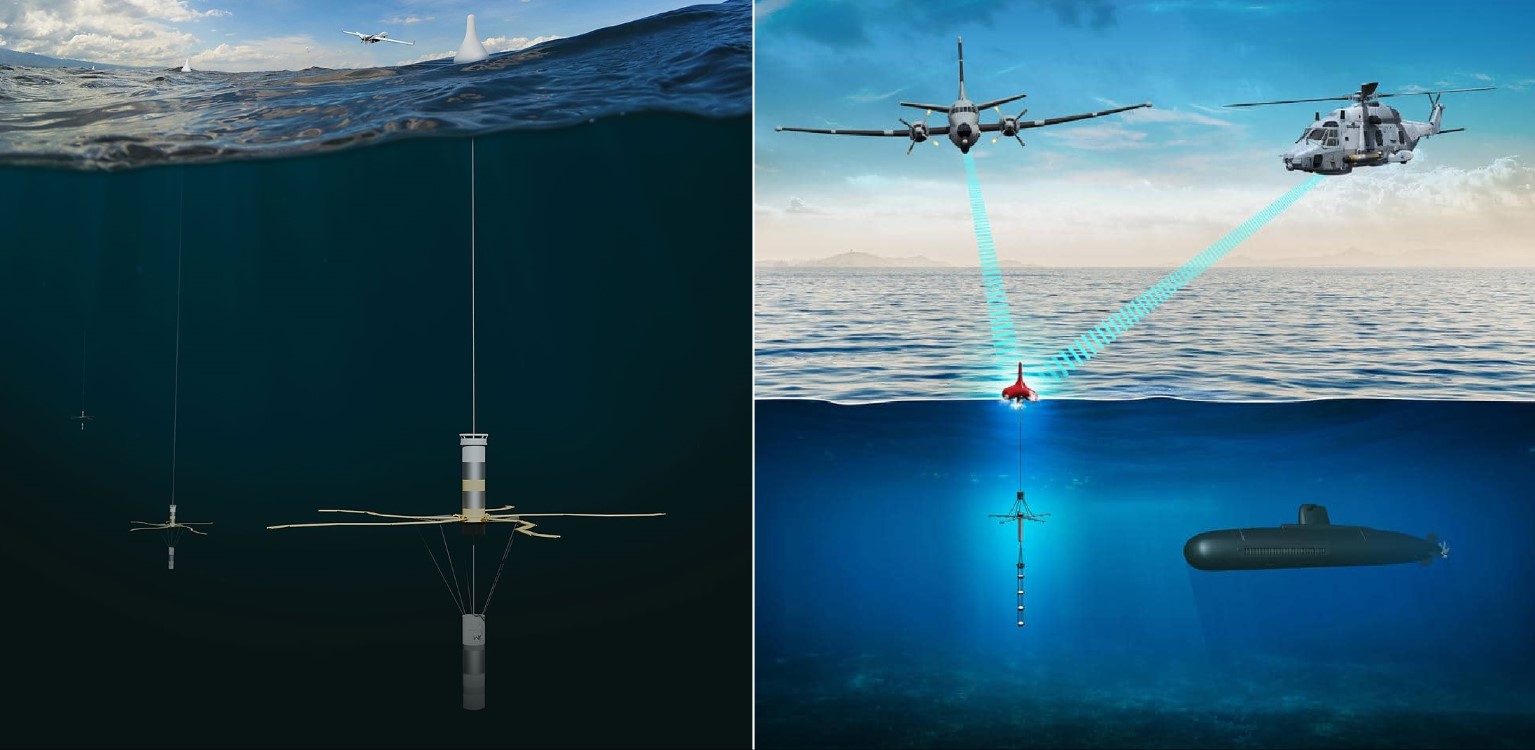
SCOTLAND, — June 11, 2026 : Ultra Maritime has successfully completed the first in-water deployment trial of its next-generation Multistatic Active Receive Sonobuoy (MSARS) in Scottish waters, marking a significant milestone in the development of advanced anti-submarine warfare (ASW) capabilities for the United Kingdom.
The trial, announced on June 10, demonstrated the operational performance of the new MSARS system, which has been designed to provide improved detection and localization of underwater threats compared to the sonobuoys currently used by the Royal Navy. The successful deployment comes as the UK and its allies continue to strengthen maritime surveillance capabilities amid increased submarine and uncrewed underwater vehicle activity in the North Atlantic.
The MSARS is a compact G-size sonobuoy that incorporates advanced signal-processing technology to improve target detection and tracking in complex underwater environments. Its smaller size enables greater deployment flexibility and makes it suitable for use from both crewed and uncrewed airborne platforms.
Integration with MQ-9B SeaGuardian
To accelerate operational deployment, Ultra Maritime is working with General Atomics Aeronautical Systems, Inc. (GA-ASI) to integrate the MSARS and other G-size sonobuoys onto the MQ-9B SeaGuardian uncrewed aerial system.
As the exclusive manufacturer of G-size sonobuoys, Ultra Maritime's technology allows unmanned aircraft to carry a larger number of sensors while maintaining extended operational endurance. The integration is expected to support distributed multistatic ASW operations by expanding detection coverage and enhancing the ability to locate and track advanced underwater threats over larger maritime areas.
The MQ-9B SeaGuardian, equipped with sonobuoy deployment and monitoring systems, is designed to provide persistent maritime surveillance. Combined with the new sonobuoy technology, the platform could significantly improve long-duration monitoring missions without exposing crewed aircraft to operational risks.
Developed Under Atlantic Bastion Programme
The MSARS programme has been developed with sponsorship from the Defence Science and Technology Laboratory (Dstl), which operates under the UK Ministry of Defence’s National Armaments Director Group.
The project directly supports the goals of the Atlantic Bastion programme, launched by the UK government in December 2025. The initiative aims to strengthen the Royal Navy’s underwater surveillance and anti-submarine warfare capabilities through the integration of autonomous systems, artificial intelligence, and conventional naval assets.
Under the programme, crewed platforms such as the Merlin Mk2 helicopter and Royal Navy warships are being combined with uncrewed air, surface, and underwater systems to create a more connected and responsive maritime force.
A key objective of Atlantic Bastion is the protection of critical undersea infrastructure, including communication cables, energy pipelines, and other strategic assets that support national security and economic activity. The programme seeks to establish a distributed digital surveillance network capable of monitoring and tracking potential threats across large sections of the Atlantic Ocean.
Previous Development Milestones
The successful in-water deployment follows earlier development achievements, including the completion of the programme’s Preliminary Design Review in March 2025. The latest trial represents an important transition from system development and testing toward future operational deployment.
Ultra Maritime has continued to expand its role in the UK’s ASW sector. In February 2026, the company received a £40 million contract from the UK Ministry of Defence to supply sonobuoys for the Royal Navy’s Merlin maritime patrol helicopters. The company also operates a new integrated design and manufacturing facility in Greenford, west London, which was opened in 2025 to support increased production and development activities.
Advancing Future Maritime Surveillance
According to defence officials, the successful Scottish waters trial demonstrates progress in bringing next-generation ASW technologies closer to frontline service. By combining advanced sonobuoys with autonomous aerial platforms such as the MQ-9B SeaGuardian, the UK aims to improve underwater domain awareness and expand its ability to detect and monitor submarine activity across strategically important maritime regions.
Further testing, evaluation, and integration activities involving the MSARS and MQ-9B SeaGuardian are expected to continue in the coming months as the technology moves toward operational deployment within future Royal Navy and allied maritime surveillance missions.
——— End of Article ———