MOSCOW, — June 18, 2026 Ukraine carried out its largest drone attack on Moscow since the beginning of Russia’s full-scale invasion, targeting key energy infrastructure in and around the Russian capital. Russian authorities reported that hundreds of unmanned aerial vehicles (UAVs) were launched during the overnight operation, with several reaching their intended targets despite extensive air defense activity.
According to Moscow Mayor Sergei Sobyanin, Russian air defense systems intercepted 194 drones approaching the capital. The Russian Defense Ministry stated that a total of 555 Ukrainian drones were shot down across 17 regions of the country. Russian officials also reported that nearly 1,000 drones and four Ukrainian cruise missiles had been intercepted nationwide over a 24-hour period.
Kapotnya Oil Refinery Hit
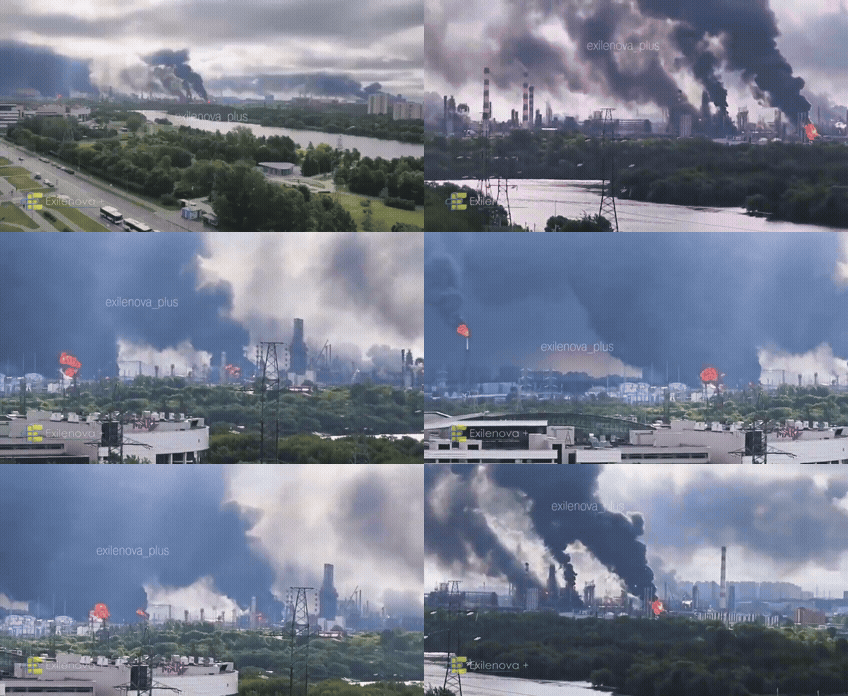
One of the primary targets of the operation was the Moscow Oil Refinery, also known as Gazprom Neft’s Kapotnya facility, located in southeastern Moscow approximately 15 kilometers from the Kremlin. The refinery is one of the largest fuel suppliers to the Moscow region and plays an important role in meeting the capital’s fuel demand.
Several drones reportedly penetrated Moscow’s air defenses and struck the facility, causing fires, heavy smoke, and explosions. Images and videos circulating online showed thick black smoke rising from the refinery complex.
Residents in nearby districts reported a strong smell of burning fuel, while some areas experienced what witnesses described as “oil rain,” with small black droplets and residue falling from the sky. Residents told media outlets that the fallout left dark spots on clothing and vehicles.
Moscow authorities denied reports of oil rain. However, the city’s official communication channels advised residents in affected areas to keep windows closed and recommended that families with children, elderly individuals, and people suffering from respiratory conditions temporarily leave the area.
Questions Over Cause of Storage Tank Damage
Footage from the refinery appeared to show a large explosion involving an oil storage tank. According to analysis highlighted by Ukrainian commentator Denis Kazansky, the damage may not have resulted from a direct drone strike.
Video footage reportedly showed the trajectory of a Russian surface-to-air missile heading toward the tank during an interception attempt. Some observers suggested that the storage tank may have been accidentally struck by Russian air defense fire while engaging incoming drones. No official confirmation of this assessment has been provided.
Second Strike on Refinery This Week
The attack marked the second reported strike on the Kapotnya refinery within days, following an earlier attack around June 16. The repeated targeting of the facility reflects Ukraine’s ongoing focus on Russian energy infrastructure, which Kyiv views as supporting military logistics and fuel supplies.
In addition to the refinery strike, Russian authorities reported damage to other infrastructure and facilities in several regions. An oil depot in the Rostov region was also hit, where officials confirmed one fatality.
FP-2 Drones Used in the Operation
The operation was carried out using FP-2 one-way attack drones developed by the Ukrainian defense technology company Firepoint. The company recently presented upgraded versions of its FP-1 and FP-2 drone systems at the Eurosatory 2026 defense exhibition in Paris.
The latest FP-2 configuration incorporates a new monoplane wing design with an integrated fuel tank. According to Firepoint, the upgraded drone can carry a 200-kilogram warhead and has an operational range of approximately 370 kilometers and up to 700 km when carrying a 105-kg payload.
Firepoint representatives stated that their drone systems account for a significant share of Ukrainian long-range strikes against targets inside Russia. The company has focused on increasing production capacity and improving operational performance based on battlefield experience.
Morok Kamikaze Drones Also Reportedly Participated
Reports indicate that Ukrainian Morok kamikaze drones also participated in the large-scale attack on Moscow. The Morok is a long-range one-way attack drone designed to strike targets deep inside enemy territory.
According to available data, the drone can carry a 30-kilogram warhead and has a reported operational range of up to 800 kilometers. The system is capable of flying at speeds of approximately 300 kilometers per hour, allowing it to engage targets far from the battlefield.
The reported use of Morok drones, together with FP-2 attack drones, demonstrates Ukraine's growing inventory of domestically developed long-range strike systems designed to target infrastructure, logistics networks, and military facilities deep inside Russia.
Reports of Bars Guided Missile Use
Russian military-linked sources also claimed that the attack involved the Ukrainian Bars guided missile in addition to drones. According to available information, the missile has an estimated range of 700–800 kilometers, a wingspan of approximately two meters, and can carry a warhead weighing between 50 and 100 kilograms.
No independent confirmation has been provided regarding the number of Bars missiles used during the operation.
Airport Disruptions and Civilian Impact
The scale of the attack led to significant disruption across the Moscow region. Operations were temporarily suspended at all four of Moscow’s major passenger airports, affecting hundreds of flights.
Russian airlines, including state carrier Aeroflot, reported widespread delays and cancellations. Authorities stated that nearly 300 flights were disrupted as a result of the security measures.
Debris from intercepted drones damaged residential buildings in parts of southern Moscow and nearby communities, including Zhukovsky. According to Moscow Region Governor Andrei Vorobyov, at least 17 people were injured, including two children.
Authorities also imposed temporary restrictions on several roads near the refinery, including sections of the Moscow Ring Road, while heightened security measures resulted in the temporary closure of Red Square.
Zelensky Links Attack to Previous Russian Strike
Ukrainian President Volodymyr Zelensky linked the operation to a recent Russian attack on Kyiv that damaged the historic Pechersk Lavra monastery.
Speaking after the strike, Zelensky said Ukraine was responding to Russian attacks on Ukrainian cities and infrastructure. He stated that Ukraine did not seek the war but would continue responding to actions taken by Russian forces.
Continued Expansion of Long-Range Drone Operations
The attack highlights the increasing role of long-range unmanned systems in the conflict. Both Russia and Ukraine have expanded their use of drones to strike targets far from the front lines, including energy facilities, military installations, logistics hubs, and industrial sites.
The June 18 operation represents one of the most extensive Ukrainian strikes against Moscow and surrounding infrastructure since the start of the war, demonstrating Kyiv’s ability to conduct large-scale long-range attacks despite Russia’s extensive air defense network.
Russian authorities continue to assess the damage, while cleanup and repair operations remain underway at affected sites.
——— End of Article ———