LONG BEACH, Calif. — Rocket Lab Corporation has secured a $397 million contract from the U.S. Space Force to develop, launch, and operate a constellation of advanced Flatellites under the Space-Based Airborne Moving Target Indicator (SB-AMTI) program. The satellites will provide persistent space-based tracking of airborne threats and support the Space Force's next-generation sensing architecture.
The award is part of a $615 million package of three firm-fixed-price Other Transaction Authority (OTA) agreements announced by Space Systems Command on Aug. 4, 2026. Besides Rocket Lab, Systems & Technology Research (STR) also received a contract, while the identity of the third recipient has not been disclosed for operational security reasons.
SB-AMTI Program Aims to Expand Space-Based Surveillance
The SB-AMTI program is led by the Portfolio Acquisition Executive for Space-Based Sensing and Targeting. Its objective is to create a resilient network capable of detecting and tracking airborne threats—including aircraft, cruise missiles, and other moving targets—in real time.
Unlike traditional airborne surveillance platforms, the program is designed to provide persistent coverage from orbit. The architecture combines satellites, secure communications links, and ground processing systems. Artificial intelligence will assist in processing large volumes of sensor data, filtering background clutter, and identifying moving targets.
According to the Space Force, the move toward space-based sensing is intended to reduce reliance on conventional surveillance aircraft, which face increasing operational challenges in contested environments where advanced anti-access and area-denial (A2/AD) systems can restrict their ability to operate.
Rocket Lab to Develop, Launch and Operate Flatellites
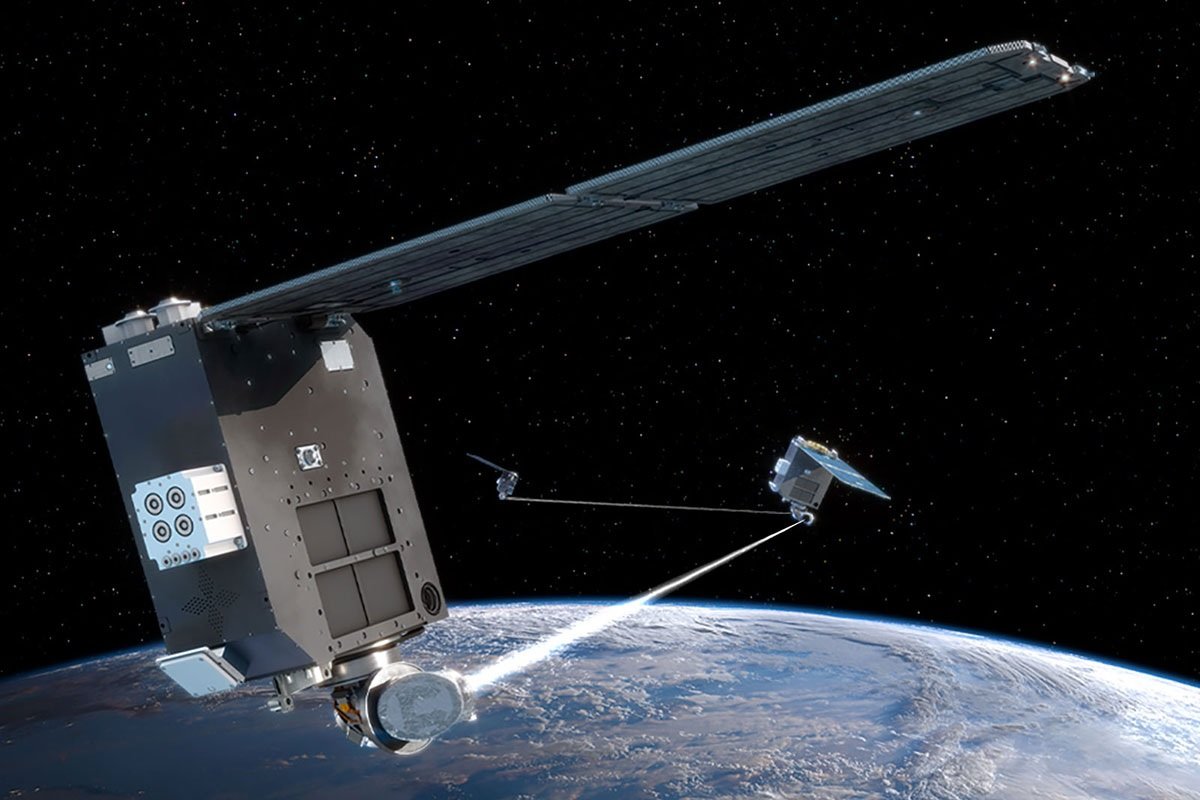
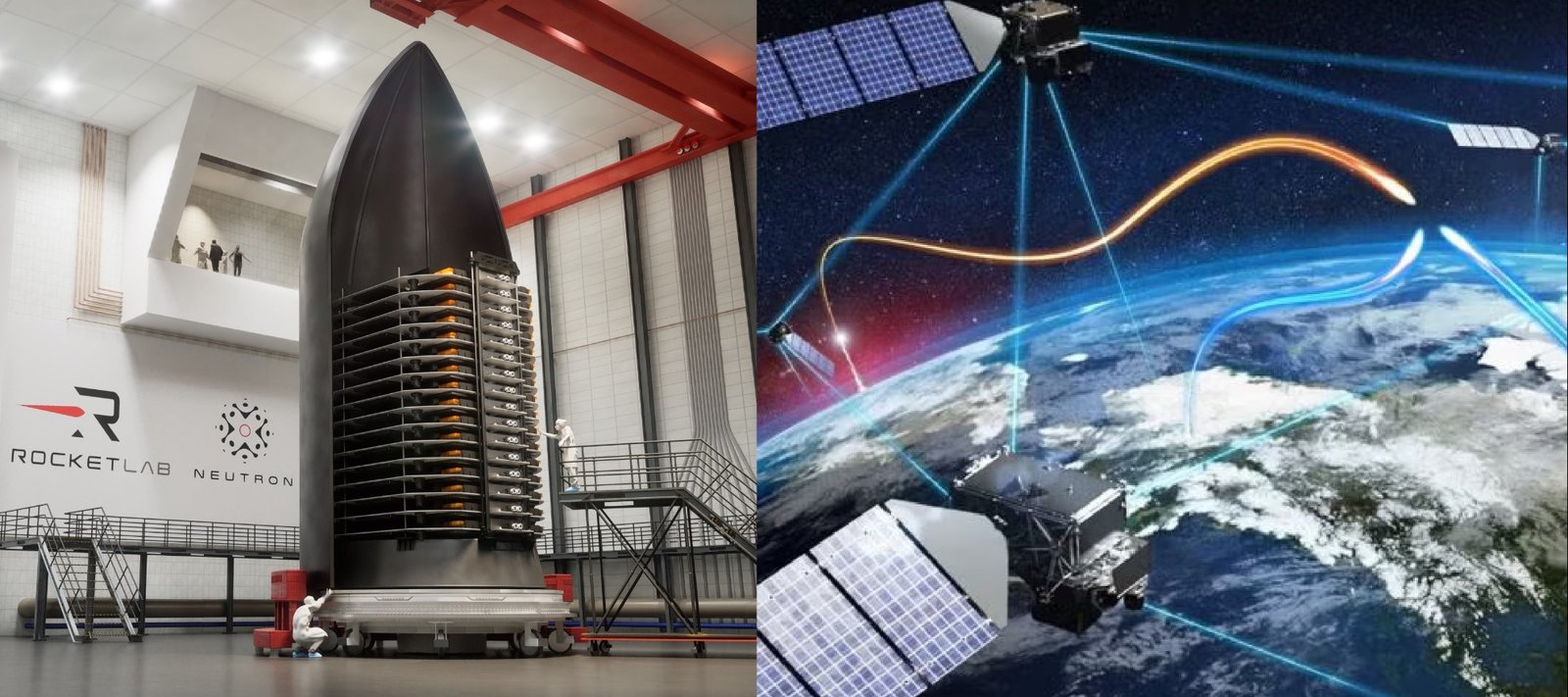
Under the contract, Rocket Lab will build multiple Flatellites, a next-generation flat satellite platform designed for deployment in large constellations. The spacecraft will carry advanced space-based sensors along with high-bandwidth, low-latency communications links to transmit tracking data.
The satellites will be launched aboard Rocket Lab's upcoming Neutron medium-lift rocket, which is currently targeting a late-2026 debut. Following deployment, Rocket Lab will operate the satellites from secure ground facilities and provide tracking information directly to the U.S. Space Force.
The contract covers spacecraft development, launch services, and on-orbit mission operations. It also includes an option for additional Flatellites within the total contract value, although Rocket Lab has not disclosed the number of satellites included in the initial award.
Focus on Multiple Technologies and Supplier Diversity
According to the Space Force, this second task order is intended to expand the supplier base and evaluate multiple sensing technologies rather than relying on a single technical solution. The agency said this approach supports long-term competition while advancing different technologies for the airborne moving target indication mission.
Col. Ryan Frazier, Acting Space Force Portfolio Acquisition Executive for Space-Based Sensing and Targeting, said the program is focused on broadening available capabilities.
"With these new partnerships, we are exploring unique innovations and technologies and fundamentally different ways to accomplish the airborne moving target indication mission."
Rocket Lab also said the inclusion of its Neutron launch vehicle will increase vendor diversity within the SB-AMTI program.
Rocket Lab Highlights Vertically Integrated Capabilities
Rocket Lab Founder and Chief Executive Officer Sir Peter Beck said the company is well positioned to support the Space Force because it provides satellite manufacturing, launch services, and mission operations through a vertically integrated business model.
"Rocket Lab is honored to play a key role in the SB-AMTI program, which is critical to expanding the Space Force's layered, resilient tracking architecture. Our vertically integrated, constellation-class satellite capabilities, mission operations, and launch services uniquely position us to deliver innovative solutions that meet the urgent needs of the Space Force. We are proud to contribute to the deployment of a resilient space-based sensing layer that will enhance the Joint Force's ability to operate in contested airspace."
Part of a Broader Space Force Acquisition Strategy
The latest award follows an earlier $4.16 billion Space Force contract awarded to SpaceX to establish an initial SB-AMTI constellation, with satellites expected to be fielded by 2028. Space Force officials have stated that the overall program will involve multiple vendors and different sensor designs as the architecture expands.
According to the Space Force, the acquisition strategy is intended to mature emerging technologies, leverage commercial investment, and maintain long-term competition while developing the future SB-AMTI tracking network.
Expanding Rocket Lab's Defense Portfolio
The contract further strengthens Rocket Lab's role in U.S. national security space programs. The company has previously supported missions for the U.S. Space Force, National Reconnaissance Office (NRO), Defense Advanced Research Projects Agency (DARPA), and NASA.
The SB-AMTI award also follows two recent milestones for the company. Last week, Rocket Lab secured a $266 million suborbital launch contract, and earlier this year it completed the Victus Haze responsive space mission, further expanding its participation in U.S. defense and space operations.
——— End of Article ———