WASHINGTON — The United States has used a significant portion of its long-range precision missile inventory during the five-month conflict with Iran, prompting internal discussions about military readiness for future contingencies, according to people familiar with U.S. defense data.
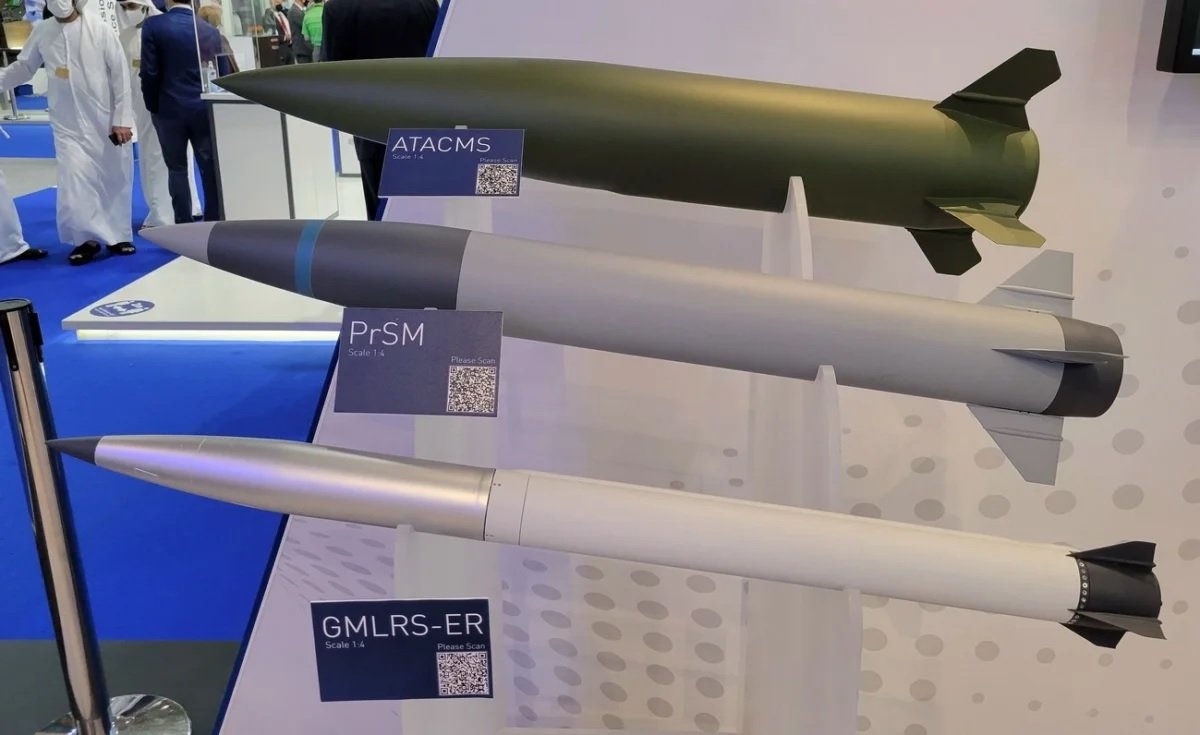
Three sources cited by Reuters said the U.S. Army has expended "virtually all" of its available Army Tactical Missile System (ATACMS) missiles and the newer Precision Strike Missile (PrSM) during the campaign. The scale of the reduction in these stockpiles has not previously been reported.
The missiles are among the U.S. military's primary long-range surface-to-surface precision weapons, allowing forces to strike targets from stand-off distances without exposing piloted aircraft to heavily defended airspace.
Readiness Concerns Emerge
Although the exact number of remaining missiles remains classified, the sources said the rapid use of ATACMS and PrSM has triggered internal discussions within the U.S. government about maintaining sufficient inventories for other potential conflicts, particularly involving China or Russia.
A fourth person familiar with the matter said U.S. Central Command (CENTCOM), which oversees military operations in the Middle East, has largely exhausted the land-based long-range missiles that were deployed in the region before the conflict. According to the source, those stocks have since been replenished by transferring missiles from other U.S. military inventories worldwide.
Defense analysts note that while such transfers help sustain ongoing operations, they also reduce the number of munitions immediately available for other regions if multiple crises occur simultaneously.
Defensive Missile Inventories Also Decline
The reduction is not limited to offensive weapons.
A recent assessment by the Center for Strategic and International Studies (CSIS) estimated that between February and July the United States used approximately 65% of its available Patriot missile interceptors, while inventories of Terminal High Altitude Area Defense (THAAD) interceptors declined by at least 38%.
Two sources familiar with internal U.S. government data said those estimates are broadly consistent with official figures.
Patriot and THAAD systems form a key part of the U.S. missile defense network, providing protection against incoming ballistic missile threats.
One source also said the United States has used slightly less than half of its global inventory of Tomahawk cruise missiles since the conflict began. Reuters said it could not independently verify that figure.
Tomahawk cruise missiles are launched from U.S. Navy destroyers and submarines and are widely used to strike heavily defended targets from long distances.
Stand-Off Weapons Favored
According to one source, the extensive use of ATACMS and PrSM reflects a deliberate operational approach that relied heavily on long-range stand-off weapons instead of higher-risk missions involving manned aircraft.
Military analysts have long regarded such weapons as an important capability because they enable precision strikes while reducing risks to pilots and aircraft operating in contested airspace.
White House and Pentagon Respond
Asked about reports of declining missile inventories, President Donald Trump said the United States still possesses "far more munitions than anyone in the world" and "far more than we need."
In a statement released by the White House, Trump also said U.S. defense companies are "making more munitions than they have ever made before" while expanding manufacturing facilities and production capacity.
Pentagon spokesman Sean Parnell also rejected concerns about military readiness.
"America's military is the most powerful in the world and has everything it needs to execute at the time and place of the President's choosing," Parnell said.
He added that the U.S. military continues to maintain a deep arsenal capable of protecting American interests while conducting operations across multiple combatant commands.
Production Efforts Underway
The increased operational demand has placed additional pressure on U.S. defense manufacturers.
Lockheed Martin, which produces ATACMS, PrSM and THAAD interceptors, is expected to play a major role in expanding production as the U.S. Army transitions from ATACMS to PrSM.
Raytheon, a business of RTX that manufactures Patriot interceptors and Tomahawk cruise missiles, has also reached a tentative multi-year agreement with the Pentagon to increase Tomahawk production as part of broader efforts to rebuild U.S. missile inventories.
Defense analysts caution that replacing advanced precision-guided missiles is a lengthy process because production depends on complex supply chains, specialized components and extended manufacturing timelines. As a result, increased production is unlikely to immediately restore depleted inventories.
Debate Over Strategy and War Powers
Military leaders have warned in recent weeks that inventories of defensive missile systems, particularly Patriot interceptors, have declined during the campaign, according to two sources.
Several media reports last week said those concerns contributed to President Trump's decision not to authorize another large-scale offensive against Iran. However, one U.S. official disputed that account, saying diplomatic pressure from Gulf states was the primary reason for the decision.
The conflict has also renewed debate in Washington over presidential war powers. Congress has not issued a formal declaration of war or approved a specific authorization for the use of military force related to the conflict with Iran.
Overall Stockpiles Lower Than Before Conflict
While U.S. Central Command has continued operations by drawing missiles from global inventories, officials familiar with the data said the overall U.S. stockpile of key long-range strike weapons and missile defense interceptors is now lower than it was before the Iran conflict began.
The reduction has intensified discussions within the U.S. government about balancing ongoing military operations with maintaining sufficient inventories for potential future contingencies in other regions.
——— End of Article ———