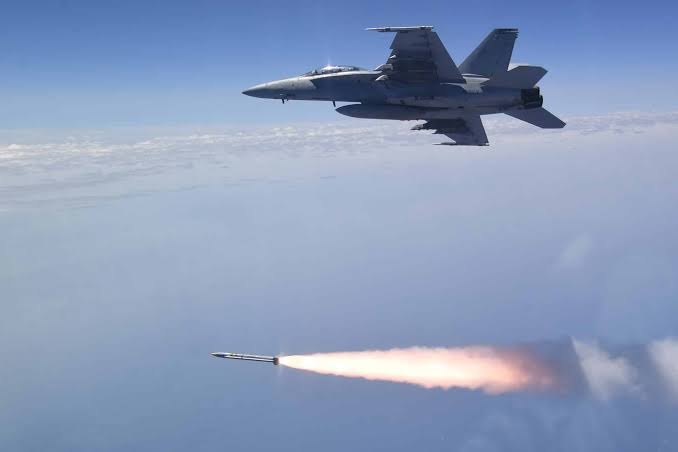
WASHINGTON — The U.S. Navy is looking for a second supplier to develop its next-generation anti-radiation missile under the Advanced Emission Suppression Missile (AESM) program, increasing planned production capacity while reducing dependence on a single manufacturer.
In a Request for Information (RFI) issued on July 1, 2026, the Naval Air Systems Command (NAVAIR) asked industry for a missile equivalent to the AGM-88G Advanced Anti-Radiation Guided Missile-Extended Range (AARGM-ER), which is currently produced by Northrop Grumman. The latest RFI raises the planned production target to as many as 600 missiles per year, up from the 300 missiles annually outlined in a February 2026 market survey.
The AESM effort is managed by the Program Executive Office for Unmanned Aviation and Strike Weapons through its Direct and Time Sensitive Strike Weapons office (PMA-242).
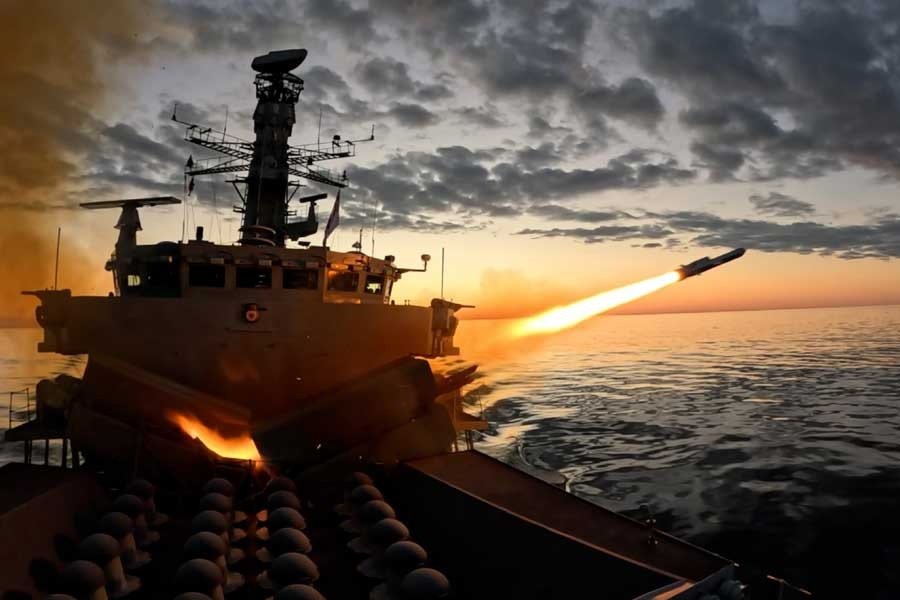
The Navy wants the new missile to match or expand the capabilities of the AARGM-ER. Anti-radiation missiles detect and destroy enemy radar systems by tracking their radio-frequency emissions, allowing aircraft to suppress enemy air defenses before they can threaten friendly forces.
The current AARGM-ER can fly at speeds of Mach 4 and has an estimated range of about 160 nautical miles (300 kilometers). Under requirements released in the February 2026 RFI, the AESM should also be capable of engaging ground-based radar systems and high-value airborne targets, including Airborne Early Warning and Control (AWACS) aircraft.
The higher production objective indicates the Navy is preparing for larger procurement quantities while establishing another production source for the missile.
The AARGM-ER received Milestone C approval in 2024, allowing low-rate initial production, and completed a live-fire test in a GPS-denied environment in January 2026. Its Initial Operational Capability (IOC), originally planned for 2024, is now expected later in 2026.
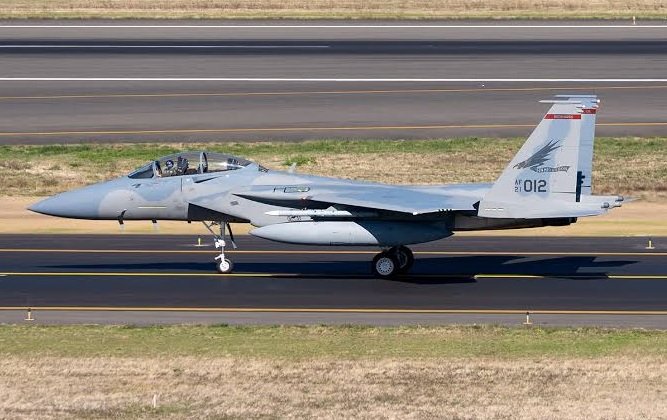
NAVAIR requires the AESM to integrate with the F/A-18E/F Super Hornet, EA-18G Growler, and F-35 Lightning II. The missile must be compatible with both the F-35's internal weapons bay and external carriage.
The missile must also comply with MIL-STD-1760 and the Universal Armament Interface while using a Modular Open Systems Approach (MOSA) that supports future upgrades using sensors and software from different suppliers.
Other requirements include advanced GPS/INS navigation, broad radio-frequency coverage, and Electronic Counter-Counter Measures (ECCM) capable of operating against modern jamming and other electronic warfare threats. The missile is also required to have a 15-year service life, withstand more than 500 hours of captive carriage under aircraft wings, and operate in the demanding maritime environment of carrier-based aviation.
NAVAIR also directed that the missile should support Foreign Military Sales (FMS) for future exports to U.S. allies. Companies responding to the RFI must have the required facility certifications and security clearances to handle Secret-level classified information.
The July 1 RFI is a market research effort and not a formal contract solicitation. Companies have until July 31, 2026, to submit capability statements along with pricing information for annual production quantities ranging from 50 to 600 missiles. The Navy will use the responses to evaluate industrial capacity and production costs before deciding on a formal competition.
——— End of Article ———