WASHINGTON, June 27, 2026 — The U.S. Navy has officially accepted delivery of the modernized guided-missile destroyers USS Chung-Hoon (DDG 93) and USS James E. Williams (DDG 95) ahead of schedule, marking an early achievement for the Navy's newly established Portfolio Acquisition Executive (PAE) Maritime office, which is responsible for accelerating acquisition, planning, and modernization programs.
Both warships successfully completed combat system sea trials, calibrations, and post-modernization shakedown operations before returning to the fleet.
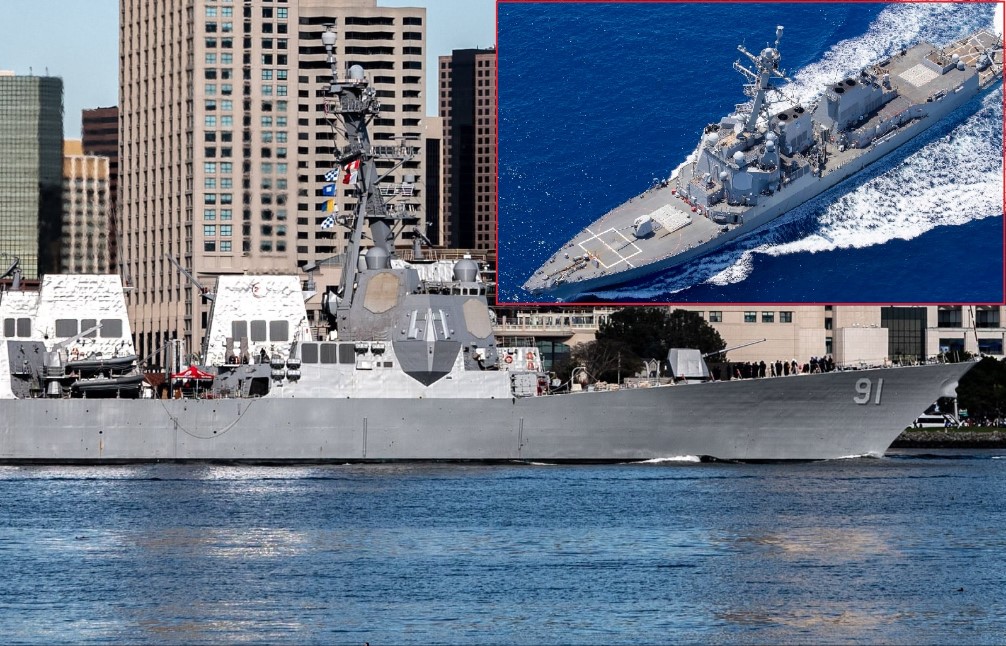
The destroyers are now the second and third Flight IIA Arleigh Burke-class ships equipped with Northrop Grumman's AN/SLQ-32(V)7 Surface Electronic Warfare Improvement Program (SEWIP) Block 3 electronic attack system, following USS Pinckney (DDG 91). The system enhances the ships' ability to detect, identify, and counter modern radar and missile threats through advanced electronic warfare capabilities.
DDG Modernization 2.0 Program
The upgrades were completed under the Destroyer Modernization 2.0 (DDG MOD 2.0) program, a comprehensive mid-life modernization initiative designed to extend the operational service life of Flight IIA Arleigh Burke-class destroyers while upgrading their combat systems, radar capabilities, electronic warfare suite, and supporting infrastructure.
The modernization is being carried out in two phases.
The first phase installs the AN/SLQ-32(V)7 SEWIP Block 3 system along with cooling and combat system upgrades required to support the new equipment. This phase has been completed for USS Pinckney (DDG 91), USS James E. Williams (DDG 95), and USS Chung-Hoon (DDG 93), while work is currently underway aboard USS Halsey (DDG 97).
The second phase will introduce Raytheon's AN/SPY-6(V)4 radar, a version of the SPY-6 radar family developed for Flight IIA destroyers, together with additional Aegis Combat System improvements to strengthen air and missile defense performance.
Capt. Tim Moore, Program Manager for DDG MOD 2.0, said the modernization effort is intended to extend the service life of Flight IIA destroyers while delivering enhanced combat capability to the fleet. He added that the program team shifted acquisition, planning, and execution milestones earlier in the process to provide upgraded capabilities to operational units more quickly.
Navy and Industry Collaboration
The modernization of USS Chung-Hoon and USS James E. Williams was supported through close coordination between the Navy's regional maintenance centers, ship crews, government program offices, and industry partners, including General Dynamics NASSCO and BAE Systems.
USS Chung-Hoon completed its Depot Modernization Period at Naval Base San Diego before departing for sea trials on April 20, 2026, while USS James E. Williams underwent similar work on the East Coast. The modernization also included structural changes to accommodate the new SEWIP Block 3 arrays.
According to Navy officials, standardized maintenance practices developed through collaboration with industry have improved schedule predictability and helped avoid many of the delays experienced during earlier modernization work on the Ticonderoga-class cruisers.
Speaking at the Combined Naval Event in 2025, Vice Adm. John Gumbleton said cooperation between ship crews, industrial partners, and government oversight has significantly improved maintenance performance. He noted that 11 of the Navy's last 12 major surface ship maintenance availabilities were completed on schedule, with the remaining availability finishing only two weeks late.
Fleet Modernization Continues
The DDG MOD 2.0 program, valued at approximately $17 billion across the class, is intended to bring selected Flight IIA destroyers closer to the capabilities of newer Flight III ships through improved electronic warfare, radar performance, combat system integration, and air and missile defense capabilities.
The early delivery of USS Chung-Hoon and USS James E. Williams expands the number of operational destroyers equipped with the SEWIP Block 3 system and reflects continued progress in the Navy's long-term effort to modernize its surface combatant fleet while maintaining readiness for future operational requirements.
——— End of Article ———