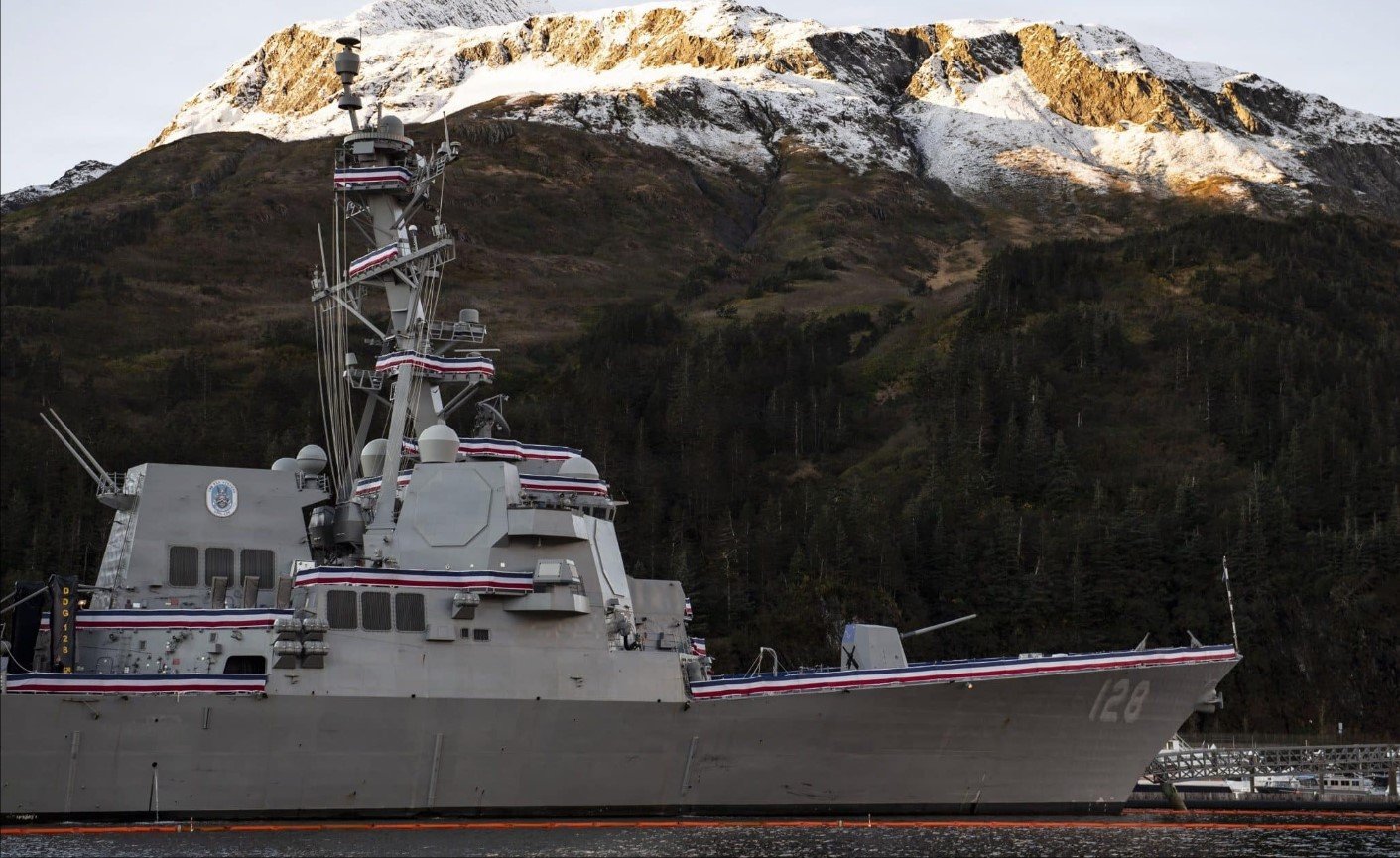
WHITTIER, Alaska, — The U.S. Navy commissioned its newest Flight III Arleigh Burke-class guided-missile destroyer, USS Ted Stevens (DDG 128), during a ceremony in Whittier, Alaska, on Saturday. Built by Huntington Ingalls Industries (HII) at its Ingalls Shipbuilding division in Pascagoula, Mississippi, the destroyer was delivered to the Navy in December 2025 and is the second Flight III destroyer to enter active service.
The ceremony took place at the Holland America Princess terminal after a fire damaged a newer dock in Whittier. The event highlighted the Navy's partnership with Alaska and marked the first Navy ship commissioning in the state since the USS Anchorage in 2013. The Tlingit phrase “Woosh-Jee-een,” meaning “working together” or “pulling together,” represented cooperation between the Navy, the Stevens family, the crew and the local community.
Advanced Radar and Weapons Systems
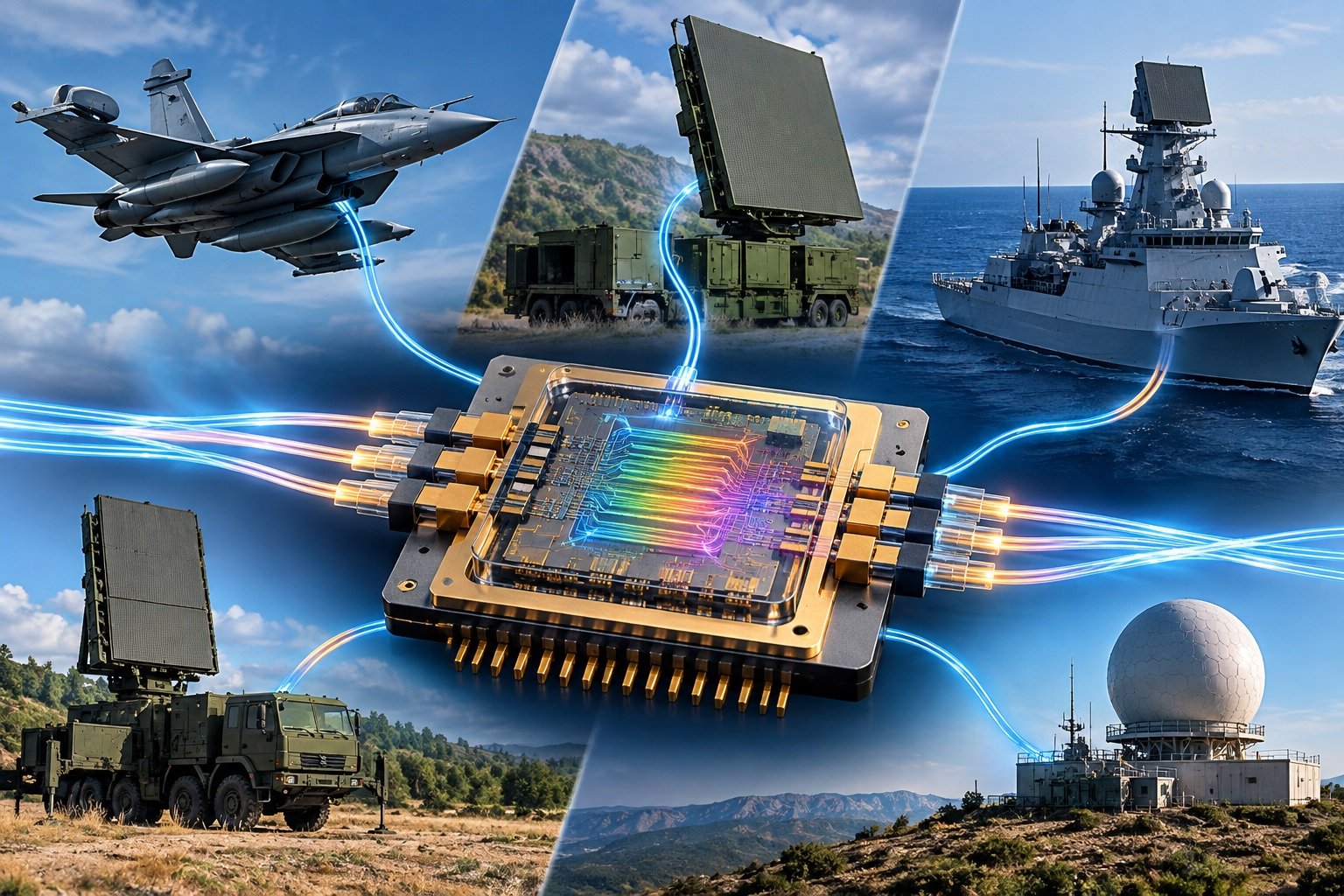
The USS Ted Stevens is equipped with the AN/SPY-6(V)1 Air and Missile Defense Radar and the Aegis Baseline 10 combat system. These systems support simultaneous anti-air warfare and ballistic missile defense operations. Improved electrical power distribution and cooling capacity support its advanced combat systems and operations alongside joint and coalition forces.
The destroyer measures approximately 510 feet long, has a 66-foot beam and a full-load displacement of around 9,200 tons. Four General Electric LM2500 gas turbines produce a combined 100,000 shaft horsepower, allowing speeds exceeding 30 knots. Its crew comprises approximately 340 to 380 personnel.
Its armament includes a 5-inch naval gun, a Phalanx close-in weapon system and a Mk 41 vertical launch system with 96 cells. The ship can also accommodate two MH-60R Seahawk helicopters.
Honoring Senator Ted Stevens
The ship is named after the late Ted Stevens, who represented Alaska in the U.S. Senate from 1968 to 2009. During World War II, he served as a U.S. Army Air Forces pilot, flying transport missions over “The Hump” in the China-Burma-India theater in support of the 14th Air Force. He received two Distinguished Flying Crosses and two Air Medals.
After the war, Stevens helped secure Alaska's statehood in 1959. During his Senate career, he focused on national security and military modernization and served as President Pro Tempore and later President Pro Tempore Emeritus. The destroyer's motto is “Lead with Courage.”
Navy Officials and Ship Sponsors Attend Ceremony
Acting Secretary of the Navy Hung Cao attended the ceremony and highlighted the ship's readiness to serve.
“Today, USS Ted Stevens is no longer preparing to join the fleet. Today, Ted Stevens is the fleet. Today, USS Ted Stevens stands ready to defend the homeland, deter aggression, and when called upon, fight and win,” Cao said.
The ship's sponsors—Senator Stevens' widow, Catherine Ann Stevens, and his daughters, Susan Stevens Covich and Lily Stevens Becker—gave the traditional command, “Man our ship and bring her to life!” The crew then boarded, manned the rails, established the first watch and brought the combat systems online.
Lily Stevens Becker said the family trusted the crew to care for the ship, look after one another and uphold the nation's peace and safety.
Capt. Mary Katey Hayes, the ship's commanding officer, praised the crew's efforts in preparing the destroyer for service. “We are ready to answer our nation's call,” Hayes said, adding that the crew was prepared to defend freedom along Alaska's rugged coast or in other parts of the world.
Destroyer to Homeport in Norfolk
Whittier, a deep-water port that served as a military facility during World War II, hosted community celebrations and public tours ahead of the commissioning. The ship's arrival was described as a historic milestone for the city, where officials noted that 80 years had passed since a Navy destroyer last visited.
Following its time in Alaska, the USS Ted Stevens will travel to its permanent homeport in Norfolk, Virginia, to prepare for future global deployments. Its commissioning adds a Flight III destroyer equipped with advanced radar and upgraded combat systems to the U.S. Navy's active fleet.
——— End of Article ———