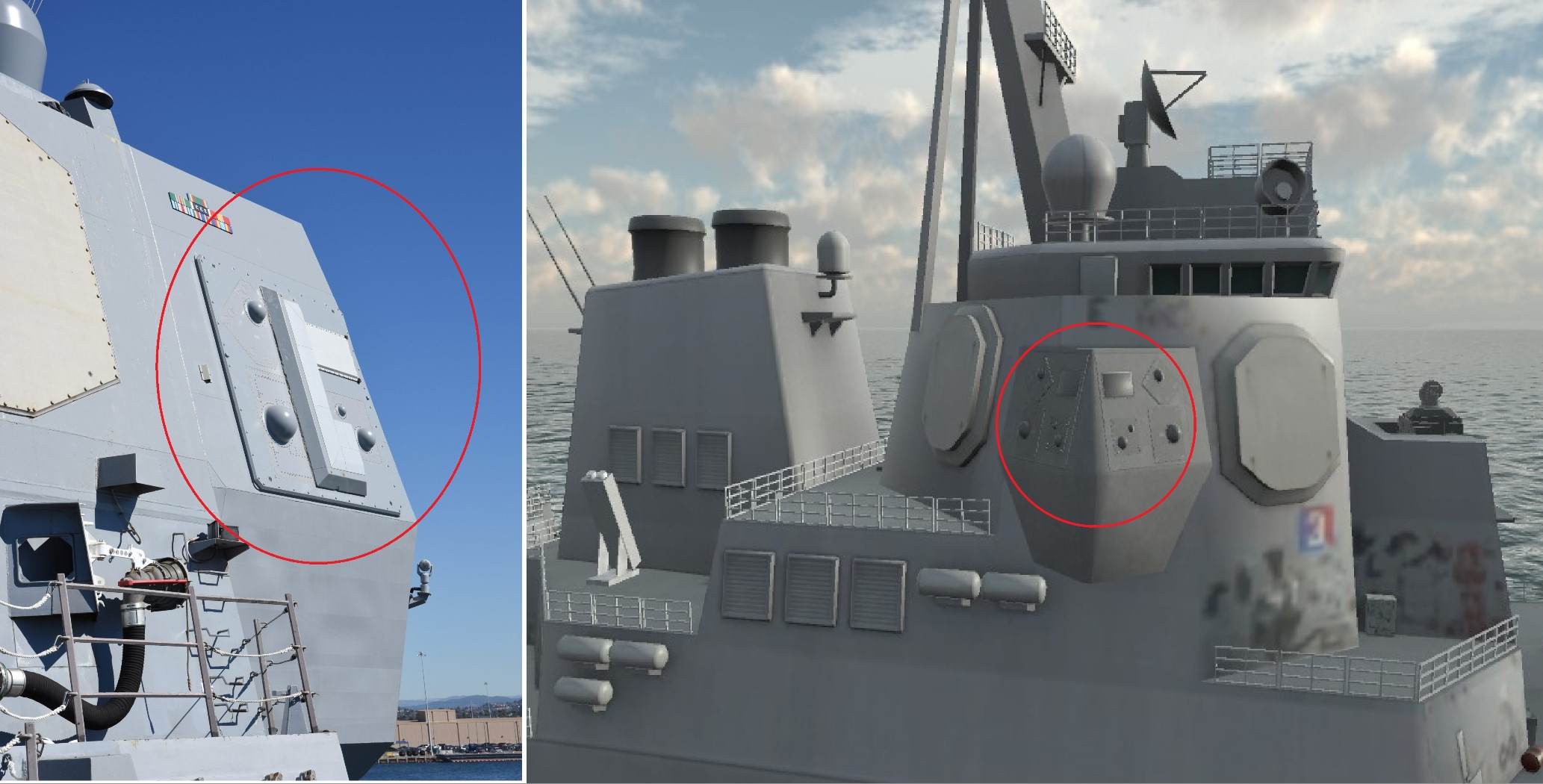
WASHINGTON, June 30, 2026 — The U.S. Navy has awarded Northrop Grumman a $312.34 million firm-fixed-price contract modification to expand production of the Surface Electronic Warfare Improvement Program (SEWIP) Block 3, accelerating deployment of advanced electronic warfare systems across the Navy's surface fleet.
Awarded on June 24, 2026, the contract is managed by the Naval Sea Systems Command and covers additional AN/SLQ-32(V)7 SEWIP Block 3 systems in both Hemisphere and Quadrant configurations for destroyers, aircraft carriers, and amphibious assault ships.
Production will take place across facilities in 15 U.S. states and is scheduled for completion by August 2029. The award is fully funded with fiscal year 2026 shipbuilding and conversion funds.
Production Expansion
The new contract follows a $334.4 million modification awarded in December 2025, increasing Northrop Grumman's production commitment to up to 24 SEWIP Block 3 systems. If all contract options are exercised, the total program value will approach $783 million.
Advanced Electronic Warfare Capability
SEWIP Block 3, designated AN/SLQ-32(V)7, is the latest upgrade of the Navy's long-serving AN/SLQ-32 electronic warfare family, originally developed by Raytheon in the 1970s.
Unlike earlier versions that primarily detected radar threats and alerted crews, SEWIP Block 3 provides an active electronic attack capability. It can jam and deceive an incoming missile's radar guidance, causing it to lose lock on the target before impact.
The system uses 16 Active Electronically Scanned Array (AESA) antennas built with gallium nitride (GaN) transmit/receive modules. Arranged into four quadrants with four antenna faces each, the system provides 360-degree coverage and can engage multiple threats arriving simultaneously from different directions.
Hemisphere and Quadrant Configurations
SEWIP Block 3 is produced in two configurations that use the same core technology but are adapted for different ship classes.
The Hemisphere configuration is designed for Arleigh Burke-class Flight IIA destroyers, using large port and starboard sponsons mounted on the ship's deckhouse to house the antenna arrays.
The Quadrant configuration redistributes the arrays to fit ships with different structural layouts. Under this contract, the Navy is procuring the first Quadrant shipset for a nuclear-powered aircraft carrier, marking the system's expansion beyond destroyers.
Budget documents indicate the system is expected to be installed aboard USS Harry S. Truman (CVN-75) during its Refueling and Complex Overhaul (RCOH) at Newport News Shipbuilding beginning in mid-2026, although the ship assignment has not been officially confirmed.
Soft-Kill Defense Against Missiles
SEWIP Block 3 provides a soft-kill defense by electronically disrupting an incoming missile's guidance system instead of relying solely on interceptor missiles. This helps preserve a ship's limited inventory of kinetic interceptors for threats that cannot be defeated through electronic attack, improving defensive endurance during saturation attacks.
The system also features an open software-defined architecture, allowing the Navy to update jamming techniques and integrate emerging technologies, including artificial intelligence (AI) and machine learning, without major hardware modifications.
An integrated Soft Kill Coordinator automates electronic attack management across the antenna arrays, reducing operator workload during complex engagements involving multiple threats.
Fleet Deployment
The first operational SEWIP Block 3 system entered service aboard USS Pinckney (DDG-91) in 2023. Additional installations have since been completed aboard USS Chung-Hoon (DDG-93) and USS James E. Williams (DDG-95) during DDG Modernization 2.0 upgrades performed by General Dynamics NASSCO.
Northrop Grumman is also developing the Scaled Onboard Electronic Attack (SOEA) system, a smaller variant intended for ships with limited space, weight, and power capacity, extending advanced electronic warfare capabilities across a wider range of surface combatants.
The program is managed by the Program Executive Office Integrated Warfare Systems (PEO IWS) as part of the U.S. Navy's ongoing effort to strengthen electronic warfare and improve protection against modern anti-ship missile threats.
——— End of Article ———