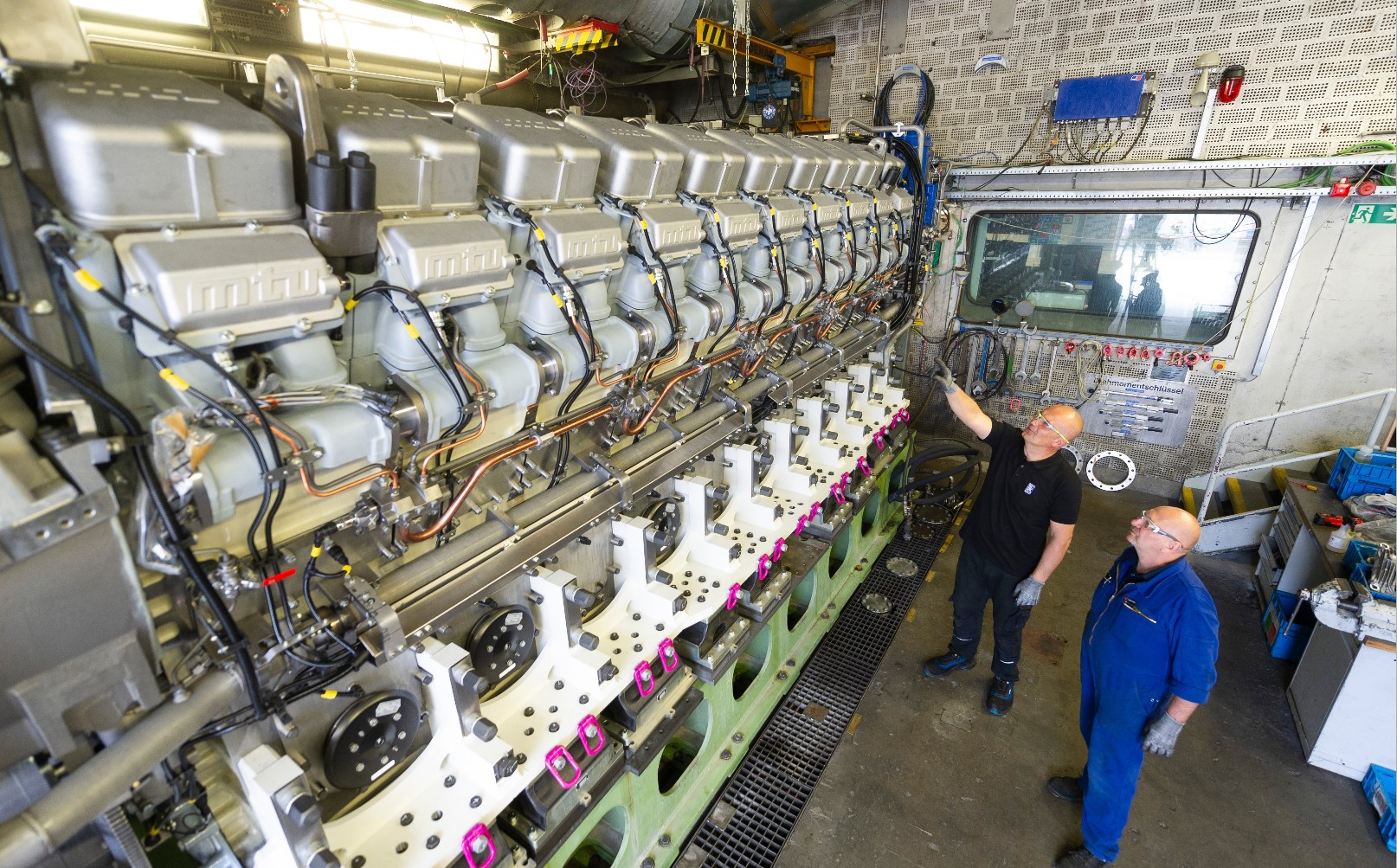
NORFOLK, Va., — June 22, 2026 : The U.S. Navy’s Military Sealift Command (MSC) has awarded a multi-vendor indefinite-delivery/indefinite-quantity (IDIQ) contract worth up to $759 million to provide diesel engine parts, maintenance, repair, and overhaul services for its global fleet of auxiliary and logistics vessels. The five-year agreement will remain in effect through June 3, 2031, supporting the long-term operational readiness of non-combatant ships that sustain naval operations worldwide.
The contract is designed to ensure continuous availability of critical propulsion systems across MSC vessels operating in multiple regions, including the United States, Europe, the Middle East, and the Indo-Pacific.
Selected Contractors
Following a competitive solicitation process that received four proposals, the Navy selected two primary contractors for the multiple-award contract:
Motor-Services Hugo Stamp Inc. (MSHS Pacific Power Group) of Fort Lauderdale, Florida.
Everllence Middle East and Africa LLC, based in Dubai, United Arab Emirates.
Task orders will be issued competitively among the selected vendors using a combination of firm-fixed-price and time-and-materials arrangements. The companies will provide original equipment manufacturer (OEM) parts, technical expertise, inspections, repairs, testing, and major engine overhauls for MSC vessels.
To maintain reliability and comply with manufacturer requirements, only OEM-certified technicians or MSC-approved personnel will be authorized to perform maintenance work on the fleet’s customized diesel propulsion systems.
Supporting the Navy’s Global Logistics Fleet
The Military Sealift Command operates a diverse fleet of non-combatant ships that provide essential logistics and support services to the U.S. Navy. These vessels transport fuel, ammunition, equipment, and supplies while enabling sustained naval operations far from home ports.
The contract will support several key vessel classes, including:
- Fleet Replenishment Oilers (T-AO)
- Dry Cargo and Ammunition Ships (T-AKE)
- Submarine Tenders
- Hospital Ships
- Expeditionary Mobile Bases (ESB)
- Expeditionary Transfer Docks (ESD)
- Large Medium-Speed Roll-on/Roll-off Ships
- Kocak-class Roll-on/Roll-off Container Ships
Services covered under the agreement include engine appraisals, inspections, repairs, overhauls, troubleshooting, testing, technical support, and lifecycle management activities.
Enhancing Operational Readiness
Reliable propulsion systems are critical to the performance of MSC vessels, which serve as the logistical backbone of U.S. naval operations. These ships enable combat fleets to remain deployed for extended periods by delivering fuel, ammunition, spare parts, and other essential supplies.
By ensuring rapid access to maintenance services and replacement components worldwide, the contract aims to reduce downtime and improve fleet availability. The global support structure allows maintenance activities to be conducted wherever MSC ships are deployed, helping sustain operational readiness across multiple theaters.
Multi-Vendor Strategy Reduces Supply Chain Risks
The Navy’s use of a multi-award IDIQ structure reflects a broader Department of Defense approach to long-term sustainment and logistics support. Rather than relying on a single contractor, the arrangement allows the Navy to distribute work among qualified providers based on operational requirements.
This strategy improves flexibility, promotes competition, helps control lifecycle costs, and reduces risks associated with supply chain disruptions or dependence on a single source of support. It also enables the Navy to rapidly procure parts and technical services as maintenance needs emerge.
Industry and Defense Implications
The contract highlights continued demand for maritime sustainment services and advanced logistics support within the defense sector. As naval forces operate across increasingly complex global environments, maintaining reliable support vessels has become a critical element of military readiness.
Companies with established global service networks, certified technical personnel, and experience supporting military fleets are expected to remain well positioned for future sustainment opportunities. The agreement also reinforces the growing importance of lifecycle support contracts as defense organizations seek cost-effective methods to maintain critical assets over extended service lives.
With a ceiling value of $759 million, the contract ensures long-term access to diesel engine expertise, OEM components, and worldwide maintenance capabilities that will support Military Sealift Command operations through 2031.
——— End of Article ———