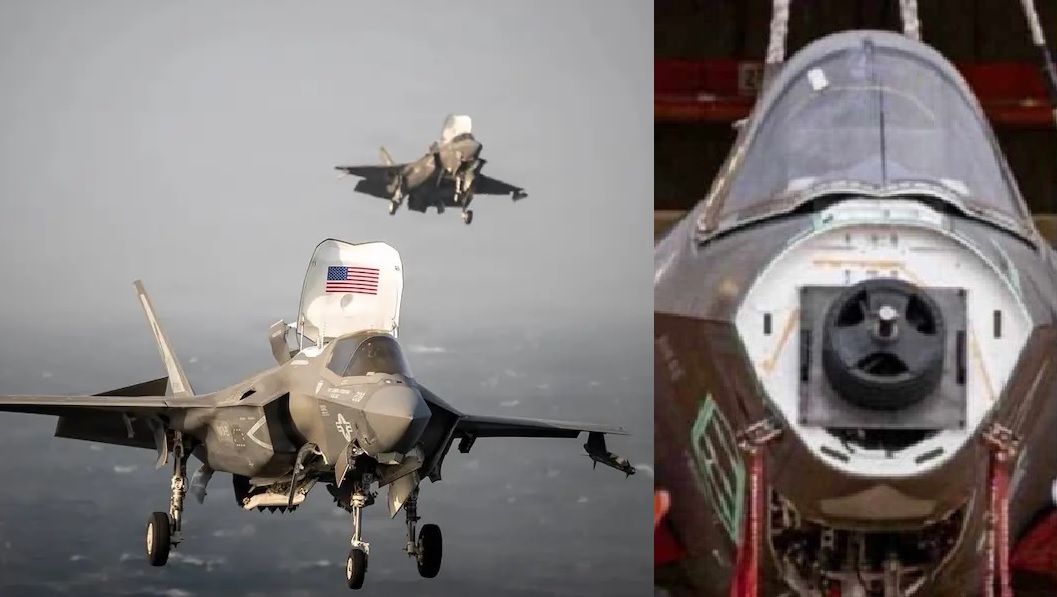
WASHINGTON, June 26, 2026 — The U.S. Marine Corps has accepted delivery of six F-35B Lightning II fighter aircraft without their AN/APG-85 active electronically scanned array (AESA) radars, marking an unusual milestone in the F-35 program as delays to the next-generation radar impact Block 4 modernization.
Instead of radar systems, the aircraft have ballast weights installed inside their nose sections to maintain the proper center of gravity and ensure safe flight operations. The aircraft entered acceptance testing in February 2026 and are currently limited to basic flight training until the radars become available.
The Air Force and Navy are also expected to receive similarly configured aircraft later this year if the radar delivery schedule remains delayed.
APG-85 Integration Creates Production Challenge
The AN/APG-85 radar, developed by Northrop Grumman, is a key element of the F-35 Block 4 modernization program. It is designed to replace the existing AN/APG-81 radar and provide improved performance against modern electronic warfare threats while supporting future mission capabilities.
Beginning with Lot 17 production, Lockheed Martin introduced a redesigned forward bulkhead specifically built to accommodate the APG-85. However, because the U.S. government purchases the radar separately and supplies it to the manufacturer, delays in radar production have resulted in completed airframes being ready before the radar systems are available.
The older AN/APG-81 radar cannot be installed in the new Lot 17 airframes without major structural modifications because of the redesigned mounting arrangement. As an interim solution, ballast weights have been installed until the APG-85 radars are delivered and integrated.
Marine Corps Receives First Aircraft
During a June 23 hearing before the Senate Armed Services Committee's Airland Subcommittee, F-35 Joint Program Office Director Marine Corps Lt. Gen. Gregory Masiello confirmed that the six Marine Corps F-35Bs are the only aircraft delivered without radars so far.
No Air Force or Navy aircraft had been accepted in this configuration as of late June 2026, although both services are expected to receive similar aircraft later this year.
According to the Joint Program Office, the Pentagon adopted a concurrent development and production strategy for the F-35's advanced capabilities, accepting the risk that some aircraft could be completed before certain technologies were ready for installation.
Aircraft Restricted to Basic Training
Without their radar systems, the aircraft cannot conduct combat missions or advanced tactical training. They are currently limited to basic pilot training and routine flight operations until the APG-85 radars are installed.
The Joint Program Office stated that the aircraft will receive the new radar once Northrop Grumman completes deliveries.
Officials noted that similar situations have occurred in previous military aviation programs. During the 1970s, early F-15 Eagle fighters were temporarily delivered during engine shortages, with available engines transferred between aircraft until production stabilized.
Readiness Remains Under Scrutiny
The radar delay comes as the F-35 program continues to face challenges related to readiness and sustainment.
A Government Accountability Office (GAO) report released in June found that only about 25 percent of U.S. F-35 aircraft were fully mission capable during fiscal year 2025. The report also said the fleet's overall mission-capable rate stood at 44.1 percent, below historical targets.
Masiello did not dispute the GAO findings but said the Joint Program Office uses a different methodology, which shows a mission-capable rate of approximately 56 percent. He acknowledged that aircraft delivered without radar systems cannot be classified as fully mission capable.
The global F-35 fleet has now surpassed 1,300 operational aircraft, increasing pressure on maintenance, logistics, and sustainment systems that were originally designed to support a much smaller fleet.
Block 4 Upgrade Faces Power and Cooling Challenges
Beyond the radar delay, the Block 4 modernization program also faces challenges related to power generation and thermal management.
The APG-85 radar and other Block 4 systems require significantly more electrical power and generate more heat than previous equipment. According to Masiello, future F-35 variants will need to support systems requiring between 62 and 80 kilowatts of power, compared with the current aircraft's 32-kilowatt capacity.
Speaking before the subcommittee, Masiello said cooling has become one of the program's primary engineering challenges because the existing system has little remaining capacity for additional equipment.
To address the issue, the Pentagon initially considered developing a new adaptive engine but ended the effort because of cost concerns. Instead, Pratt & Whitney's Engine Core Upgrade (ECU) is expected to enter production around 2031, providing additional cooling capacity while broader power and thermal management improvements are planned for future modernization efforts beyond Block 4.
Modernization Continues
Masiello declined to discuss the detailed capabilities of the APG-85 radar during the public hearing, stating that additional information was provided in a classified session.
While the temporary absence of radar systems limits the operational use of the affected aircraft, the F-35 program continues production as the Pentagon works to complete Block 4 modernization. Once APG-85 radar deliveries resume, the six Marine Corps aircraft—and future aircraft delivered in the same configuration—will receive the new radar and transition to full operational capability.
——— End of Article ———