WASHINGTON, D.C., June 25, 2026 — The U.S. government has awarded Lockheed Martin a seven-year undefinitized contract action (UCA) valued at up to $35 billion to significantly expand production of Terminal High Altitude Area Defense (THAAD) interceptors. The contract is designed to rapidly replenish U.S. missile inventories, strengthen the defense industrial base, and accelerate deliveries to the United States and allied nations.
The agreement marks one of the largest missile defense production contracts awarded in recent years and represents one of the first major multiyear procurement programs implemented under the Department of War's Acquisition Transformation Strategy. The contract transitions the framework agreement signed between the department and Lockheed Martin in January 2026 into full contract execution.
Under the agreement, Lockheed Martin will increase annual THAAD interceptor production from approximately 96 interceptors to 400 interceptors per year, more than quadrupling current manufacturing capacity over the seven-year contract period, which runs from March 2026 through June 2032.
Department officials said the multiyear procurement approach provides industry with a predictable long-term demand signal, allowing contractors to invest in manufacturing capacity, workforce expansion, and supply chain improvements while reducing production risks associated with short-term contracts.
Expanding Manufacturing Capacity
To support the increased production target, Lockheed Martin is continuing a broader $9 billion investment plan through 2030 aimed at expanding missile manufacturing across the United States.
According to the company, the investment program has already resulted in more than 20 newly built or modernized facilities supporting missile and munitions production.
Recent milestones include:
- Construction of a new Munitions Production Center (Building 47) in Troy, Alabama, adding approximately 87,000 square feet of production space for THAAD interceptors and future Next Generation Interceptor (NGI) work while nearly doubling the site's manufacturing area.
- Opening of the Next Generation Interceptor facility in Courtland, Alabama.
- Launch of the Munitions Acceleration Center in Camden, Arkansas, which will train and prepare workers to manufacture THAAD interceptors and other advanced missile defense systems.
The company is also expanding its workforce across engineering, manufacturing, and skilled trades, with investments expected to support tens of thousands of American jobs over the coming years.
In parallel, Lockheed Martin is working closely with suppliers to improve supply chain resilience by expanding production capacity, qualifying additional sources for critical components, and reducing manufacturing bottlenecks.
Supporting that effort, the Pentagon recently awarded L3Harris a separate $400 million contract to manufacture additional solid rocket boost motors for the THAAD system.
THAAD's Role in Missile Defense
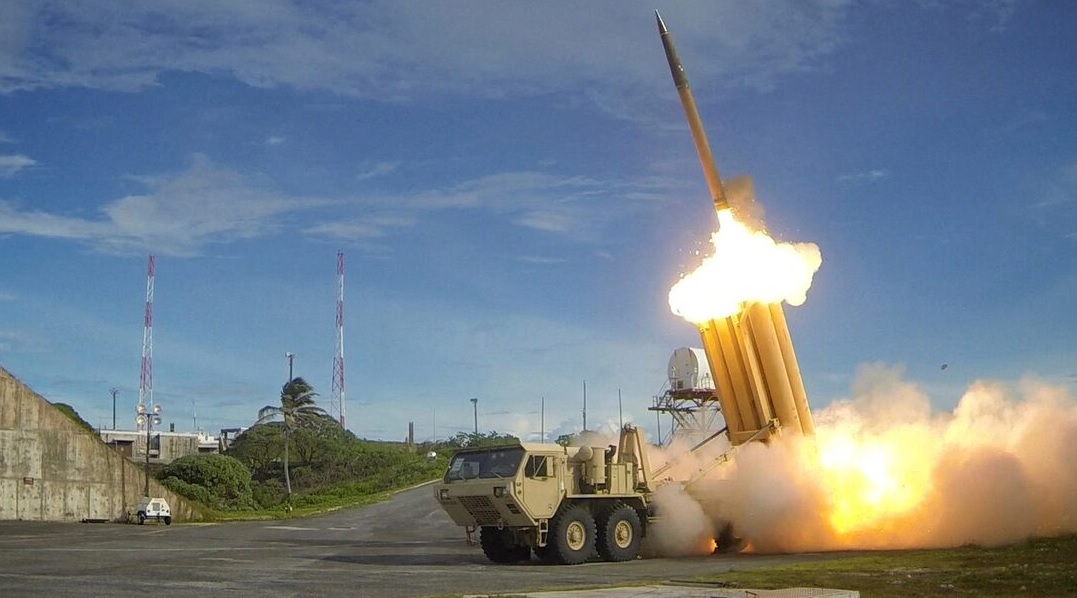
THAAD is a ground-based missile defense system designed to intercept and destroy short-, medium-, and intermediate-range ballistic missiles during the terminal phase of flight, both inside and outside Earth's atmosphere.
Unlike traditional missile interceptors that rely on explosive warheads, THAAD uses hit-to-kill technology, destroying incoming missiles through direct kinetic impact.
A standard THAAD battery consists of approximately 90 soldiers, six truck-mounted launchers, 48 interceptors, an AN/TPY-2 radar, and associated fire control and communications equipment. The system provides an upper-layer missile defense capability and complements lower-tier systems such as the Patriot air and missile defense system.
THAAD has undergone numerous successful flight tests and has been deployed operationally to support U.S. and allied missile defense missions.
Production Increase Driven by Operational Demand
The expansion in production follows extensive operational use of THAAD interceptors during recent military operations, particularly Operation Epic Fury, which placed significant demand on U.S. missile defense inventories.
According to estimates published by the Center for Strategic and International Studies (CSIS), the U.S. military has expended roughly half of its Patriot and THAAD interceptor stockpiles since operations began in February.
The report estimates that approximately 190 to 290 THAAD interceptors have been launched to defend U.S. forces and critical infrastructure against evolving ballistic missile threats, representing an estimated replacement cost of between $2.3 billion and $3.5 billion.
The increased production is intended to replenish those inventories while ensuring continued support for U.S. military requirements and foreign military sales to allied nations.
Part of a Broader Missile Production Strategy
The THAAD contract forms part of a wider Department of War initiative to expand production of key missile systems through multiyear procurement agreements.
Lockheed Martin was the first defense contractor to announce a framework agreement under the department's munitions acceleration strategy. Similar agreements also cover the PAC-3 Missile Segment Enhancement (PAC-3 MSE) interceptor and the Precision Strike Missile (PrSM) program.
In April 2026, the company received a separate $4.7 billion contract to accelerate production of the PAC-3 MSE interceptor, further expanding U.S. missile manufacturing capacity.
Officials say the combination of long-term procurement contracts, industrial investments, facility modernization, workforce expansion, and strengthened supplier networks is intended to ensure the United States can sustain higher production rates for critical missile defense systems while meeting future operational requirements.
——— End of Article ———