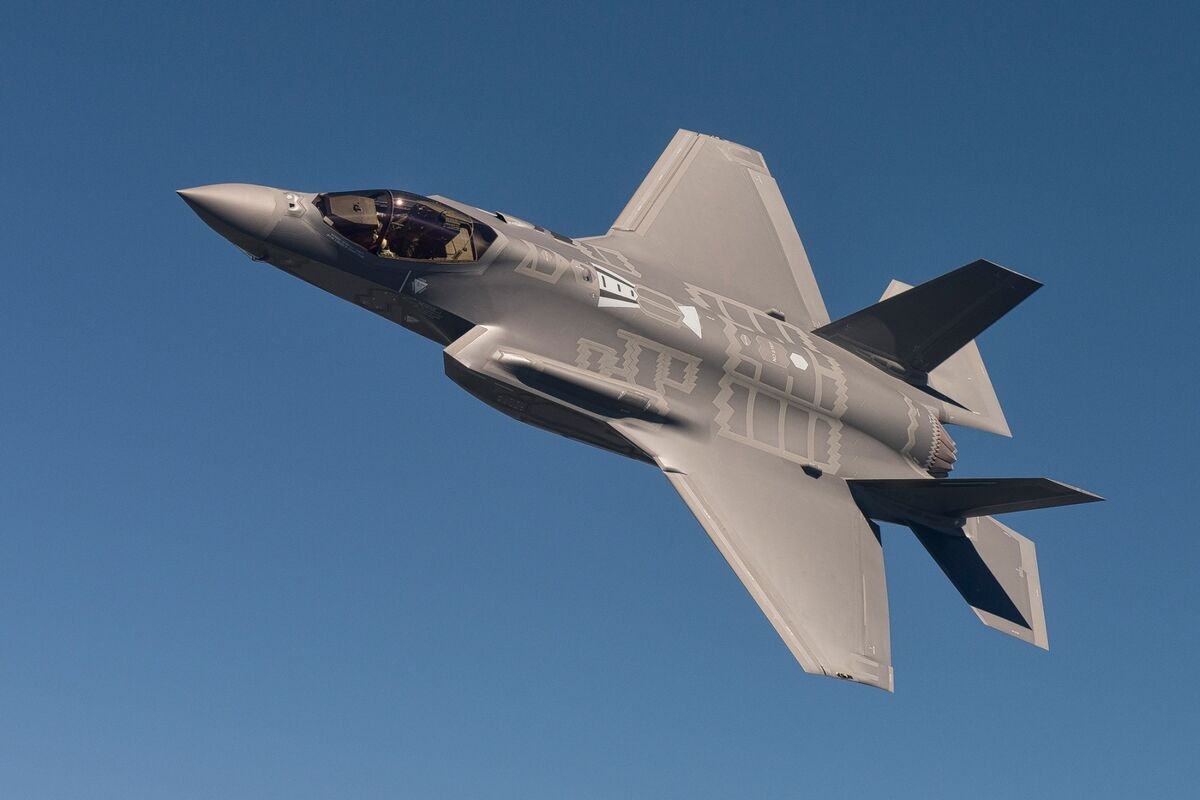
WASHINGTON, June 28, 2026 — The U.S. Department of Defense has awarded Lockheed Martin a $74.2 million contract modification to integrate sovereign weapons systems into the F-35 Lightning II fleets operated by the United Kingdom and Italy, expanding the combat capabilities of two key NATO allies under the aircraft's ongoing Block 4 modernization program.
The contract, announced on June 26, 2026, supports the integration of nationally selected weapons from the system functional review phase through development and flight testing. Rather than procuring additional aircraft, the agreement focuses on software-driven modernization, enabling existing and future F-35s to employ domestically selected precision-guided munitions while maintaining full interoperability within NATO operations.
The work includes systems engineering, software development, avionics integration, weapons certification, flight testing, and aerodynamic separation trials required to validate new weapons on the aircraft. These upgrades are intended to provide greater operational flexibility while allowing partner nations to retain their preferred national weapons inventories.
The modernization effort forms part of the broader Block 4 upgrade program, which introduces a significant expansion of the F-35's combat capabilities through new sensors, electronic warfare functions, networking improvements, and support for a wider range of precision-guided weapons. These enhancements are made possible by the Technical Refresh 3 (TR-3) hardware architecture, which provides substantially greater computing power, expanded memory, and improved data processing capacity.
For the United Kingdom, the contract supports the Royal Air Force and Royal Navy, both of which operate the short takeoff and vertical landing (STOVL) F-35B variant from land bases and the Queen Elizabeth-class aircraft carriers. Although the Department of Defense did not identify the specific weapons covered under this contract modification, the United Kingdom's established Block 4 roadmap includes integration of the MBDA SPEAR 3 network-enabled precision strike missile and the Meteor beyond-visual-range air-to-air missile.
Once integrated, these sovereign weapons are expected to improve the ability of British F-35s to engage heavily defended ground targets and advanced airborne threats while preserving the aircraft's low observable characteristics by carrying weapons internally.
Italy will receive similar integration work across its fleet of F-35A conventional takeoff and landing fighters and F-35B STOVL aircraft, providing greater flexibility in selecting weapons tailored to national operational requirements.
Italy also continues to play a major industrial role in the multinational Joint Strike Fighter program through the Final Assembly and Check-Out (FACO) facility at Cameri, Novara. The site assembles F-35 aircraft for several European operators and serves as the regional Maintenance, Repair, Overhaul and Upgrade (MRO&U) center, making it a key element of the aircraft's long-term sustainment infrastructure across Europe.
In addition to sovereign weapons integration, the contract includes the installation of a common tactical data recorder across all three F-35 variants—the F-35A, F-35B, and F-35C. The upgraded recorder will capture comprehensive mission data, including aircraft performance, sensor activity, electronic warfare events, weapons employment, and pilot inputs.
The information collected will support post-mission debriefings, operational analysis, software verification, and the refinement of future combat tactics. It will also provide valuable data for validating future Block 4 software releases and accelerating capability upgrades across the international F-35 fleet.
The sovereign weapons integration initiative provides several operational advantages for partner nations. By allowing the United Kingdom and Italy to field domestically selected munitions while maintaining compatibility with NATO combat operations, the program improves mission planning flexibility, reduces reliance on shared U.S. weapons inventories, and strengthens supply chain resilience during sustained military operations.
The multinational structure of the Joint Strike Fighter program enables participating nations to share investment in the aircraft's common software architecture while incorporating national capabilities that meet their individual defense requirements. This approach helps control development costs while ensuring standardized coalition operations among F-35 operators.
According to the Department of Defense, contract work will be performed primarily in Samlesbury, United Kingdom, Fort Worth, Texas, and other F-35 program locations responsible for software engineering, systems integration, and developmental testing.
Although the $74.2 million contract represents a relatively small investment compared with large-scale F-35 production agreements, it marks another step in the aircraft's transition toward a software-defined combat platform. As Block 4 modernization continues, software upgrades, enhanced computing architecture, and sovereign weapons integration are expected to expand the operational capabilities of the F-35 while ensuring the aircraft remains effective against evolving air and missile threats for decades to come.
——— End of Article ———