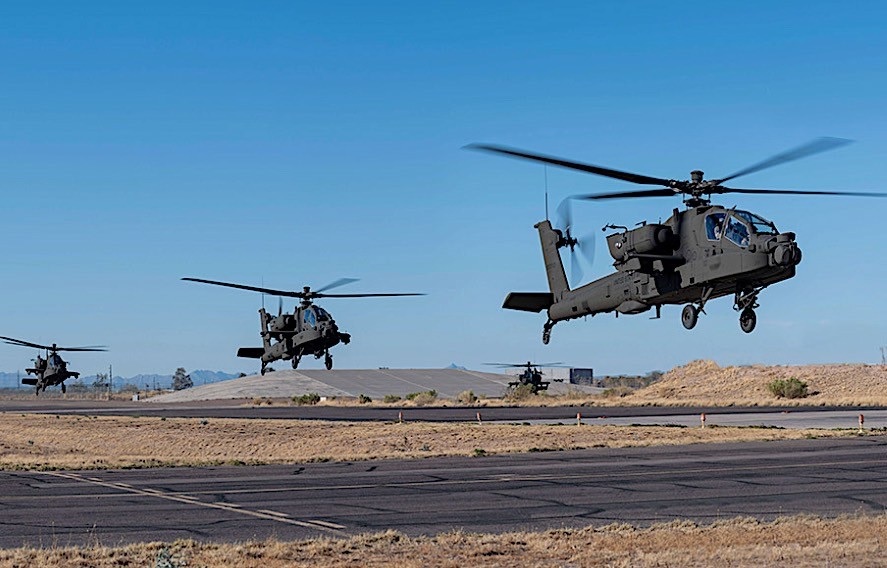
FORT NOVOSEL, Ala., June 30, 2026 — The U.S. Army and Boeing have successfully completed a 12-month operational maintenance exercise demonstrating that a diagnostic system originally developed for ground combat vehicles can significantly improve maintenance efficiency for the AH-64E Apache attack helicopter. The initiative showed that advanced diagnostics performed directly on the flightline can reduce repair time, improve aircraft readiness, ease supply chain demands, and lower sustainment costs.
The exercise introduced the first-ever Aviation Test Program Set on the Next Generation Automatic Test System (NGATS) Pathfinder, expanding the system's capabilities beyond ground combat vehicles and into Army aviation maintenance.
Expanding NGATS from Ground Vehicles to Aviation
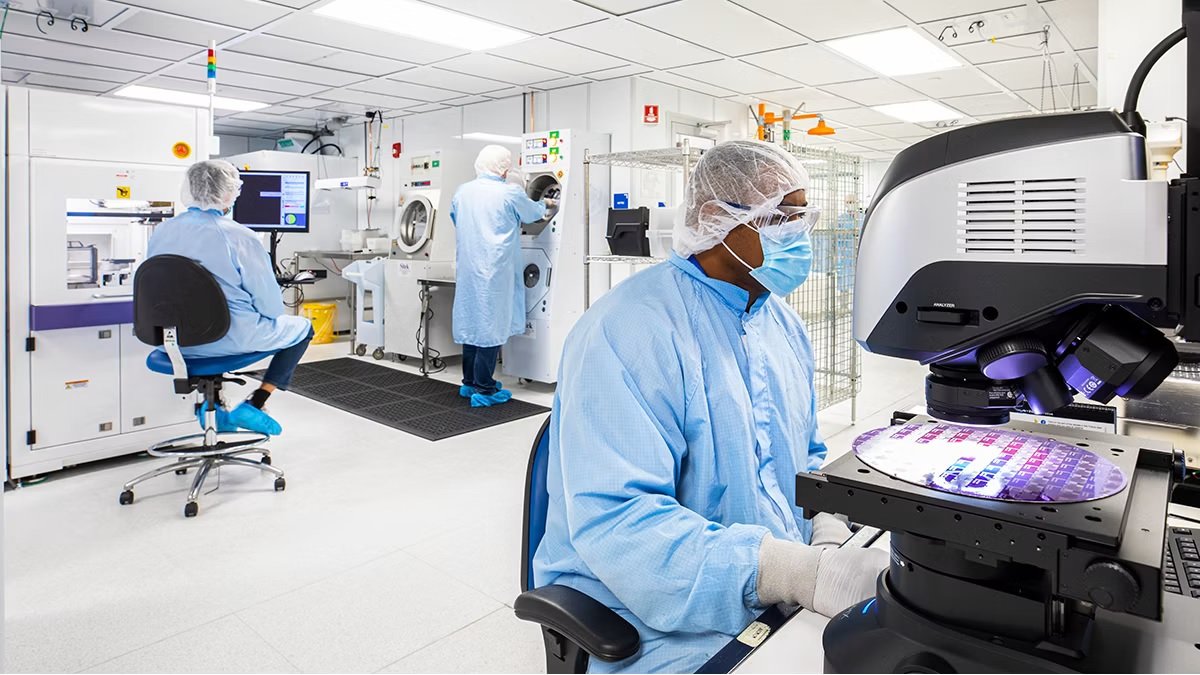
The NGATS Pathfinder is a mobile, modular diagnostic platform used by the U.S. Army to identify faults in electronic line-replaceable units. It has previously supported maintenance for major ground combat platforms, including the M1 Abrams main battle tank, Bradley Fighting Vehicle, and Stryker combat vehicle.
Boeing Global Services upgraded NGATS last year by developing its first Aviation Test Program Set, allowing maintainers to perform advanced diagnostics on Army aircraft. The objective was to bring diagnostic capability directly to the point of maintenance, enabling technicians to identify faults without sending components to centralized repair facilities whenever possible.
Focus on the Apache Aircraft Interface Unit
The operational exercise was conducted at the U.S. Army Aviation Center of Excellence at Fort Novosel, where Army sustainment personnel worked alongside Boeing and onsite maintenance partner M1 to evaluate new fault diagnostic procedures for the Apache's Aircraft Interface Unit (AIU).
The AIU is a key electronic component that enables communication between the helicopter's avionics and mission systems. During the exercise, maintainers used the NGATS Pathfinder to diagnose AIU-related issues directly on the flightline rather than removing the unit for depot-level testing.
More Than $1 Million in Cost Avoidance
The maintenance exercise generated more than $1 million in cost avoidance on the Aircraft Interface Unit alone, exceeding initial projections of several hundred thousand dollars.
The savings were primarily achieved by quickly confirming "no fault found" conditions at the point of maintenance. Previously, components suspected of malfunctioning were routinely removed from aircraft and shipped to centralized Army depots for additional testing. In many cases, testing later confirmed that the components were fully functional, resulting in unnecessary transportation, repair processing, and maintenance delays.
By performing diagnostics on the flightline, Army maintainers were able to immediately return serviceable components to operation while replacing only those that required repair. This approach reduced unnecessary logistics activity, eased pressure on the global supply chain, and shortened aircraft downtime.
Improving Readiness Through Field-Level Diagnostics
Conducting diagnostics closer to the aircraft allows maintenance personnel to isolate faults more quickly, reduce unnecessary component replacements, improve aircraft readiness, and lower long-term sustainment costs by reducing repair turnaround times and improving maintenance efficiency.
Fort Novosel Provides an Ideal Test Environment
The maintenance exercise was carried out at the U.S. Army Aviation Center of Excellence, which operates an aircraft fleet equivalent to five combat aviation brigades and conducts approximately 40% of the Army's total aviation flight hours. Its high operational tempo provided an effective environment for evaluating the new maintenance procedures under operational conditions.
The Army expects the maintenance improvements validated at Fort Novosel to be expanded across the wider Army aviation fleet to improve readiness and field-level repair capabilities.
Expansion Planned for Other Army Platforms
Following the successful Apache demonstration, Boeing and the Army plan to expand NGATS aviation capabilities to additional platforms.
Future Aviation Test Program Sets are expected to support the UH-60 Black Hawk utility helicopter and the CH-47 Chinook heavy-lift helicopter. Boeing also plans to extend the technology to unmanned aircraft systems (UAS) and Army watercraft, creating a common diagnostic framework across multiple operational domains.
The expanded use of NGATS is expected to further improve maintenance efficiency, reduce sustainment costs, and increase operational readiness across a broader range of Army platforms.
Supporting Long-Term Sustainment Efficiency
The successful completion of the 12-month exercise demonstrates how adapting an existing diagnostic system from ground combat vehicles to aviation can improve maintenance without requiring entirely new infrastructure.
By enabling faster fault isolation, reducing unnecessary depot-level testing, lowering logistics requirements, and improving aircraft availability, the U.S. Army and Boeing aim to strengthen sustainment performance and reduce operational costs across multiple military platforms.
——— End of Article ———