GRAND PRAIRIE, Texas, July 2, 2026 — Lockheed Martin has been awarded a $347.5 million cost-plus-incentive-fee contract by the United States Army to develop, fabricate, and test improvements to prototype air and missile defense systems.
The contract, announced by the Pentagon on July 1 and managed by the Army Contracting Command at Redstone Arsenal, provides an open-ended framework under which individual task orders will determine specific work locations and funding. The project is scheduled for completion by December 31, 2028.
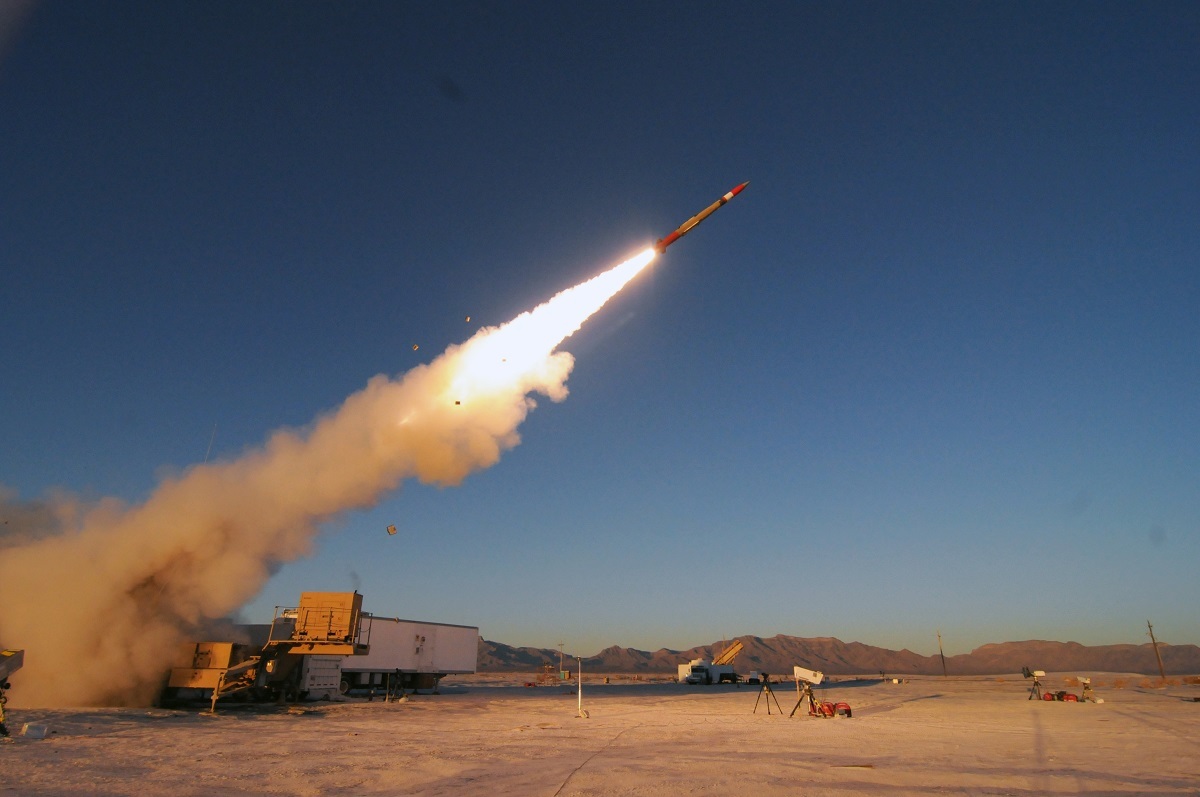
The Pentagon's announcement does not identify a specific interceptor, missile, radar, or air defense system that will receive upgrades. Instead, the agreement is structured to support a range of related prototype technologies, allowing the Army to issue task orders as operational requirements and funding priorities evolve.
The contract was awarded after bids were solicited through an online competition, with Lockheed Martin submitting the only proposal. Single-bid awards are not unusual in advanced missile defense programs because only a limited number of companies possess the required security clearances, specialized testing infrastructure, and technical expertise needed to develop and evaluate complex air and missile defense systems.
Rapid Prototyping Approach
The flexible structure of the agreement aligns with the Pentagon's rapid prototyping model, which is designed to accelerate the development of emerging defense technologies. Rather than committing to detailed technical requirements at the beginning of a program, the Army can issue individual task orders for separate prototype projects as new operational needs arise.
Such efforts commonly use the Pentagon's Middle-Tier Acquisition authority, established by the U.S. Congress in 2016. The acquisition pathway is intended to shorten development timelines by allowing prototype systems to move from concept to demonstration more quickly than under traditional defense procurement processes.
Redstone Arsenal's Role
Redstone Arsenal remains the U.S. Army's principal center for missile procurement and is home to the Program Executive Office for Missiles and Space. During fiscal year 2025, the Army Contracting Command at Redstone oversaw approximately $34 billion in contract awards across multiple defense programs.
The new prototype agreement adds to a series of major contracts recently awarded to Lockheed Martin through Redstone Arsenal, reflecting continued investment in air and missile defense capabilities.
Among the largest recent awards are:
- A contract worth up to $35 billion to expand production of the Terminal High Altitude Area Defense (THAAD) interceptor system.
- A $9.8 billion multi-year contract covering 1,970 Patriot Advanced Capability-3 Missile Segment Enhancement (PAC-3 MSE) interceptors.
- A $3 billion fixed-price-incentive contract for production of the Sentinel A4 air surveillance radar.
- An $8.4 billion contract modification to increase procurement and production capacity for Precision Strike Missile (PrSM) Increment One systems.
These programs support the Army's efforts to strengthen missile defense, long-range precision strike, and battlefield surveillance capabilities.
Broader Missile Defense Modernization
The latest contract comes as the United States continues investing in layered missile defense capabilities, including the Trump administration's proposed Golden Dome initiative. The program aims to establish a nationwide defensive architecture capable of detecting and intercepting ballistic, hypersonic, and cruise missile threats.
Congress allocated $13.4 billion for related activities in the fiscal year 2026 defense appropriations legislation, adding to funding approved in previous years.
The Missile Defense Agency also continues to manage prototype development through its SHIELD contracting vehicle, which had qualified more than 2,440 companies to compete for future task orders as of early 2026.
Separately, the United States Space Force selected Lockheed Martin as one of twelve companies eligible to compete for prototype agreements valued at up to $3.2 billion to develop concepts for space-based interceptors designed to counter missile threats traveling at speeds exceeding Mach 20.
——— End of Article ———