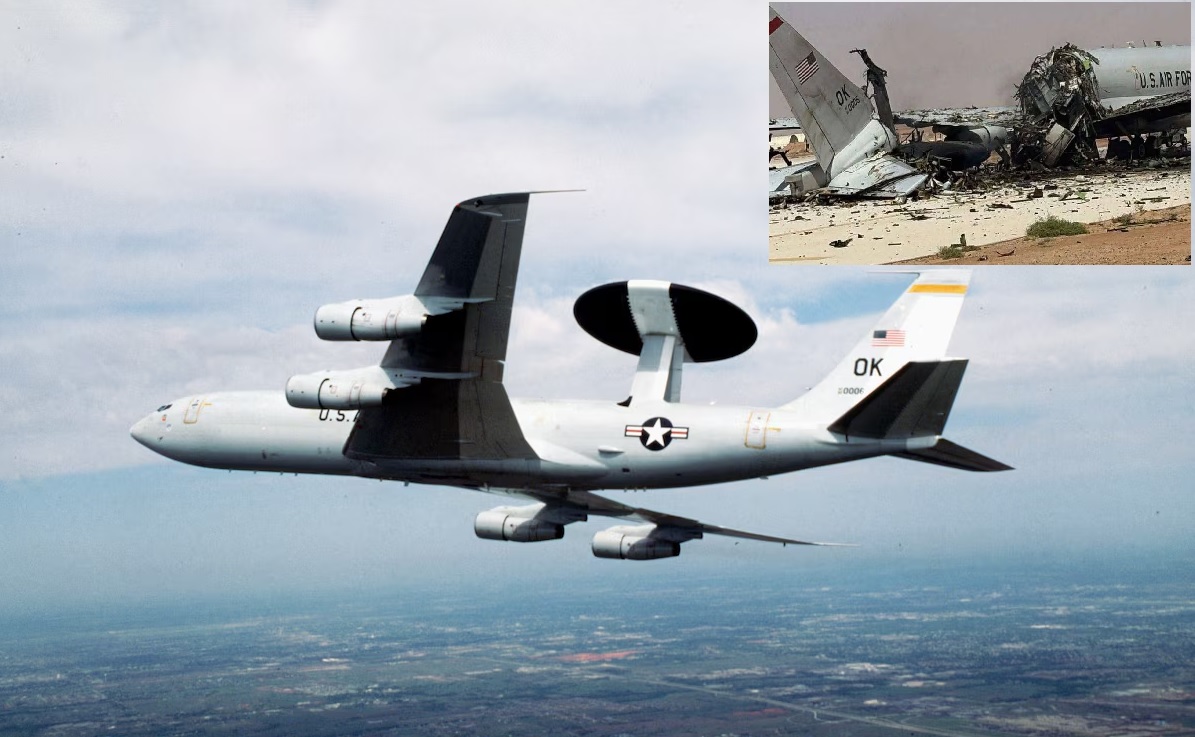
RIYADH, Saudi Arabia — March 31, 2026 : The United States Air Force is deploying a replacement E-3G Sentry Airborne Warning and Control System (AWACS) aircraft to Prince Sultan Air Base in Saudi Arabia following the destruction of a previously stationed aircraft during a missile and drone strike on March 27. The incoming aircraft is expected to arrive on Friday, April 3, restoring a critical component of U.S. airborne command and control capabilities in the region.
The replacement will take over for E-3G tail number 81-0005, which was assigned to the 552nd Air Control Wing based at Tinker Air Force Base, Oklahoma. The aircraft was destroyed in an attack conducted by Iran’s Islamic Revolutionary Guard Corps (IRGC) Aerospace Force as part of a coordinated strike targeting the base, a key logistics and operational hub supporting U.S. Central Command activities.
Details of the March 27 Strike
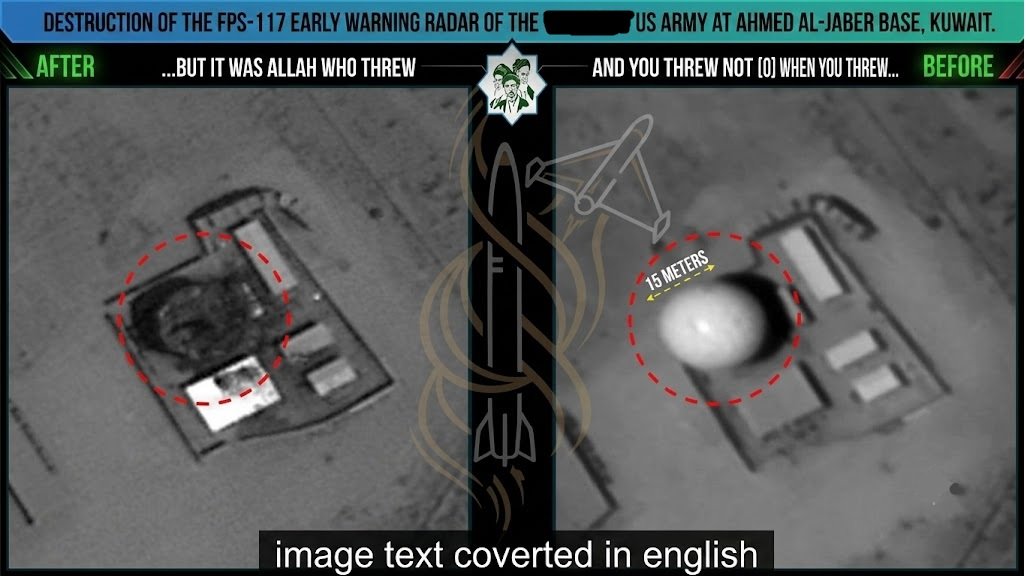
According to defense reports and verified open-source imagery, the March 27 attack involved a combination of ballistic missiles and unmanned aerial systems. The strike directly impacted Prince Sultan Air Base, resulting in the total loss of the E-3G Sentry (serial number 81-0005). Visual evidence indicates the aircraft suffered catastrophic structural damage, including a split fuselage and the detachment of its radar dome, rendering it beyond repair.
In addition to the AWACS platform, several aerial refueling tanker aircraft positioned on the flight line sustained damage. Defense analysts have also indicated possible damage to two electronic warfare aircraft located within the base perimeter.
The attack resulted in injuries to more than 10 U.S. service members, with two personnel reported to be in serious condition. The incident marks one of the most significant direct strikes on U.S. airborne command assets in the region in recent years.
Operational Impact and Replacement Deployment
Prior to the attack, Prince Sultan Air Base hosted six E-3 aircraft as part of its forward-deployed surveillance and battle management structure. Across the broader U.S. Air Force inventory, only approximately 16 to 17 E-3 aircraft remain operational, with a limited number available for immediate deployment due to maintenance cycles and platform age.
The loss of a single E-3G created an immediate gap in airborne surveillance and command coverage, reducing the ability to coordinate air operations and monitor regional airspace. The rapid deployment of a replacement aircraft is intended to restore these capabilities and maintain operational continuity.
The AWACS platform plays a central role in supporting Operation Epic Fury, the ongoing U.S.-designated regional mission. Without an operational E-3, commanders must rely on alternative systems that provide reduced coverage and coordination capacity.
Capabilities of the E-3G Sentry
The E-3G Sentry represents the latest Block 40/45 configuration of the Boeing E-3 platform, which is based on the Boeing 707-320B airframe. The aircraft is equipped with a 30-foot rotating radar dome mounted above the fuselage, providing continuous 360-degree surveillance coverage.
Its radar and identification friend-or-foe (IFF) systems enable detection, identification, and tracking of airborne targets at ranges exceeding 250 miles (approximately 400 kilometers). This includes low-altitude aircraft and cruise missiles that may evade ground-based radar due to terrain limitations or the curvature of the Earth.
The platform is capable of simultaneously tracking more than 600 targets while managing air battle operations in real time. It provides situational awareness across an operational area exceeding 120,000 square miles, relaying data directly to joint air operations centers, naval assets, and ground forces.
The E-3G also performs airspace deconfliction, assigns targeting data, directs interceptor aircraft, and supports coordinated air-to-ground missions. It operates in all weather conditions and integrates with network-centric warfare systems, making it a key enabler for joint and coalition operations.
Strategic Role of Prince Sultan Air Base
Prince Sultan Air Base remains a central node for U.S. military operations within the U.S. Central Command area of responsibility. The installation supports logistics, surveillance, and combat coordination functions across multiple theaters in the Middle East.
The presence of high-value enabler aircraft such as the E-3G AWACS is critical to maintaining continuous airspace monitoring, early warning of missile threats, and coordinated defensive and offensive air operations.
The March 27 strike forms part of a broader pattern of retaliatory actions targeting U.S. military infrastructure and airborne assets in the region. The replacement deployment is intended to stabilize operational capabilities at the base and ensure continuity in surveillance and command functions.
Fleet Constraints and Future Transition
The E-3 fleet, originally introduced in the late 1970s, is operating under increasing strain due to aging airframes and limited numbers. The reduction in available aircraft has heightened the operational impact of any single loss, particularly in high-demand theaters such as the Middle East.
The U.S. Air Force is in the early stages of transitioning to the E-7A Wedgetail as a next-generation airborne early warning platform. However, the program remains in development, with initial deliveries not expected before 2028.
Until then, the E-3G Sentry will continue to serve as the primary airborne command and control platform. The arrival of the replacement aircraft at Prince Sultan Air Base is expected to restore full AWACS coverage and support ongoing U.S. and coalition operations in the region.
——— End of Article ———