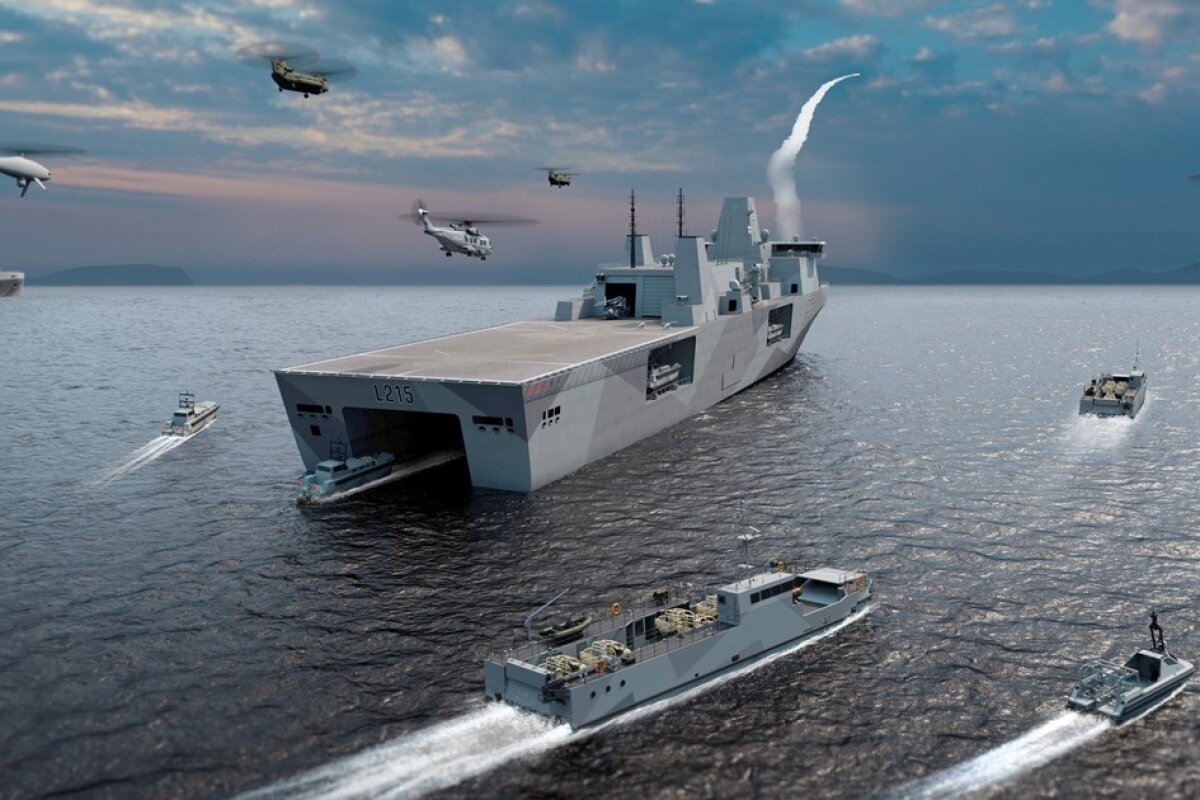
LONDON, June 30, 2026 — The United Kingdom Ministry of Defence (MoD) has announced a £500 million investment to modernize the Royal Marines' Commando Force and restore the country's amphibious assault capabilities through new equipment, autonomous systems, and a future fleet of amphibious transport ships developed in cooperation with the Netherlands.
The investment forms part of a refreshed Defence Investment Plan led by newly appointed Defence Secretary Dan Jarvis, who took office in early June 2026. During his first weeks in office, Jarvis reviewed the defence budget and redirected funding toward rapidly equipping frontline forces ahead of the upcoming NATO Summit.
The programme is designed to transform the Royal Marines into the Future Commando Force, a highly agile and rapidly deployable force focused on operations in the High North and the Arctic, where the UK has identified increasing Russian military activity as a growing security concern.
Investment to Equip the Future Commando Force
The £500 million package will strengthen the Royal Marines with new maritime platforms, advanced unmanned systems, and precision strike capabilities.
A key element of the programme is the procurement of High-Speed Joint Commando Craft (JCC), specialized insertion vessels designed for rapid troop transport, covert maritime operations, coastal insertions, and maritime security missions, including the interception of illicit or sanctioned vessels. The Ministry of Defence cited the Royal Marines' seizure of the Russian shadow fleet tanker Smyrtos in the English Channel as an example of the type of mission these vessels are intended to support.
Nearly £100 million has also been allocated for next-generation technologies, including uncrewed surface vessels (USVs), networked targeting systems, and lethal strike drones to improve operational awareness and precision engagement.
Defence Secretary Dan Jarvis said the investment would ensure the Commandos receive the equipment required for future operations.
"We're investing in new lethal strike drones, high-speed boats and amphibious transport ships to give our Commandos the equipment they need to stay ahead of adversaries and defend us," Jarvis said.
Joint Amphibious Fleet with the Netherlands
A central part of the modernization programme is the development of a new class of larger amphibious transport ships that will operate as part of a combined fleet with the Royal Netherlands Navy.
The United Kingdom and the Netherlands have cooperated through the UK/NL Amphibious Force for more than 50 years. In 2023, both countries signed a memorandum of understanding to explore a common amphibious ship design. Although the proposal for an identical ship was abandoned in 2024 due to different operational requirements and budget constraints, both nations agreed to pursue interoperability.
Under the new approach, their future amphibious ships will incorporate shared subsystems—including standardized landing craft, dock gates, crane systems, and power plants—allowing both navies to operate seamlessly from each other's vessels during joint operations. According to the Ministry of Defence, the ships will form the foundation of a combined amphibious fleet supporting multinational and NATO missions.
Restoring Amphibious Capability
The investment follows the decommissioning of the Royal Navy's dock landing ships HMS Albion and HMS Bulwark in late 2024 because of cost-saving measures and persistent personnel shortages, leaving the service without dedicated amphibious assault ships.
Rather than being scrapped, both vessels were sold to Brazil following a Statement of Intent signed during the LAAD Defence & Security Expo in April 2025. HMS Bulwark is currently completing its final refit in Plymouth before entering Brazilian Navy service in mid-2026 under the name Oiapoque, where it is expected to remain in service for around 20 years.
Until the new UK-Netherlands amphibious transport ships enter service, the Royal Navy will continue relying on its Bay-class auxiliary landing ships to support Royal Marine deployments.
Supporting Future NATO Operations
The investment is intended to maintain the UK's amphibious capability during the transition period by combining existing naval assets with autonomous systems, strike drones, and high-speed insertion craft.
The Future Commando Force concept emphasizes lighter, faster, and more technologically advanced expeditionary operations. The planned amphibious transport ships will provide platforms for deploying commandos alongside landing craft, unmanned systems, and other mission equipment while strengthening defence cooperation between the United Kingdom and the Netherlands and supporting NATO operations in the Arctic, High North, and other strategic regions.
——— End of Article ———