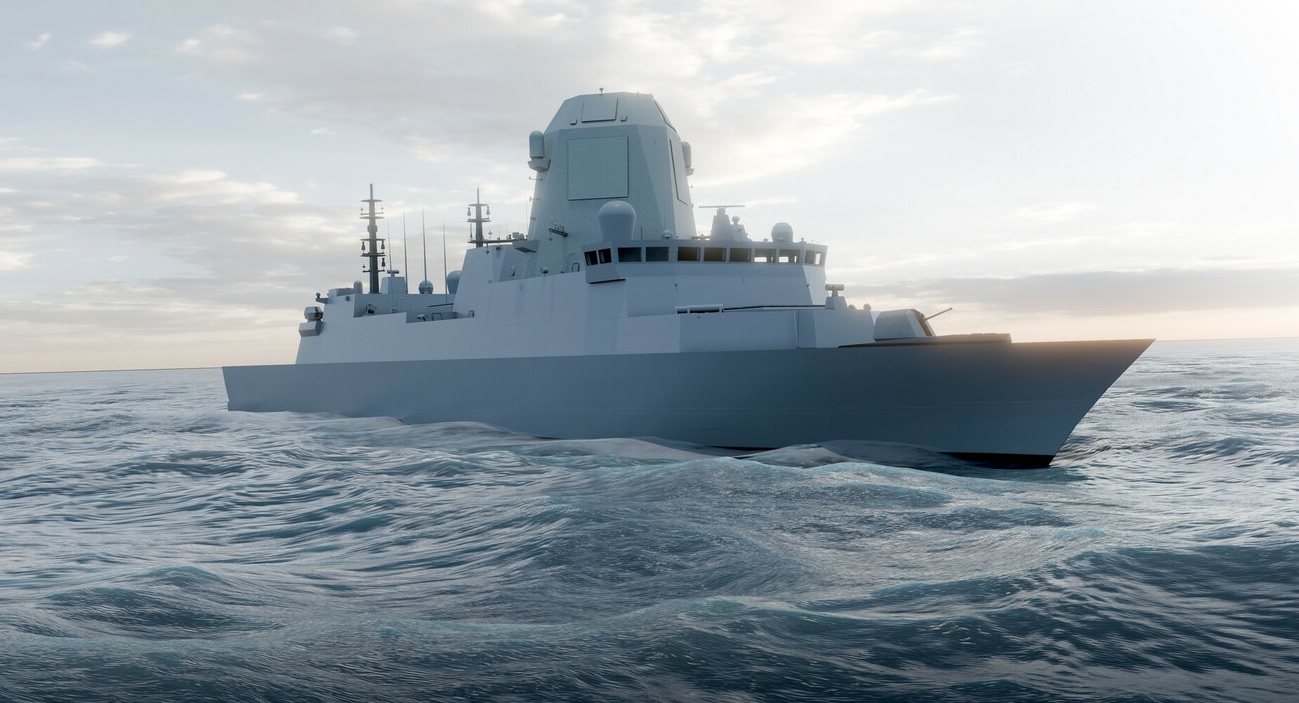
LONDON, June 29, 2026 — The British government has officially cancelled the Royal Navy's Type 83 destroyer programme, ending development of the next-generation warship that was intended to replace the fleet's six Type 45 destroyers. The decision, announced in the latest Defence Investment Plan, marks a major change in the UK's naval modernization strategy, with future investment shifting toward Common Combat Vessels (CCVs) designed to coordinate uncrewed systems across multiple domains.
The Type 83 programme entered its concept phase in 2025 and was expected to become a key element of the Royal Navy's Future Air Dominance System. The destroyers were planned to enter service during the mid-to-late 2030s as the Type 45 fleet retires by the end of 2038. With no direct replacement currently planned, the Royal Navy is expected to operate without traditional destroyers after that date.
Shift to Hybrid and Uncrewed Operations
Instead of pursuing a new class of destroyers, the Ministry of Defence plans to procure at least six Common Combat Vessels. These hybrid warships will function as command platforms for uncrewed aerial, surface, and underwater systems, supporting distributed maritime operations rather than serving as heavily armed frontline combatants.
Defence Secretary Dan Jarvis said the new vessels will provide sailors with hybrid ships designed to command networks of autonomous systems suited to modern warfare. Housing Secretary Steve Reed added that Britain must prepare for future conflicts rather than continue relying solely on legacy platforms.
Financial Pressures End Type 83 Development
The cancellation reflects increasing pressure on the UK's defence budget as funding priorities expand across nuclear deterrence, combat aircraft procurement, and wider military modernization programmes.
The Type 83 remained in the early concept stage and received limited funding. Defence Minister Luke Pollard recently disclosed that only around £1 million had been allocated for platform-specific design work over three financial years.
The planned destroyer would have significantly expanded the Royal Navy's air defence capability, with proposals calling for 70 to 128 Vertical Launch System (VLS) cells, advanced radar and sensor suites, greater electrical power generation, enhanced command facilities, and the potential for minimal or optional crewing. By comparison, the current Type 45 destroyers carry 48 VLS cells.
While autonomous systems can extend operational reach and reduce costs, defence analysts continue to caution that current uncrewed technologies cannot fully replace heavily armed destroyers during high-intensity naval warfare.
Widening Gap in Surface Combat Capability
The UK's decision comes as several major naval powers continue expanding their fleets of large surface combatants.
China continues to build destroyers at a rate comparable to the rest of the world combined. Its Type 055 destroyer is equipped with 112 VLS cells.
The United States is developing the DDG(X) next-generation destroyer alongside the larger BBG(X) nuclear-powered capital ship, while its Arleigh Burke-class destroyers carry 96 VLS cells.
North Korea, after launching its first two destroyers in 2025, plans to commission two destroyers annually. At that pace, its destroyer fleet is projected to exceed the Royal Navy's by 2029 and double it by 2031.
Industrial Challenges
The decision also reflects ongoing concerns about the UK's ability to deliver and sustain complex naval programmes.
The Type 45 destroyers have experienced propulsion reliability issues during their service life, particularly during operations in warm waters. The Queen Elizabeth-class aircraft carriers have also faced mechanical failures and flooding incidents, while maintenance capacity for the Royal Navy's submarine fleet has remained under strain, reducing overall fleet availability.
Future Surface Fleet
The cancellation of the Type 83 programme represents a significant shift in the Royal Navy's future force structure. Rather than replacing the Type 45 with another class of large destroyers, the UK plans to rely on a mix of frigates, Common Combat Vessels, and autonomous systems for future maritime operations, reflecting both budget realities and the growing role of uncrewed technology in naval warfare.
——— End of Article ———