BERN, Switzerland, June 23, 2026 — Switzerland is assessing alternative long-range air defense systems after delays and rising costs associated with its planned acquisition of U.S.-made Patriot missile batteries. The review comes as the country seeks to address a growing capability gap in protection against ballistic and cruise missile threats.
Switzerland originally agreed to purchase five Patriot fire units from the United States under a deal valued at approximately CHF 2 billion as part of its Air2030 modernization program. Deliveries were initially scheduled between 2026 and 2029. However, production constraints and the prioritization of air defense equipment for Ukraine have significantly affected delivery timelines, with some projections indicating that the systems may not arrive until 2035.
The project has also experienced substantial cost increases beyond the original contract value. Swiss authorities have already paid an estimated CHF 700 million as a down payment, making any decision to cancel or modify the agreement financially and diplomatically complex. Despite these challenges, the extended delay has prompted the Swiss government to explore other options to strengthen national air and missile defense capabilities.
Alternative Proposals Presented at Eurosatory
Several international defense companies presented their systems to Swiss officials during the Eurosatory defense exhibition in Paris, offering delivery schedules considerably shorter than the revised Patriot timeline.
The Franco-Italian consortium Eurosam proposed its SAMP/T long-range air defense system and stated that it could complete deliveries within 36 months of a contract award.
According to Cyprien Canivenc, a member of Eurosam’s executive management, an order placed in 2026 could result in deliveries beginning in 2028 and continuing through 2029. The company also emphasized its commitment to maintaining agreed pricing, stating that the prices communicated to Swiss procurement agency armasuisse would be honored throughout the contract period.
Diehl Defence Promotes IRIS-T SLX
German defense manufacturer Diehl Defence is offering its IRIS-T SLX long-range air defense system, which it says could be delivered by 2029.
The proposal benefits from Switzerland’s existing investment in the IRIS-T family. Earlier, Switzerland signed a contract for five IRIS-T SLM medium-range firing units. By selecting the longer-range SLX variant, the Swiss Armed Forces could potentially reuse existing radar systems, command infrastructure, and training resources.
Diehl Defence spokesperson Henner Euting said the approach could provide a financially attractive solution while reducing integration and operational costs.
Hanwha Offers Industrial Cooperation
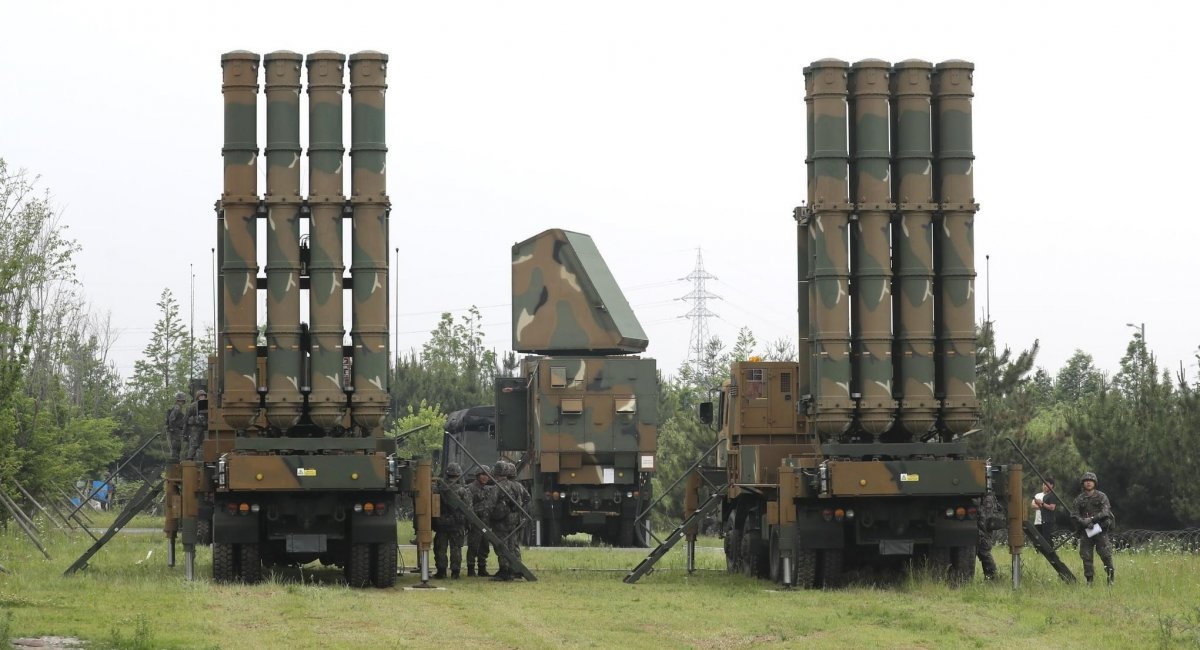
South Korean defense company Hanwha Aerospace has also entered the competition with its L-SAM long-range missile defense system.
Hanwha stated that it could deliver the system by 2029 and expressed willingness to involve Swiss industry in the program. The company indicated that portions of manufacturing could be subcontracted to Swiss firms, creating industrial benefits and supporting domestic defense production capabilities.
Although the system is produced outside Europe, Hanwha believes industrial cooperation and local participation could strengthen its position in the competition.
Rafael's David's Sling Remains a Potential Option
Israeli defense company Rafael Advanced Defense Systems also showcased its David’s Sling missile defense system at Eurosatory.
The system recently gained operational attention following its use during the conflict involving Iran and Israel. While Rafael did not publicly announce a specific proposal for Switzerland, David’s Sling remains one of the recognized long-range air and missile defense solutions available on the international market.
Federal Council Weighs Next Steps
The Swiss Federal Council has been reviewing alternatives since spring 2026 as concerns over Patriot delivery delays increased. Officials must now decide whether to continue waiting for the U.S. systems while accepting a prolonged capability gap and higher costs, or pursue an alternative supplier and address the contractual implications of modifying the existing agreement.
Swiss authorities have indicated a preference for European-produced systems due to considerations related to interoperability, supply security, and strategic autonomy. However, any final decision will also consider delivery schedules, overall costs, operational compatibility, industrial participation opportunities, and long-term defense requirements.
No immediate selection is expected, but the Federal Council is anticipated to determine the next procedural steps before the start of the summer holidays.
The review highlights a broader trend across Europe, where governments are seeking diversified and rapidly available air defense capabilities in response to evolving security challenges and increasing demand for missile defense systems.
——— End of Article ———