BUSAN, South Korea — The Republic of Korea (ROK) Navy has successfully completed its first live combat experiment combining artificial intelligence (AI) with crewed and uncrewed platforms for mine countermeasure operations, marking an important step in the country's efforts to modernize naval warfare.
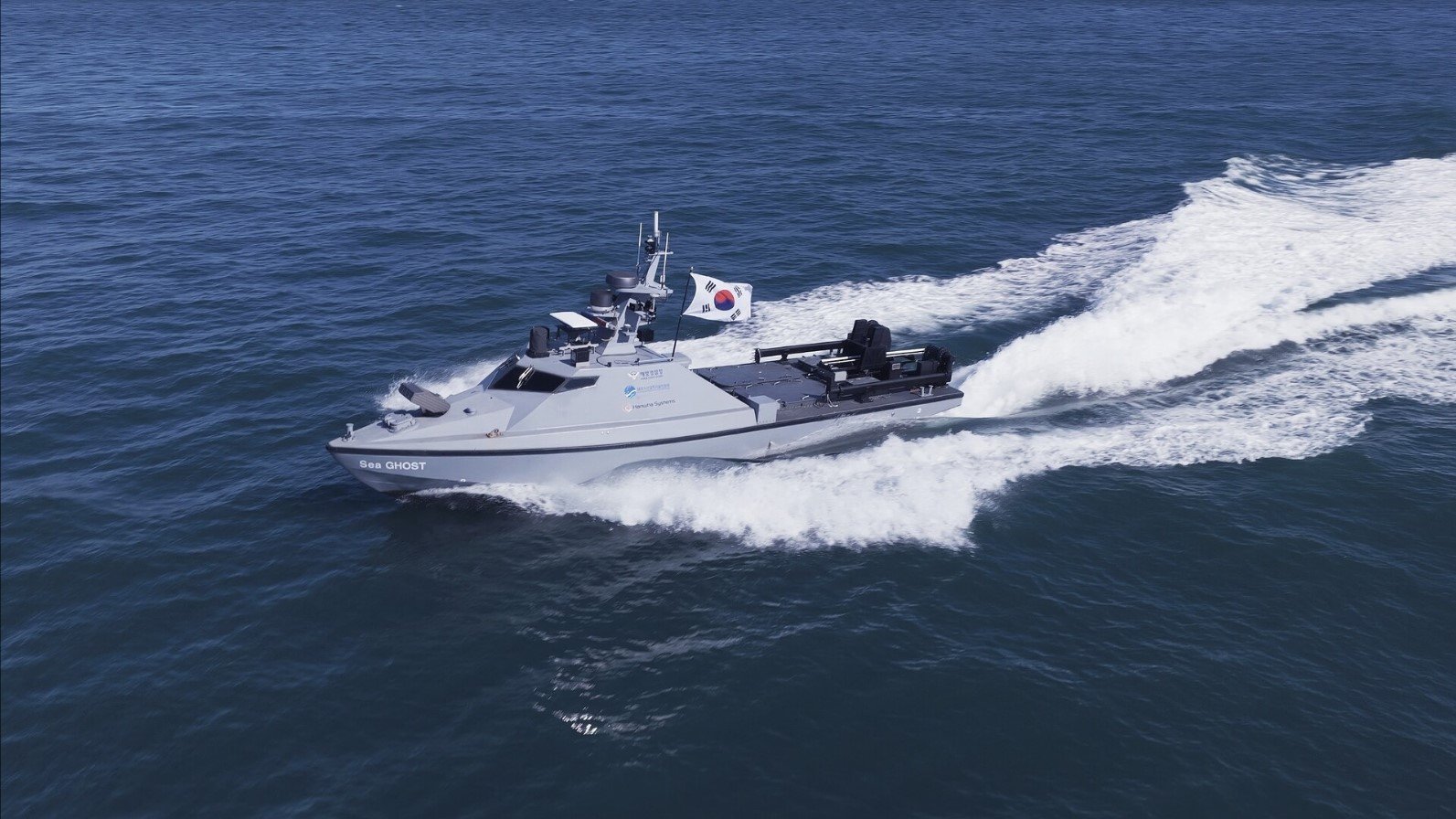
The exercise was conducted on August 3 at the Busan Naval Base in partnership with Hanwha Systems. It evaluated an AI-supported mine warfare system operating under the Navy's Sea GHOST (Guardian Harmonized with Operating manned Systems and Technology based unmanned systems) concept, which focuses on integrating conventional naval vessels with unmanned platforms through Manned-Unmanned Teaming (MUM-T).
The demonstration tested how artificial intelligence could support commanders in planning and coordinating mine countermeasure missions while keeping human operators in control of all final decisions.
Mine Blockade Scenario
The exercise was based on a simulated scenario in which enemy forces blocked the Port of Busan with naval mines, preventing safe access to the harbor.
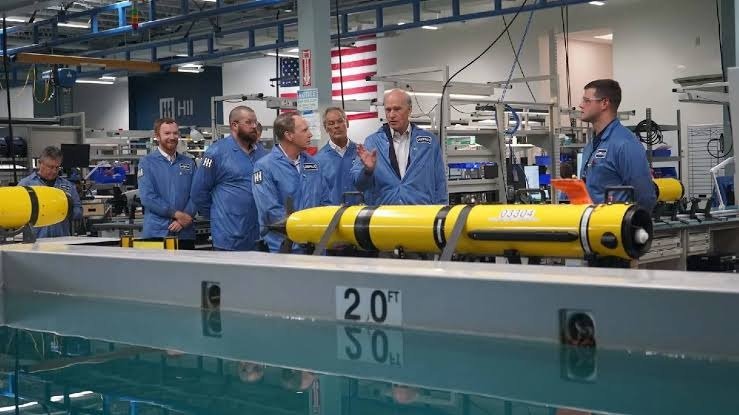
To respond to the threat, the Navy deployed a hybrid task group centered on the 730-ton ROKS Ongjin (MSH-572) minesweeper. The vessel operated alongside several unmanned platforms, including an aerial reconnaissance drone, Hanwha Systems' 30-ton unmanned surface vessel (USV), the Haeryeong reconnaissance USV, and an autonomous underwater vehicle (AUV) designed for mine detection.
The unmanned surface vessels were not equipped with operational mine-clearing systems during the trial and instead performed simulated operational roles.
AI Supported Mission Planning
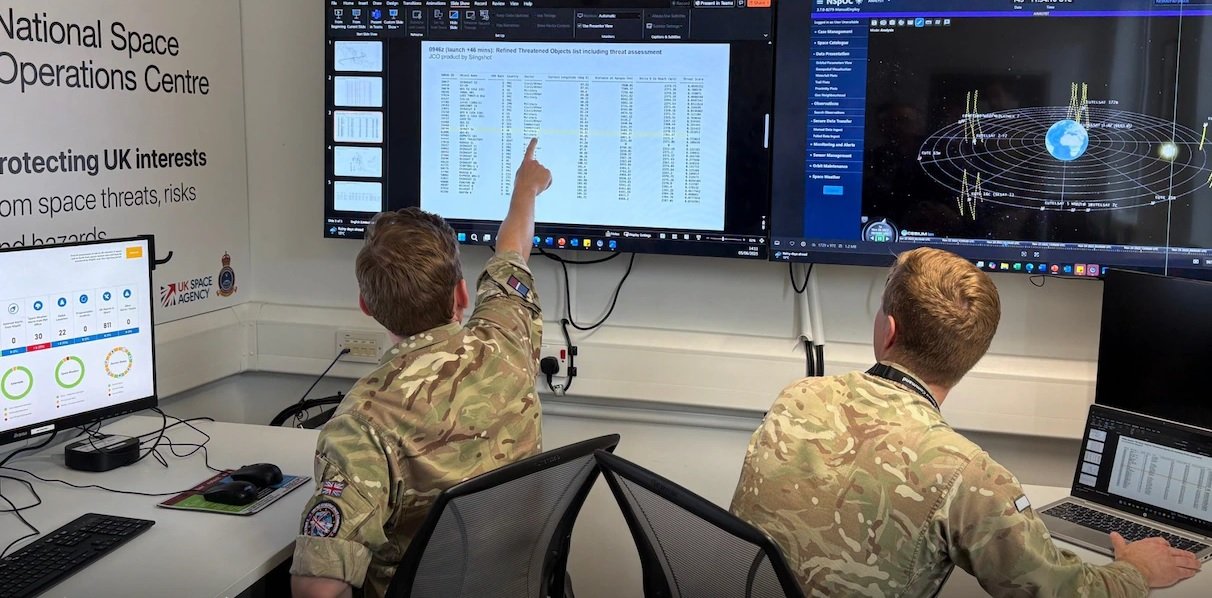
A key part of the demonstration was the use of a Large Language Model (LLM)-based Automatic Mine Detection System (AMDS), described by the Navy as an "AI combat adviser" and by Hanwha Systems as an AI mission-planning platform.
The AI system received natural-language commands and analyzed operational information, including weather conditions and ocean currents, before producing a mine search and sweeping plan.
Rather than acting independently, the system submitted its recommendations to the commander aboard ROKS Ongjin. After reviewing and approving the proposed plan, the commander authorized mission assignments for both crewed and unmanned platforms.
The exercise demonstrated that AI was used as a decision-support tool, while command authority remained with human personnel.
Four Operational Phases Tested
During the combat experiment, the Navy evaluated four major stages of mine countermeasure operations.
The first phase focused on AI-assisted mission planning, where the system automatically prepared a search strategy using real-time operational information.
The second phase tested multi-domain tactical integration, allowing the minesweeper, unmanned surface vessels, autonomous underwater vehicle, and aerial drone to operate through a single network. Communications between the platforms were supported by Eutelsat OneWeb low-Earth-orbit satellite communications.
The third phase evaluated real-time target analysis. The Haeryeong USV deployed its onboard autonomous underwater vehicle into the simulated minefield, where it collected underwater information. That data was transmitted in real time to the Automatic Mine Detection System, which processed the information and identified the simulated mine locations.
The final phase demonstrated countermeasure procedures, with the unmanned platforms conducting simulated mine neutralization while ROKS Ongjin moved to a safe area to avoid simulated blast damage.
Remote Operation Demonstrated
The trial also demonstrated the ability to remotely operate the autonomous underwater vehicle and both types of unmanned surface vessels from a land-based control center using Eutelsat OneWeb low-Earth-orbit satellite communications.
According to the Navy, the exercise showed that AI-supported planning combined with coordinated crewed and uncrewed operations can improve future mine countermeasure missions by assigning higher-risk tasks to autonomous systems while keeping personnel farther from potential danger.
Navy Highlights Future Role of AI
Vice Admiral Kwak Kwang-seop, Commander of the Republic of Korea Fleet, said artificial intelligence and unmanned systems will become increasingly important in future naval operations.
"AI technology and unmanned systems will become core capabilities on the future maritime battlefield. We must lead the future battlefield through the rapid military application of advanced technology. Moving forward, we will expand civil-government-military collaboration—leveraging Busan as an AI Transformation (AX) hub—to rapidly field AI capabilities and advance our operational capabilities through continuous combat experiments."
Commander Lee Kwang-hoon, who leads the ROK Fleet's unmanned systems operations innovation division, said the trial successfully demonstrated the AI decision-support structure. He added that future work will focus on improving the system's accuracy, particularly its ability to distinguish actual naval mines from underwater objects such as rocks and fishing nets.
Sea GHOST Development Continues
The Sea GHOST concept was first introduced during the ROK Navy's 77th anniversary ceremony in 2022. Since then, South Korean defense companies, including Hanwha Systems and LIG Nex1, have continued developing technologies that support the concept, including anti-submarine warfare unmanned underwater vehicles (ASWUUV), the Haegum series of unmanned surface vessels, and cross-domain data links.
The Busan combat experiment forms part of the Navy's broader effort to transition AI-enabled and uncrewed mine countermeasure capabilities from testing into operational fleet service. The ROK Navy plans to conduct additional combat trials as it continues developing future autonomous mine warfare capabilities.
——— End of Article ———