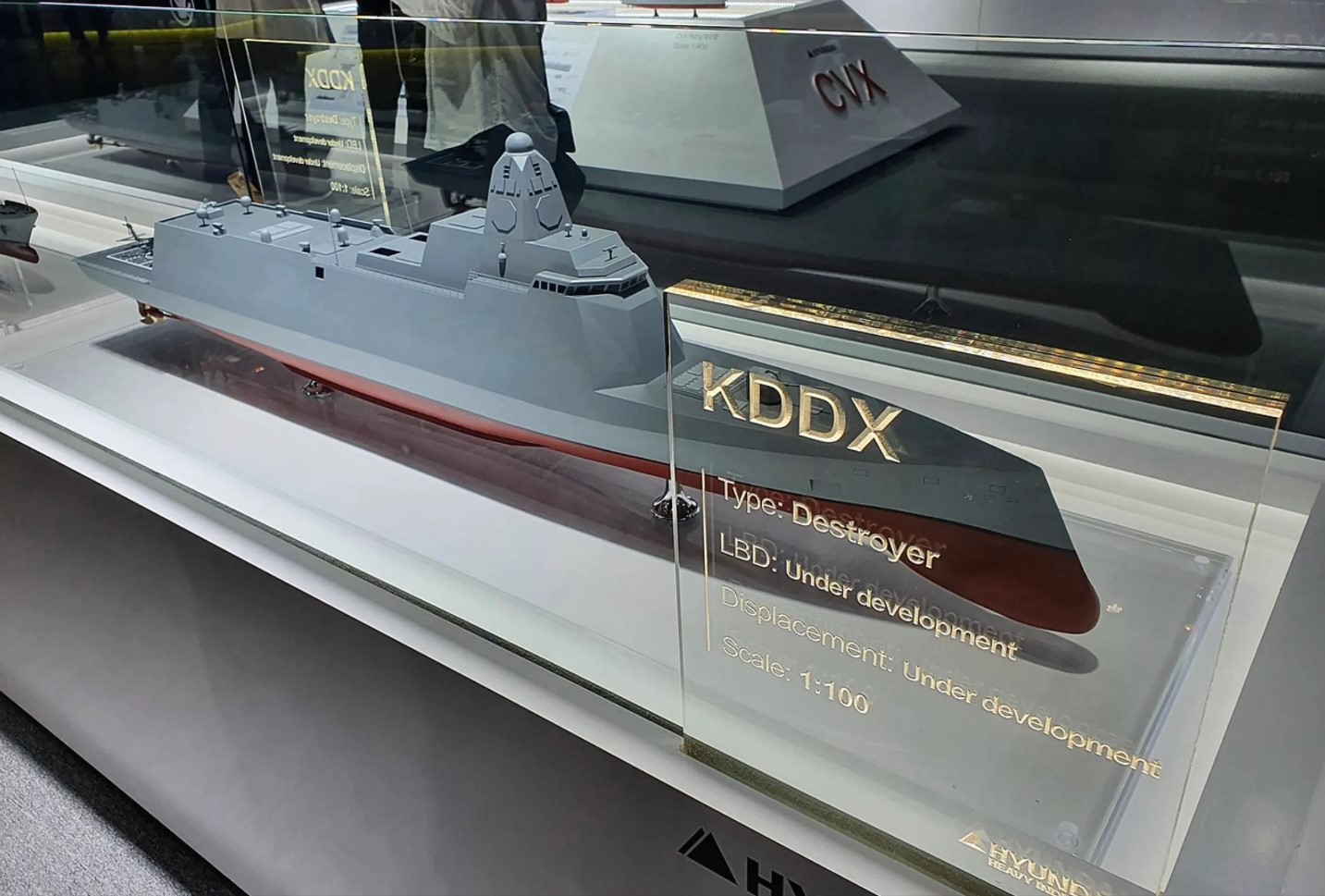
SEOUL, — June 11, 2026 : South Korea’s Defense Acquisition Program Administration (DAPA) has selected Hanwha Ocean as the preferred bidder for the Korean Next-Generation Destroyer (KDDX) program, marking a major step forward in one of the country’s most significant naval modernization initiatives. The program, valued at approximately 7.8 trillion KRW (US$5.7 billion), aims to build six advanced destroyers for the Republic of Korea Navy (ROKN) by 2030.
The decision was announced following a competitive evaluation process in which Hanwha Ocean narrowly surpassed its main rival, HD Hyundai Heavy Industries, by 0.5867 points, according to government and industry sources on June 11, 2026.
Evaluation Results and Contractor Selection
The evaluation process concluded after more than two years of competition between South Korea’s two leading naval shipbuilders. Although HD Hyundai Heavy Industries reportedly achieved a higher score in the technical capability assessment by 0.64 points, the company received a 1.2-point security-related deduction that ultimately affected the final outcome.
The penalty was linked to previous legal convictions involving the unauthorized acquisition of KDDX conceptual design materials. HD Hyundai Heavy Industries sought a court injunction to prevent the extension of the deduction period, but the court dismissed the request on June 5, 2026, allowing the penalty to remain in effect until December 2026.
Industry analysts noted that the deduction played a significant role in determining the final ranking between the two bidders.
The result remains subject to standard review and objection procedures before DAPA formally confirms the contract award.
Major Naval Modernization Program
The KDDX (Korean Destroyer Next Generation) program is considered a cornerstone of South Korea’s future naval strategy. The project is designed to deliver six advanced destroyers that will become the first fully indigenous destroyer class developed for the Republic of Korea Navy.
Unlike previous destroyer programs that relied heavily on foreign technologies, the KDDX class will incorporate a domestically developed hull design, combat management system, and key sensors, reflecting South Korea’s broader effort to strengthen defense self-reliance.
The destroyers are planned as 6,000-ton-class warships, with reported light-load displacement of approximately 7,100 tons and full-load displacement estimates of around 8,000 tons.
Advanced Design and Combat Systems
The KDDX class will introduce several advanced technologies into the ROK Navy fleet.
Among the key features is an Integrated Electric Propulsion System (IEPS), which is expected to improve fuel efficiency, reduce acoustic signatures, and provide greater electrical power for future combat systems. The ships will also feature a stealth-optimized hull design intended to reduce radar detection.
Another notable component is the Integrated Mast (I-MAST), which will house a domestically developed dual-band S/X phased-array Multi-Function Radar. The radar is designed to enhance target detection, tracking, and engagement capabilities against multiple airborne and surface threats.
The vessels will also incorporate advanced automation systems aimed at reducing crew requirements while improving operational efficiency and maintenance management.
Weapons and Mission Capabilities
The KDDX destroyers are expected to be equipped with both Korean Vertical Launch System-I (KVLS-I) and KVLS-II launchers, enabling the deployment of a wide range of indigenous missile systems.
Planned armament includes the K-SAAM short-range air defense missile and the Ship-to-Air Missile-II, a long-range naval air defense missile developed by LIG Nex1. Additional weapons are expected to include the Mk 45 5-inch naval gun, CIWS-II close-in weapon systems, anti-ship missiles, and land-attack missiles, including variants of the Hyunmoo-3C and Haeseong (SSM-700K) missile families.
The destroyers are designed to perform a wide range of missions, including anti-air warfare, anti-surface warfare, and anti-submarine warfare, providing the ROK Navy with enhanced multi-mission capabilities.
Replacing Aging Destroyers
Once commissioned, the KDDX ships will serve as core assets within the ROK Navy’s Task Fleet Command. They are intended to gradually replace the aging KDX-I Gwanggaeto the Great-class destroyers, which have been in service for more than two decades.
The program is expected to significantly improve South Korea’s maritime defense capabilities while strengthening indigenous naval shipbuilding and combat-system development.
Program Delays and Future Timeline
The KDDX project was originally expected to move into the next phase in 2024, but contractor selection disputes and legal issues contributed to delays in the program schedule. The competition for the detailed design and lead ship construction contract represented a departure from traditional sole-source follow-on contracts commonly used in previous naval programs.
HD Hyundai Heavy Industries completed the program’s basic design phase in December 2023 after securing that contract in 2020. Hanwha Ocean, formerly known as Daewoo Shipbuilding & Marine Engineering, has extensive experience in detailed design and first-of-class construction for South Korean submarine programs.
If the selection is finalized after the review process, Hanwha Ocean will proceed with detailed engineering work and construction of the lead ship. The first KDDX destroyer is currently targeted for delivery to the Republic of Korea Navy by the end of 2032, with additional vessels expected to enter service in sequence afterward.
Impact on South Korea’s Shipbuilding Industry
The contract is widely regarded as one of the most important naval shipbuilding awards in South Korea in recent years. Industry observers believe the company selected to build the lead ship will gain a significant advantage in securing follow-on vessel orders and future naval export opportunities.
With the KDDX program moving toward its next phase, South Korea continues its efforts to develop advanced indigenous naval capabilities, reduce dependence on foreign defense technologies, and strengthen its position in the global naval shipbuilding market.
——— End of Article ———