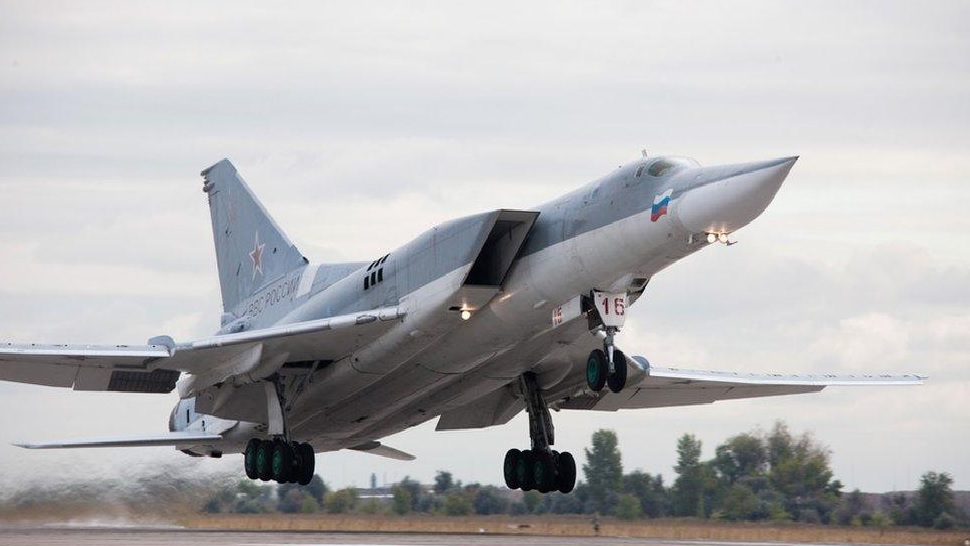
IRKUTSK, Russia, — June 15, 2026 : A Russian Tu-22M3 long-range strategic bomber crashed in Siberia’s Irkutsk region on Monday during a scheduled training flight, according to the Russian Defense Ministry. The aircraft went down while approaching for landing near the village of Kamenka and the town of Svirsk, approximately 50 kilometers northwest of the Belaya Air Base.
The incident initially sparked uncertainty regarding the fate of the crew after unconfirmed reports circulated on social media suggesting that the pilots may have been killed. However, the Russian Defense Ministry later confirmed that all four crew members successfully ejected from the aircraft before impact and survived the crash.
Witnesses in the area reported seeing several parachutes descending shortly before the bomber crashed into a heavily wooded area along the banks of the Angara River. Videos shared on social media appeared to show the aircraft entering a steep nosedive before striking the ground, followed by a large column of black smoke rising above the forest.
According to Russian officials, the Tu-22M3 was not carrying any combat load or munitions at the time of the accident. Authorities stated that the crash did not cause damage to civilian infrastructure or populated areas. Emergency services, including firefighting units and medical teams, were dispatched to the scene shortly after the aircraft went down. A localized fire caused by the impact was subsequently contained.
Irkutsk Region Governor Igor Kobzev said search-and-rescue teams quickly located all four crew members. The personnel were transported to a local hospital for medical evaluation and treatment. Officials reported that the crew sustained non-life-threatening injuries.
The crew consisted of the aircraft commander, assistant commander, navigator, and systems navigator. Russian authorities have not released additional details regarding the medical condition of the personnel.
Preliminary findings indicate that a technical malfunction may have caused the accident. Russian military officials stated that an engine failure is currently considered the most likely cause of the crash. A commission from the Russian Aerospace Forces and a dedicated military investigation team have been deployed to the crash site to determine the exact circumstances surrounding the incident.
The Tu-22M3, known by the NATO reporting name “Backfire,” is a supersonic long-range bomber developed by the Soviet Union and later modernized for service with the Russian Aerospace Forces. The aircraft features variable-sweep wings and is designed to conduct strategic strike and maritime attack missions.
The bomber is capable of carrying a wide range of weapons, including the Kh-22 air-launched cruise missile. Modified versions of the aircraft have also been adapted to carry Russia’s Kh-47M2 Kinzhal air-launched hypersonic missile. In recent years, Tu-22M3 aircraft have been used in combat operations in Syria and have also participated in strike missions during the conflict in Ukraine.
The crash occurred near Belaya Air Base, one of Russia’s major strategic aviation facilities in eastern Siberia. The base is home to the 220th Heavy Bomber Aviation Regiment, which operates both Tu-22M3 and Tu-95 strategic bombers and serves as an important hub for Russia’s long-range aviation operations.
The latest accident marks the third reported Tu-22M3 crash in the Irkutsk region in less than two years. In August 2024, a Tu-22M3 crashed in the Cheremkhovsky district during a routine flight following a technical malfunction. Another aircraft of the same type crashed in the Usolsky district of the Irkutsk region in April 2025. Monday’s crash near Kamenka represents the third known loss involving the bomber in the region since 2024.
Military aviation analysts have noted that Russia’s long-range bomber fleet continues to face challenges associated with aging Soviet-era airframes, extensive operational demands, and maintenance requirements. The Tu-22M3 remains a key component of Russia’s strategic strike capabilities, but the combination of sustained operational activity and the age of the aircraft has increased pressure on maintenance and support infrastructure.
Russian authorities have not yet released further details regarding the aircraft’s condition or the full findings of the initial investigation. Officials said recovery operations and technical examinations are ongoing, with additional information expected once the military commission completes its assessment of the crash site and the aircraft’s systems.
——— End of Article ———