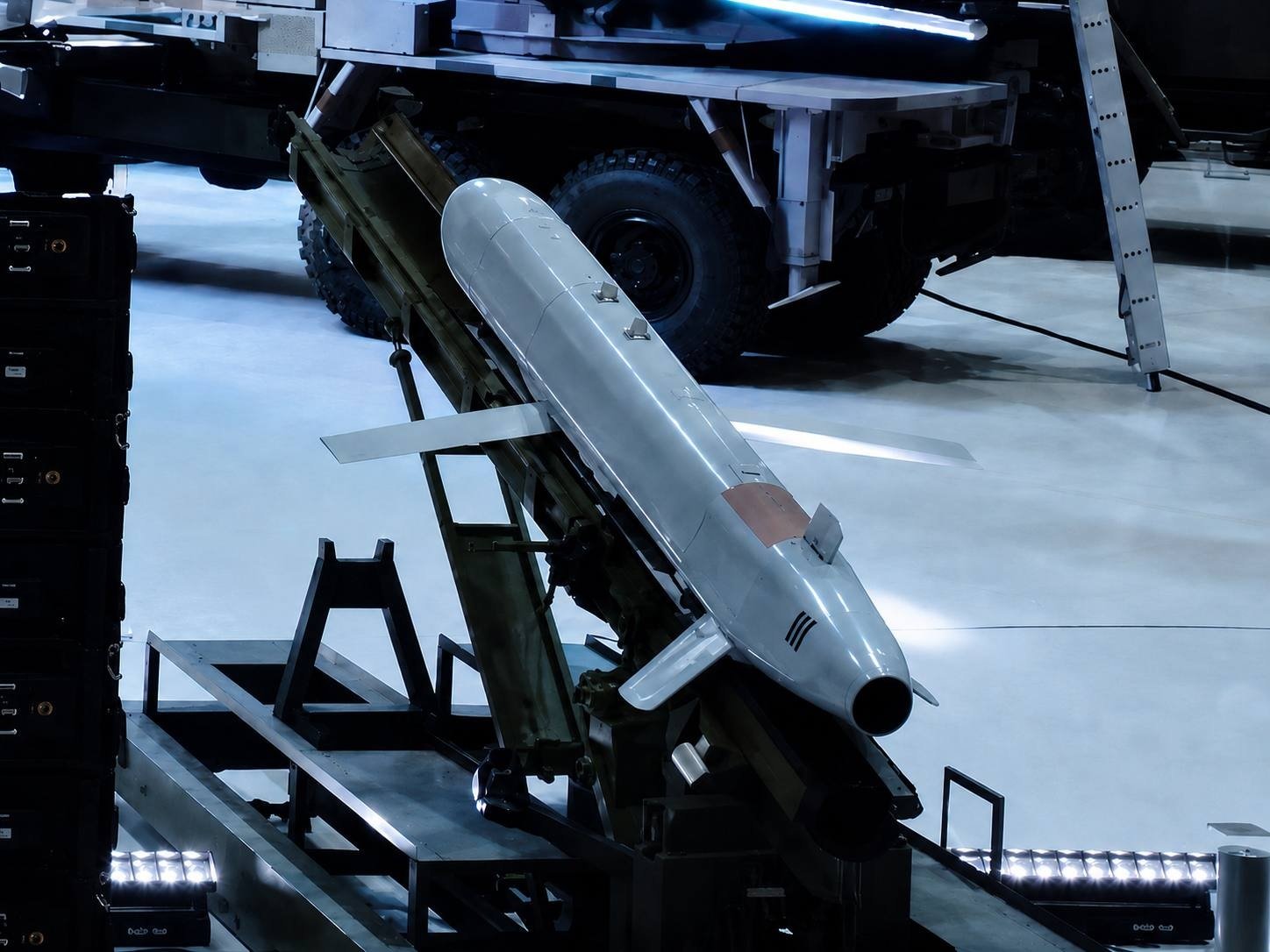
Moscow — Recent images indicate that Russia, S8000 Banderol cruise missile, ground-based launcher, Kronshtadt Group, Orion UAV, and Mi-28 attack helicopter have become central to a new development, marking the first public appearance of a launcher designed to fire the weapon from a ground vehicle. Until now, the missile had been associated with air-launched platforms, including the Kronshtadt Orion unmanned aerial vehicle (UAV) and the Mi-28 attack helicopter.
A photograph published by the Colonel GSh Telegram channel shows a compact launcher mounted on a platform that appears intended for installation on a pickup-type vehicle. The emergence of the system suggests that Russia is expanding the available launch options for the Banderol missile, allowing it to be deployed without relying exclusively on aircraft.
A ground-based launcher could increase operational flexibility by enabling missile launches from mobile land vehicles. However, military analysts note that launching a cruise missile from a stationary ground position requires more energy than releasing it from an aircraft already in flight. As a result, unless the ground-launched version has been modified, its operational range would likely be lower than the air-launched variant.
Analysts say maintaining the missile's original range could require changes such as a more powerful engine or a reduction in payload weight. No official information has been released confirming whether the ground-launched version has undergone such modifications.
S8000 Banderol Cruise Missile
The S8000 Banderol, developed by Russia's Kronshtadt Group (also referred to as Kronstadt Group or Kronstadt JSC), is a small jet-powered cruise missile designed with an emphasis on relatively low production costs and simplified manufacturing. Ukrainian Defense Intelligence (HUR) first disclosed the missile's existence and published technical details and component lists in May 2025.
The missile has reportedly been in service since 2025 and has been used by Russian forces during the conflict with Ukraine. Before the appearance of the new launcher, it was primarily associated with the Orion UAV, with reports also identifying the Mi-28 attack helicopter as a launch platform.
Specifications
According to available technical information, the S8000 Banderol has the following characteristics:
- Length: Approximately 5 meters
- Fuselage diameter: 30 centimeters
- Wingspan: Approximately 2.2 meters
- Maximum speed: 620–650 km/h
- Cruising speed: 520–560 km/h
- Maximum stated range (air-launched): Up to 500 kilometers
- Fuel load: 50–65 kilograms
The missile is powered by a Chinese Swiwin SW800Pro (also identified in some reports as the SW800Pro-A95) commercially available turbojet engine. The engine weighs 8.5 kilograms, operates at up to 65,000 rpm, and produces up to 81.6 kgf of thrust.
The Banderol carries an OFBCh-150 high-explosive fragmentation warhead with a total mass of 114.3 kilograms, including 49.5 kilograms of explosive material. The explosive mixture consists of HMX (octogen) combined with aluminum powder and a plasticizer. Some reports also refer to a warhead weight of up to 150 kilograms.
The missile uses a combination of inertial navigation and satellite guidance. It is also reported to be equipped with the Kometa-M8 jamming-resistant antenna system, designed to improve resistance to electronic warfare.
Foreign Components
Technical information published by Ukrainian Defense Intelligence indicates that the missile incorporates a range of foreign-made components sourced from multiple countries. Identified parts reportedly include the Chinese turbojet engine, Japanese batteries, South Korean servo drives, Australian telemetry modules, and various U.S.-manufactured electronic components, along with components from other countries.
Operational Significance
The appearance of a ground-based launcher expands the potential deployment methods for the S8000 Banderol beyond aircraft-based platforms. The system could allow the missile to be launched from mobile ground vehicles, increasing deployment flexibility.
Reports published in July 2026 also indicated increased use of the Banderol missile, with Ukrainian sources documenting multiple strikes over a short period. The newly observed launcher represents the first publicly known ground-based launch system for the missile, although no official Russian announcement has been made regarding its operational status or performance.
——— End of Article ———