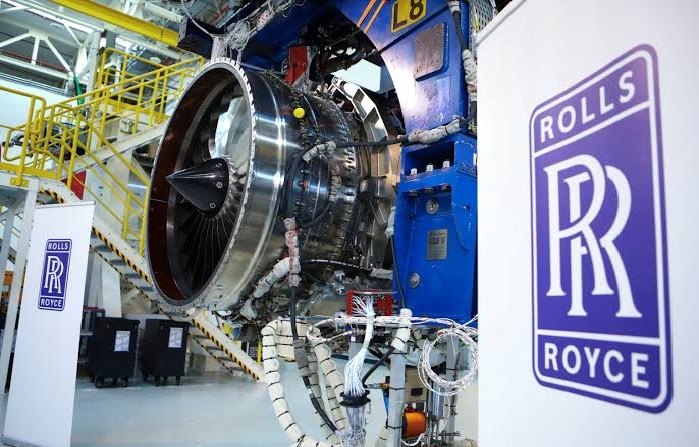
NEW DELHI, June 24, 2026 — British aerospace company Rolls-Royce has formally submitted its final proposal to jointly design, develop, and manufacture a new 120 kN-plus thrust fighter engine for India’s fifth-generation Advanced Medium Combat Aircraft (AMCA) programme. The offer includes a 100 percent transfer of technology (ToT) and provides that all intellectual property (IP) generated during the programme will remain with India.
The proposal places Rolls-Royce in direct competition with French defence company Safran for the engine that will power the AMCA Mk2, the advanced phase of India’s indigenous stealth fighter programme.
According to Rolls-Royce, the proposed engine will be a completely new design developed in India through a joint effort, while leveraging the company’s extensive aero-engine expertise and background intellectual property accumulated over more than 80 years of engine development.
Development Timeline
Rolls-Royce has outlined a development roadmap linked to the signing of a contract by the end of 2026. Under the proposed schedule:
- 2030: Testing of the engine core, including the hot section.
- 2034: First flight test of the new engine.
- 2036: Commencement of full-scale serial production.
The timeline is broadly aligned with the AMCA programme schedule, which aims for operational induction of the aircraft around 2035-36.
Sashi Mukundan, Executive Vice President (Transformation) for Rolls-Royce India, stated that the company’s proposal is designed to support India’s long-term objective of developing indigenous fighter engine capabilities while retaining ownership of all newly generated intellectual property.
Proposal Includes Full Technology Transfer
A key element of the offer is Rolls-Royce’s commitment to provide 100 percent technology transfer for the programme. Under the proposed arrangement, India would gain access to critical engine technologies and manufacturing know-how required for future upgrades, production, maintenance, and lifecycle support.
Mukundan said that Rolls-Royce would contribute its existing technical knowledge and background IP to accelerate development while ensuring that intellectual property created through the programme remains under Indian ownership.
He also highlighted the company's experience in aero-engine development, stating that Rolls-Royce has introduced a new engine design approximately every 18 months over the past three decades.
India as a Global Propulsion Hub
Beyond the AMCA engine project, Rolls-Royce has proposed establishing India as its fourth global propulsion hub alongside the United Kingdom, the United States, and Germany.
The company’s vision includes creating a comprehensive propulsion ecosystem covering:
- Engine design and development
- Prototyping and testing
- Manufacturing
- Maintenance, Repair and Overhaul (MRO)
- Lifecycle support and upgrades
The proposed infrastructure would support not only military aviation programmes but also civil aerospace, naval propulsion, coast guard requirements, army applications, and land-based power generation systems.
According to Rolls-Royce, the ecosystem would enable India to manage a broad range of propulsion requirements domestically while supporting future export opportunities and industrial growth.
AMCA Engine Requirement
The AMCA programme is being developed in two phases.
The AMCA Mk1 will be powered by the American GE F414 engine, which has also been selected for the Tejas Mk2 fighter. GE’s agreement with Hindustan Aeronautics Limited (HAL) includes an 80 percent technology transfer package for local production.
However, defence industry observers note that the GE arrangement is primarily focused on licensed manufacturing rather than full engine development capability.
For the AMCA Mk2, India requires a more powerful engine in the 110-130 kN thrust class to achieve key fifth-generation fighter capabilities such as supercruise performance, increased payload capacity, and enhanced mission endurance. This requirement has narrowed the competition to Rolls-Royce and Safran.
Competition with Safran
Rolls-Royce’s proposal comes amid ongoing evaluations by Indian defence authorities of competing offers from Safran.
Mukundan argued that only a limited number of companies globally possess a proven record of independently developing advanced fighter engines. He stated that Rolls-Royce’s long history of engine design and production provides a strong foundation for a joint development programme with India.
He also pointed to Dassault Aviation’s selection of Rolls-Royce engines for its latest Falcon business jets as an example of the company’s technological capabilities and international market presence.
Indian defence planners are expected to assess the competing proposals based on technology transfer, development timelines, industrial participation, cost considerations, and long-term strategic benefits.
Strategic Significance
The selection of a development partner for the AMCA Mk2 engine is regarded as one of the most important decisions for India's military aerospace sector.
A successful co-development programme would help India reduce dependence on foreign propulsion systems and strengthen domestic capabilities in one of the most complex areas of aerospace engineering.
Defence sources indicate that delays in finalising a partner for the 120 kN-class engine could increase reliance on additional GE F414 engines for future aircraft production. As a result, the ongoing negotiations are expected to play a significant role in determining India's progress toward self-reliance in advanced military aviation technologies.
The Ministry of Defence, DRDO, and other stakeholders are expected to continue evaluating the competing offers in the coming months before making a final decision on the AMCA Mk2 propulsion programme.
——— End of Article ———