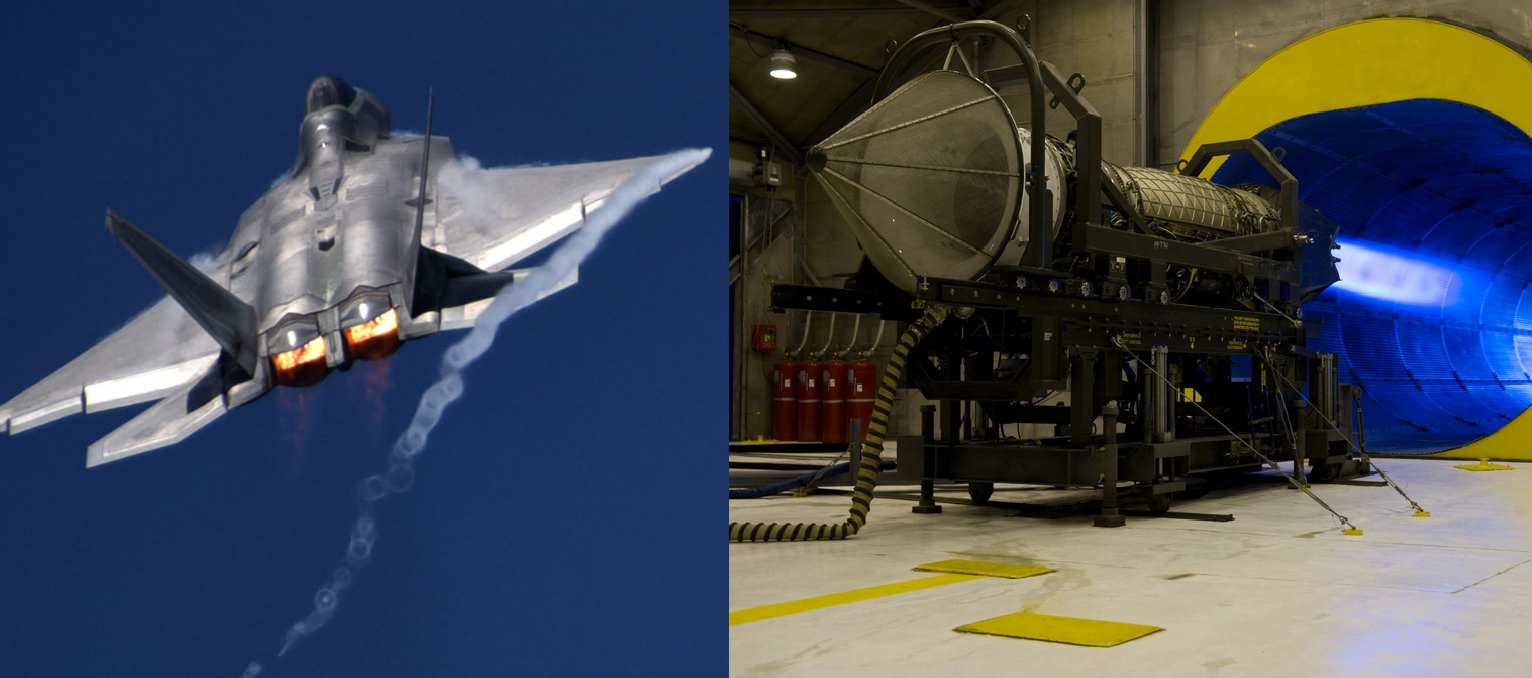
EAST HARTFORD, Conn., July 1, 2026 — Pratt & Whitney, an RTX business, has announced that its F119 engine has officially surpassed one million cumulative flight hours while powering the U.S. Air Force's Lockheed Martin F-22 Raptor fleet. The milestone highlights the engine's long-term operational performance and its continued contribution to the Air Force's air superiority mission more than two decades after the F-22 entered service.
The F119 is the world's first operational fifth-generation fighter engine. Each F-22 Raptor is powered by two F119-PW-100 engines, providing the aircraft with advanced propulsion capabilities that combine high thrust, stealth integration, and exceptional maneuverability.
The engine delivers thrust in the 35,000-pound class and features two-dimensional thrust-vectoring nozzles capable of directing exhaust flow by up to ±20 degrees in the pitch axis. Combined with integrated stealth technologies and a Full-Authority Digital Engine Control (FADEC) system, these features enhance the aircraft's agility, precision, and overall combat performance.
A key capability of the F119 is supercruise, which enables the F-22 to sustain supersonic flight at speeds of up to approximately Mach 1.8 without using afterburners. This improves fuel efficiency, extends operational range, and reduces the aircraft's infrared signature.
"The F119 engine plays a critical role in maintaining air dominance for the U.S. Air Force, as it enables the F-22 mission," said Jill Albertelli, president of Military Engines at Pratt & Whitney. "Having powered the F-22 Raptor since it launched over 20 years ago, the engine continues to provide unmatched capability, safety and readiness rates. This milestone demonstrates Pratt & Whitney's commitment to delivering for our customers."
Sustainment and Fleet Modernization
Production of the F119 concluded in 2013 after 507 engines were built. Pratt & Whitney continues to support a global fleet of more than 400 operational engines through depot maintenance, sustainment services, and modernization programs.
In February 2025, RTX secured a contract valued at up to $1.5 billion to improve F119 fleet readiness while reducing long-term lifecycle costs. The effort supports the U.S. Air Force's objective of maintaining the F-22 fleet into the 2040s.
Current modernization initiatives include Usage-Based Lifing (UBL), which uses real-time flight data and component wear information to optimize maintenance schedules, and Model-Based Systems Engineering (MBSE), which employs digital engineering tools to predict component life and improve long-term durability. Pratt & Whitney is also introducing software updates, including enhancements to the FADEC system, to improve engine performance and operational efficiency.
Foundation for Future Fighter Engines
The F119 also served as the technological foundation for Pratt & Whitney's F135 engine, which powers the F-35 Lightning II. Technologies and engineering experience gained through the F119 program contributed directly to the development of the next-generation fighter engine.
With continued sustainment, modernization, and component upgrades, the F119 remains a key element of the U.S. Air Force's F-22 fleet, supporting operational readiness and long-term combat capability.
——— End of Article ———