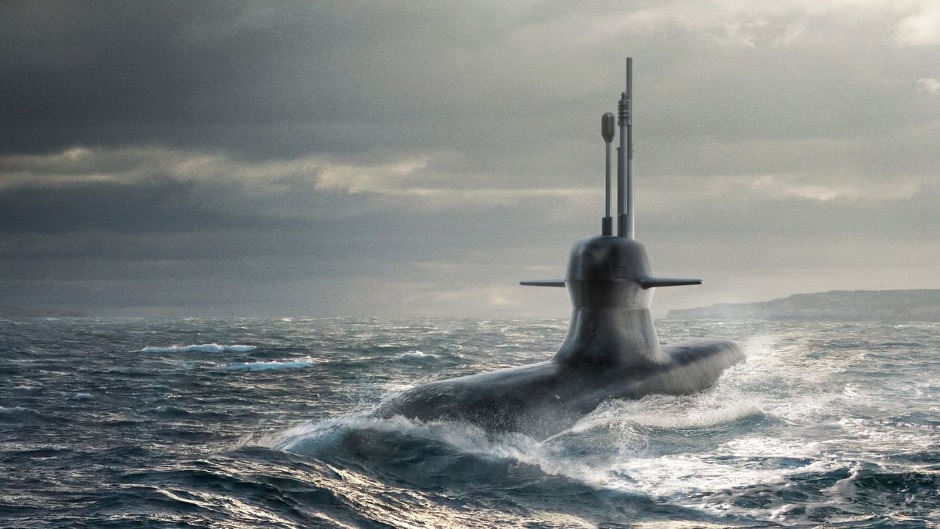
GDYNIA, Poland, June 29, 2026 — Poland has signed a landmark agreement with Swedish defense company Saab for the production and delivery of three A26 Blekinge-class submarines, marking one of the country's largest naval modernization programs in decades. The contract, signed on June 29 during intergovernmental consultations between Polish Prime Minister Donald Tusk and Swedish Prime Minister Ulf Kristersson, is valued at approximately SEK 47 billion (€4.5 billion).
The agreement covers the construction of three A26 submarines, a comprehensive weapons package, and long-term training, maintenance, and support services. The procurement forms a key part of Poland's Orka submarine program and will replace the Polish Navy's only remaining Soviet-era Kilo-class submarine, which has been in service for around 40 years.
The acquisition is intended to significantly strengthen Poland's undersea warfare capabilities while expanding long-term defense cooperation between Sweden and Poland within NATO.
Delivery Timeline and Industrial Cooperation
Saab will deliver the submarines in stages, with the first vessel expected to enter Polish service in 2031 and the final submarine scheduled for delivery in 2038.
As part of the agreement, Saab will establish maintenance, repair, and overhaul (MRO) capabilities in Poland to support the submarines throughout their operational life. The company will work closely with Polish industry and invest up to €100 million in the country, with hundreds of Polish companies expected to participate in the program as subcontractors.
The industrial cooperation is expected to strengthen Poland's domestic defense industry while supporting the long-term sustainment of the new submarine fleet.
Interim Capability and Training Support
To maintain Poland's underwater operational capability before the new submarines enter service, Sweden will lease the HMS Södermanland submarine to Poland until 2032.
The leasing arrangement is accompanied by an extensive training and support program that the Swedish Ministry of Defence has described as the largest submarine-related training initiative undertaken by the Swedish Navy.
Under the agreement, training for Polish submarine crews will begin in August 2026, earlier than originally planned. Sweden will support Poland's New Type Submarine programme from 2027 through 2038, with options to extend the cooperation. Polish personnel will also participate in testing and evaluation activities involving HMS Blekinge and HMS Skåne A26 submarines to accelerate operational readiness before the delivery of Poland's own fleet.
Baltic Sea Pact
The submarine agreement was signed alongside the launch of the Baltic Sea Pact, a new strategic cooperation framework established by Sweden and Poland during the June 29 government-level consultations.
The initiative focuses on strengthening regional security through cooperation in three key areas:
- Security and defense policy
- Military cooperation
- Defense industry cooperation
The pact is intended to reinforce security in the Baltic Sea region, strengthen cooperation between the two NATO allies, and support continued regional stability.
The cooperation is also expected to contribute to industrial growth and employment in both countries through expanded defense manufacturing and technology collaboration.
A26 Submarine Capabilities
The Saab A26 Blekinge-class submarine has been specifically designed for operations in the Baltic Sea, where shallow waters, limited maneuvering space, and complex seabed conditions require advanced underwater capabilities.
The submarines feature low acoustic signatures for silent operation and are optimized for stealth, maneuverability, and endurance. They support multi-domain naval operations, including intelligence, surveillance and reconnaissance (ISR), maritime security missions, and precision strike operations.
The agreed weapons package includes long-range precision strike torpedoes, while the submarine's modular architecture allows future integration of submarine-launched missile systems.
The procurement supports Poland's Orka submarine modernization programme and will enhance NATO's collective undersea capabilities in the Baltic region through expanded operational cooperation, industrial investment, long-term maintenance infrastructure, and comprehensive training support.
——— End of Article ———