WASHINGTON, June 27, 2026 — The U.S. Missile Defense Agency (MDA) has launched the Mobile Integrated Launch Capability (MILC) program to develop mobile launch platforms for missile defense target vehicles, aiming to reduce testing costs, improve operational flexibility, and increase the pace of missile defense evaluations.
The agency issued the solicitation on June 24, 2026, under Solicitation No. 26-MDA-12366, inviting industry proposals for ground-, sea-, or alternative air-based launch systems capable of deploying target missiles from a variety of locations worldwide. The solicitation will remain open until September 30, 2028, allowing the MDA to review and select promising white paper submissions on a rolling basis.
Reducing Reliance on Strategic Airlift
The MDA currently relies on C-17 Globemaster III transport aircraft to air-drop target missiles used during missile defense tests. These target vehicles simulate the flight characteristics of potential adversary missiles, enabling the evaluation of U.S. missile defense interceptors, sensors, command-and-control systems, and other elements of the country's missile defense architecture, including components of the developing Golden Dome homeland defense initiative.
While the C-17 launch method has supported numerous successful tests, it also presents several operational challenges. Missile defense testing competes with other military missions for limited C-17 availability, requires aircraft to be positioned precisely to achieve the desired target trajectory, and results in higher operating costs and slower testing schedules.
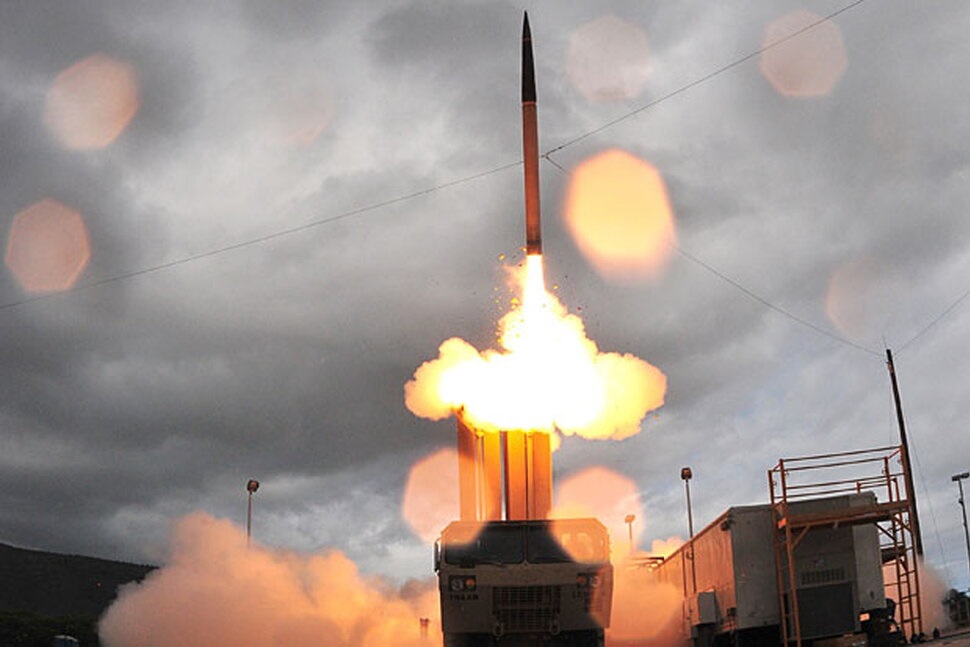
The MILC program seeks a mobile launch capability that can be rapidly deployed, repositioned, and reused without relying on dedicated strategic airlift, enabling more frequent and cost-effective testing.
Wide Range of Launch Concepts
Rather than specifying a single launch method, the MDA is encouraging industry to propose solutions best suited to different testing requirements. Potential concepts could include truck-mounted launchers, naval launch systems, or alternative aircraft capable of providing greater flexibility and availability than the current approach.
The mobile launch platform must support target vehicles representing a wide range of missile threats, including:
- Short-, medium-, intermediate-, and intercontinental-range ballistic missiles
- Maneuvering reentry vehicles
- Hypersonic glide vehicles
- Fractional and maneuvering orbital bombardment systems
- Air-breathing targets
These requirements reflect the growing need to evaluate missile defense systems against increasingly advanced ballistic and hypersonic threats.
Accelerated Development Schedule
The MILC program follows a two-phase acquisition strategy designed to deliver an operational capability within 30 months of contract award.
Phase I focuses on detailed system design, engagement analysis, and prototype cost estimates, with an objective completion time of three months and a maximum duration of six months.
Phase II covers prototype development, ground testing, and a live launch demonstration, with an objective schedule of 12 months and a maximum duration of 24 months.
To meet the compressed timeline, the MDA is encouraging contractors to use modular, open-architecture designs and commercially available off-the-shelf (COTS) components instead of developing entirely new launch technologies.
At the end of Phase II, the selected contractor will deliver one operational mobile launch platform along with the services necessary to integrate, transport, and launch an MDA target vehicle.
Industry Opportunities
Because the program involves classified target vehicles and compliance with U.S. missile technology export controls, proposals that integrate proven liquid- or solid-propellant launch systems into mobile platforms may offer implementation advantages.
The solicitation's rolling submission process allows companies to submit concepts throughout the solicitation period, enabling the MDA to evaluate technologies as they mature. Related contract efforts are expected to range between $10 million and $50 million, although final award values will depend on the proposals selected.
The MILC program is part of the MDA's broader effort to improve the realism, flexibility, and frequency of missile defense testing. By enabling launches from multiple environments without depending on strategic transport aircraft, the agency aims to better support the development and validation of missile defense systems against current and emerging threats.
——— End of Article ———