WHITE SANDS MISSILE RANGE, N.M., June 26, 2026 — U.S. Defense Secretary Pete Hegseth observed live demonstrations of multiple directed-energy weapon systems at White Sands Missile Range on June 23, marking the first publicly known occasion in which a sitting U.S. defense secretary has witnessed the live firing of advanced laser and high-power microwave weapons.
Hegseth was joined by Undersecretary of Defense for Research and Engineering Emil Michael during the demonstration, first reported by Laser Wars. The event featured five directed-energy systems representing the latest developments in U.S. laser and high-power microwave technology. According to the Pentagon, the successful demonstrations highlighted the growing role of directed-energy technologies in future missile defense and air defense operations.
Five Directed-Energy Systems Demonstrated
The live-fire event showcased systems ranging from 20 kilowatts to 300 kilowatts, designed to counter threats ranging from low-cost drones to cruise missiles.
The systems demonstrated included:
-
Army Multi-Purpose High Energy Laser (AMP-HEL): A 20-kilowatt laser weapon based on AeroVironment's LOCUST platform.
-
DE-MSHORAD P5: The Army's 50-kilowatt Directed Energy Maneuver-Short Range Air Defense system developed by nLight.
-
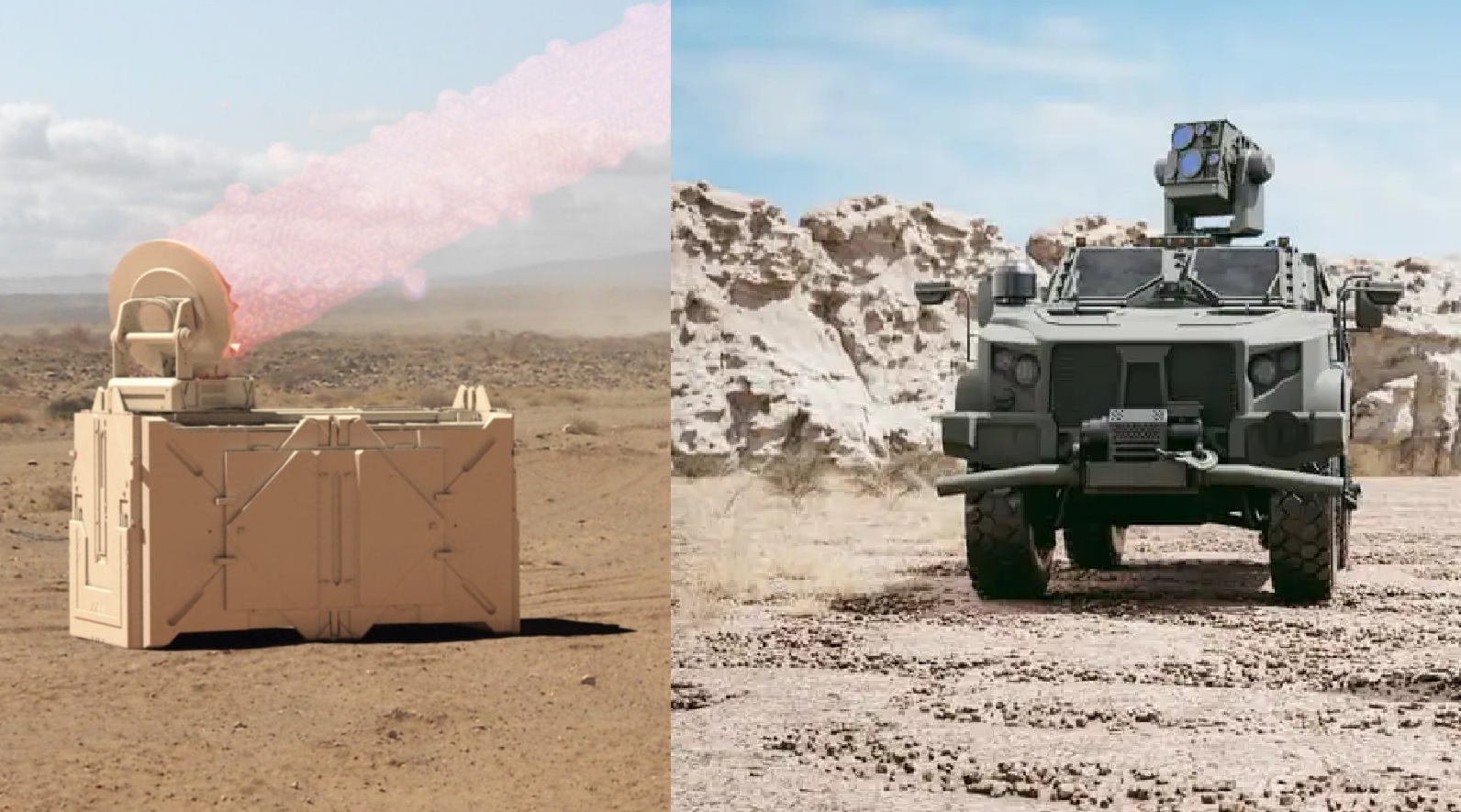
IFPC-HEL "Valkyrie": Lockheed Martin's 300-kilowatt Indirect Fire Protection Capability-High Energy Laser.
-
IFPC-HPM: A high-power microwave system based on Epirus' Leonidas platform.
-
Coyote High-Power Microwave Variant: A non-kinetic version of Raytheon's Coyote interceptor, believed to be the Block 3 system.
According to Army officials and the Congressional Research Service, the Valkyrie laser and Leonidas microwave system are not expected to enter standalone production. Instead, both prototypes will provide operational data for future programs, including the Joint Laser Weapon System (JLWS).
Pentagon Expands Directed-Energy Investment
The Pentagon is increasing investment in directed-energy weapons as recent conflicts have demonstrated the challenge of countering inexpensive drones with costly interceptor missiles. Laser weapons significantly reduce the cost per engagement because they are powered primarily by electricity and can continue operating as long as sufficient electrical power is available.
The White Sands demonstration validated the effectiveness of directed-energy systems against highly proliferated aerial threats while highlighting their ability to engage multiple targets without the ammunition limitations associated with conventional weapons.
The FY2027 defense budget request includes more than $2 billion for directed-energy research and development.
According to the Defense Department, the increased investment is focused on improving manufacturability, reliability and system integration while accelerating the transition of directed-energy technologies into operational service.
In testimony submitted to Congress in April 2026, Hegseth outlined plans for the Pentagon to procure tens to hundreds of directed-energy weapons over the coming years to provide a stable demand signal for industry and overcome long-standing procurement challenges.
E-HEL Program Advances
The Army's Enduring High Energy Laser (E-HEL) program is intended to deliver a modular 30-kilowatt counter-drone system. The first prototype is expected during the second quarter of fiscal year 2026, with production beginning in late 2027. The Army plans to field 24 systems over the following five years.
Both the AMP-HEL and DE-MSHORAD P5 demonstrated at White Sands are competing for the E-HEL contract.
AMP-HEL Operational Experience
Among the demonstrated systems, the LOCUST-based AMP-HEL has accumulated the most operational experience. It was deployed overseas in 2022 on Infantry Squad Vehicles and later successfully engaged drone targets from the flight deck of the USS George H.W. Bush in October 2025.
In May 2026, Army Secretary Dan Driscoll publicly operated the system using an Xbox-style controller during a demonstration at White Sands.
The system also recorded the U.S. military's first publicly acknowledged laser engagement against a drone near the U.S.-Mexico border in February 2026. The target was later identified as a friendly U.S. Customs and Border Protection (CBP) drone, prompting temporary FAA airspace restrictions.
Following the incident, the Department of Defense and the Federal Aviation Administration (FAA) reached a safety agreement governing military laser operations in national airspace. As part of the validation process, Joint Interagency Task Force 401 fired the AMP-HEL for eight seconds at maximum effective range against the grounded fuselage of a Boeing 767 at White Sands. The test confirmed the laser caused no structural damage to commercial aircraft materials, satisfying key civilian safety requirements.
Golden Dome Integration
The White Sands demonstration also supports development of the Pentagon's Golden Dome missile defense initiative, a proposed multi-layered homeland defense architecture integrating satellite tracking, ground-based interceptors and directed-energy weapons.
The FY2027 budget request includes $452 million for directed-energy research under the Golden Dome program, more than triple the previous year's funding.
Separately, the Army and Navy plan to invest $676 million over five years to develop a containerized 150-kilowatt Joint Laser Weapon System capable of intercepting cruise missiles. Future defense concepts also include studying 300- to 600-kilowatt laser weapons for installation aboard planned Trump-class battleships.
Directed-energy capabilities are scheduled to be included in a full Golden Dome demonstration planned for the summer of 2028.
The White Sands demonstration reflects the Pentagon's ongoing effort to transition directed-energy weapons from prototype programs into operational military capabilities while expanding the role of laser and high-power microwave systems in future air and missile defense architectures.
——— End of Article ———