WASHINGTON, — June 11, 2026 : The U.S. Department of Defense has awarded a nearly $114 million contract for the construction of a dedicated training facility supporting the LGM-35A Sentinel intercontinental ballistic missile (ICBM) program at Vandenberg Space Force Base, marking another key step in the modernization of the nation’s land-based nuclear deterrent.
According to a contract announcement issued on June 10, the U.S. Army Corps of Engineers Los Angeles District awarded a firm-fixed-price contract valued at $113,852,388 to Korte Construction Co. of St. Louis, Missouri. The contract covers the construction of the Sentinel Air Education and Training Command (AETC) Formal Training Unit, which is scheduled for completion by March 6, 2029.
The project will establish a modern training complex covering approximately 177,490 square feet and will serve as the primary educational and qualification center for Air Force personnel responsible for operating and maintaining the LGM-35A Sentinel missile system.
Dedicated Training Center for Sentinel Personnel
The new facility is designed to consolidate classroom instruction, simulator-based learning, and practical maintenance training into a single location. Air Force officials expect the integrated design to improve training efficiency, reduce travel time between instructional venues, and enhance coordination between students and instructors.
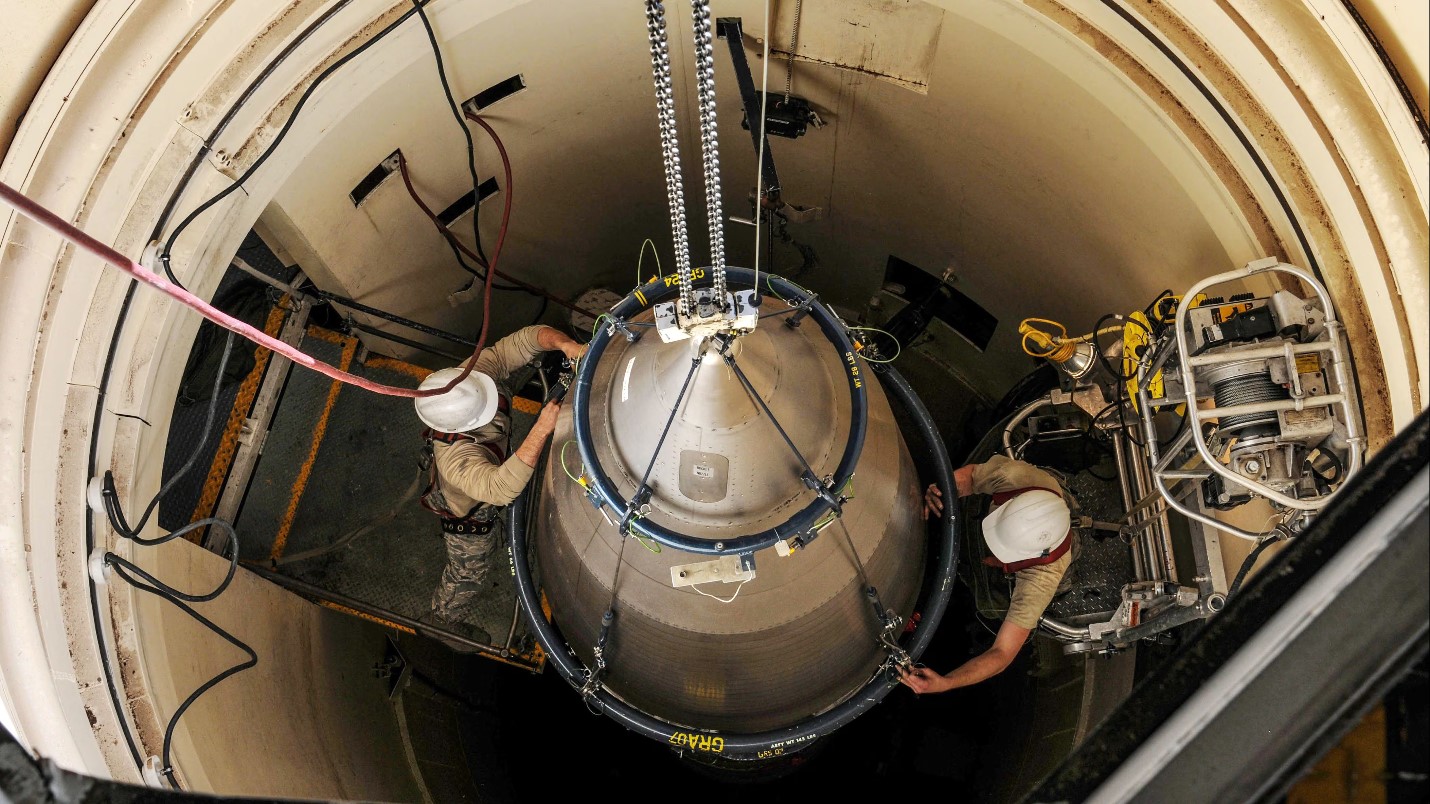
The complex will include maintenance training bays equipped with overhead cranes capable of handling large missile-related training hardware. It will also feature operations training laboratories, academic classrooms, advanced simulation areas, and administrative offices for instructors and training leadership.
Additional infrastructure will support the movement and maintenance of specialized equipment used by the Sentinel program, including designated areas for Payload Transporters, maintenance vehicles, and government-operated support equipment.
Once completed, the facility will become the primary schoolhouse for airmen and maintenance personnel transitioning to the Sentinel weapon system.
Supporting the Transition from Minuteman III
The LGM-35A Sentinel, developed by Northrop Grumman, is intended to replace the LGM-30G Minuteman III, which has served as the land-based component of the U.S. nuclear triad since the late 1960s.
Although the Minuteman III has undergone multiple modernization efforts over more than five decades of service, the Air Force has concluded that its aging infrastructure and Cold War-era design require a comprehensive replacement to maintain long-term strategic deterrence capabilities.
The Sentinel introduces significant changes in propulsion systems, electronics, guidance technology, command-and-control architecture, and operational procedures. As a result, existing Minuteman III training facilities cannot adequately support the new system, making a purpose-built training center necessary.
Air Force personnel will require new technical training devices, updated documentation, revised maintenance procedures, and specialized operational instruction before the Sentinel enters service.
Strategic Role of Vandenberg Space Force Base
Located near Lompoc, California, Vandenberg Space Force Base was selected as the site for the training facility due to its longstanding role in U.S. missile testing operations.
The base hosts critical missile testing infrastructure, including Space Launch Delta 30, and serves as the primary range for U.S. ICBM test launches. Establishing the training center alongside the nation’s principal missile test range is expected to create operational and educational efficiencies by linking training activities closely with testing and evaluation programs.
The Air Education and Training Command (AETC) will operate the facility and oversee qualification programs for personnel assigned to the Sentinel force.
Part of a Broader Nuclear Modernization Effort
The Sentinel program represents one of the largest modernization initiatives within the U.S. nuclear enterprise. The Air Force plans to deploy approximately 400 operational Sentinel missiles while replacing or upgrading supporting infrastructure across missile fields in Wyoming, Montana, and North Dakota.
The effort includes construction of new launch facilities, launch control centers, communications networks, command posts, and support structures required to sustain the next-generation ICBM force.
The broader Sentinel program has faced congressional scrutiny following significant cost growth beyond its original development and production estimate of approximately $95 billion. The program underwent a Nunn-McCurdy review, a statutory process triggered when major defense acquisition programs experience substantial cost increases.
Despite those challenges, Air Force leaders and successive U.S. administrations have continued to support the program, arguing that replacing the aging Minuteman III force remains essential for maintaining strategic stability and ensuring a credible nuclear deterrent throughout the 21st century.
Funding and Contract Details
The construction contract was awarded following a full and open competition, with two bids received. The Department of Defense stated that the entire contract value was obligated at the time of award using fiscal year 2025 military construction and defense-wide funds.
While construction of launch facilities and operational infrastructure continues across multiple states, the new training center at Vandenberg will focus on preparing the personnel required to operate and maintain the future Sentinel force.
The facility represents a significant investment in the human element of the modernization effort, ensuring that airmen assigned to the nation’s next-generation land-based nuclear deterrent receive the specialized training needed before the Sentinel enters operational service in the coming decade.
——— End of Article ———