WASHINGTON, — June 18, 2026 : The U.S. Department of Energy’s National Nuclear Security Administration (NNSA) has completed and delivered the first production unit of the Mark (Mk) 4B reentry body for the W76 nuclear warhead, achieving the milestone nearly three months ahead of the planned schedule.
The accomplishment marks an important step in the ongoing modernization and sustainment of the United States’ sea-based nuclear deterrent, which forms one of the three pillars of the nation’s nuclear triad alongside land-based intercontinental ballistic missiles and strategic bombers.
The Mk4B reentry body, developed through a partnership between the NNSA and the U.S. Navy, is designed to protect the W76 warhead as it reenters Earth’s atmosphere at extremely high speeds following launch from a submarine-launched ballistic missile (SLBM). The reentry body must withstand intense heat, pressure, and friction while ensuring the warhead reaches its intended target reliably.
Key Component of the U.S. Sea-Based Deterrent
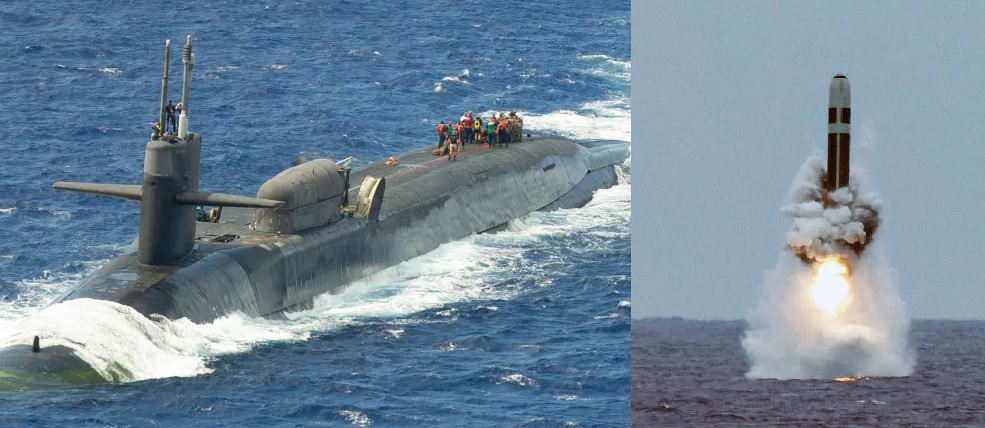
The W76 warhead series represents the largest portion of the United States’ active strategic nuclear stockpile. The warheads are deployed aboard UGM-133 Trident II (D5) submarine-launched ballistic missiles, which are carried by the U.S. Navy’s Ohio-class ballistic missile submarines and will eventually transition to the next-generation Columbia-class submarines.
Together, the W76 warhead and Trident II missile system form the backbone of the U.S. sea-based nuclear deterrent. The survivability of ballistic missile submarines provides the United States with a credible second-strike capability, a key element of strategic deterrence.
The Mk4B upgrade is intended to improve the reliability and long-term sustainability of the previous Mk4A reentry body design while ensuring continued operational effectiveness in evolving security environments.
Built on Previous Modernization Efforts
The new reentry body follows earlier modernization work conducted under the W76-1 Life Extension Program, which upgraded the original W76-0 warhead and was completed in 2019. The Mk4B program continues efforts to extend the service life and reliability of the W76 system as it remains a central component of U.S. strategic forces.
The W76 warhead is estimated to have a yield of approximately 100 kilotons and can be deployed as part of the multiple independently targetable reentry vehicle (MIRV) configuration carried by Trident II missiles. Each Ohio-class submarine is capable of carrying up to 24 Trident II missiles, although operational deployments may vary under arms control agreements and military requirements.
Enterprise-Wide Collaboration Accelerated Production
According to NNSA, the accelerated completion of the first production unit resulted from coordinated efforts across the U.S. Nuclear Security Enterprise.
The Pantex Plant in Texas, which assembled the final Mk4B unit, leveraged previous readiness assessments and production experience to streamline manufacturing activities. The Kansas City National Security Campus accelerated production and delivery of critical non-nuclear components required for the program.
Meanwhile, Sandia National Laboratories and Los Alamos National Laboratory expedited qualification testing, technical evaluations, and certification activities necessary to support the accelerated production schedule.
“NNSA is making good on our commitment to accelerate production for the nation’s nuclear deterrent and delivering the first W76/Mk4B to the Navy ahead of schedule,” said Brandon Williams, Administrator of the NNSA.
Williams noted that enhancing the reliability of the W76 reentry body will help maintain the credibility of the nation’s nuclear deterrent and support long-term national security requirements.
Jason Armstrong, Manager of the Pantex Field Office, said the early completion demonstrates the enterprise’s ability to accelerate mission delivery while meeting safety, security, and quality standards.
Future Sea-Based Nuclear Programs
The successful delivery of the first Mk4B production unit is expected to support broader modernization efforts planned for the U.S. nuclear arsenal over the coming decade.
Among the next major sea-based deterrence programs are the W88 Alteration 376 Program, the development of the W93 warhead, and the W80-5 warhead intended for the future nuclear-armed Sea-Launched Cruise Missile-Nuclear (SLCM-N) program.
NNSA expects first production units for these systems to be delivered during the early to mid-2030s.
The agency also noted that personnel and expertise from the recently completed W88 Alteration 370 modernization effort are helping support the acceleration of upcoming programs. The W88 Alt 370 program reached its final production unit in late 2025.
Supporting the Transition to the Columbia-Class Fleet
The Mk4B milestone comes as the U.S. Navy prepares to transition from the Ohio-class ballistic missile submarine fleet to the new Columbia-class SSBNs, which are scheduled to begin entering service in the coming years and will gradually replace Ohio-class boats through the 2040s.
By modernizing key components such as the W76 reentry body, the United States aims to ensure that its sea-based nuclear deterrent remains reliable, effective, and sustainable throughout the transition period and into the decades ahead.
The completion of the first Mk4B production unit represents another step in maintaining the operational readiness of existing strategic systems while supporting future modernization requirements across the nation’s nuclear deterrence enterprise.
——— End of Article ———