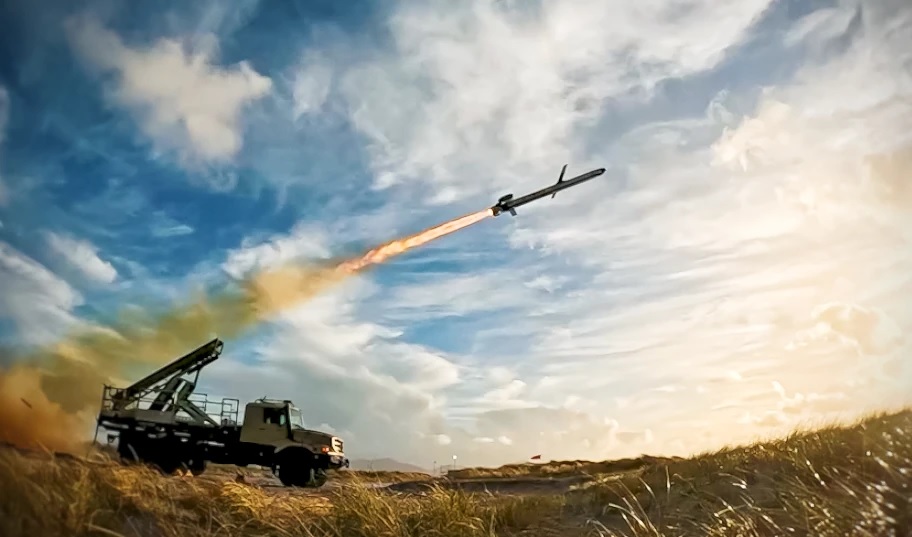
London, — June 20, 2026 : European missile manufacturer MBDA has announced the successful test launches of its new CROSSBOW cruise missile, developed under the UK Ministry of Defence's Project Brakestop. The program aims to provide Ukraine with an affordable, mass-produced long-range strike capability that is entirely free of U.S. components and navigation data.
Although announced publicly in June 2026, the flight tests were conducted at the Ministry of Defence's Hebrides range in Scotland between December 2025 and February 2026. According to MBDA, the missile progressed from development to successful flight trials in approximately nine months.
Modular Design and Production
MBDA developed CROSSBOW in cooperation with small and medium-sized enterprises across the UK and Europe. The missile features a modular design that combines military and commercial off-the-shelf subsystems, helping reduce costs and support large-scale production.
The company has stated it is prepared to begin and expand production as early as 2026.
CROSSBOW Specifications
CROSSBOW is designed to operate in contested environments where GPS signals may be jammed or degraded. Instead of relying on U.S. satellite positioning systems, it uses an image-based visual navigation system developed by MBDA.
Key specifications include:
- Length: 5.3 meters
- Wingspan: 3 meters
- Speed: High subsonic
- Range: More than 800 kilometers
- Payload: Up to 300 kilograms
- Propulsion: Turbojet engine
- Launch Platform: Mobile ground launchers
Project Brakestop
Project Brakestop was launched by the UK Ministry of Defence to develop low-cost, mass-producible, long-range strike systems for Ukraine.
The program requires weapons to contain no U.S. components or navigation data, allowing the UK to retain full control over export and operational decisions. The Ministry of Defence has set a target cost of approximately £400,000 (€475,000) per missile, excluding the warhead, and a production capacity of at least 20 missiles per month.
Other Competitors
Project Brakestop initially attracted interest from 27 companies before being narrowed to three finalists.
- TigerShark (MGI Engineering) is a high-speed autonomous strike system developed using advanced composite materials and aerodynamic technologies.
- SkyLance (Rotron Aerospace) is a propeller-driven long-range strike system designed to maximize range, fuel efficiency, and payload capacity.
Both systems have also completed flight trials.
Next Phase
The UK Ministry of Defence will continue evaluating all three designs during 2026 before selecting at least one system for serial production. According to current plans, the first deliveries to Ukraine are expected before the end of 2026.
——— End of Article ———