Washington. June 28, 2026 — Lockheed Martin has outlined its strategy to combine the Global Positioning System (GPS) with emerging quantum navigation technologies to deliver more resilient and highly accurate Positioning, Navigation, and Timing (PNT) capabilities. The company said the integrated approach is intended to maintain reliable navigation for civilian and military users even in environments where GPS signals are degraded, jammed, spoofed, or unavailable.
As electronic warfare and signal interference become more common, Lockheed Martin is developing a layered navigation framework that combines satellite-based positioning with quantum sensing technologies. The company believes this approach will support future operations across air, land, sea, space, and cyber domains.
Enhancing the GPS Constellation
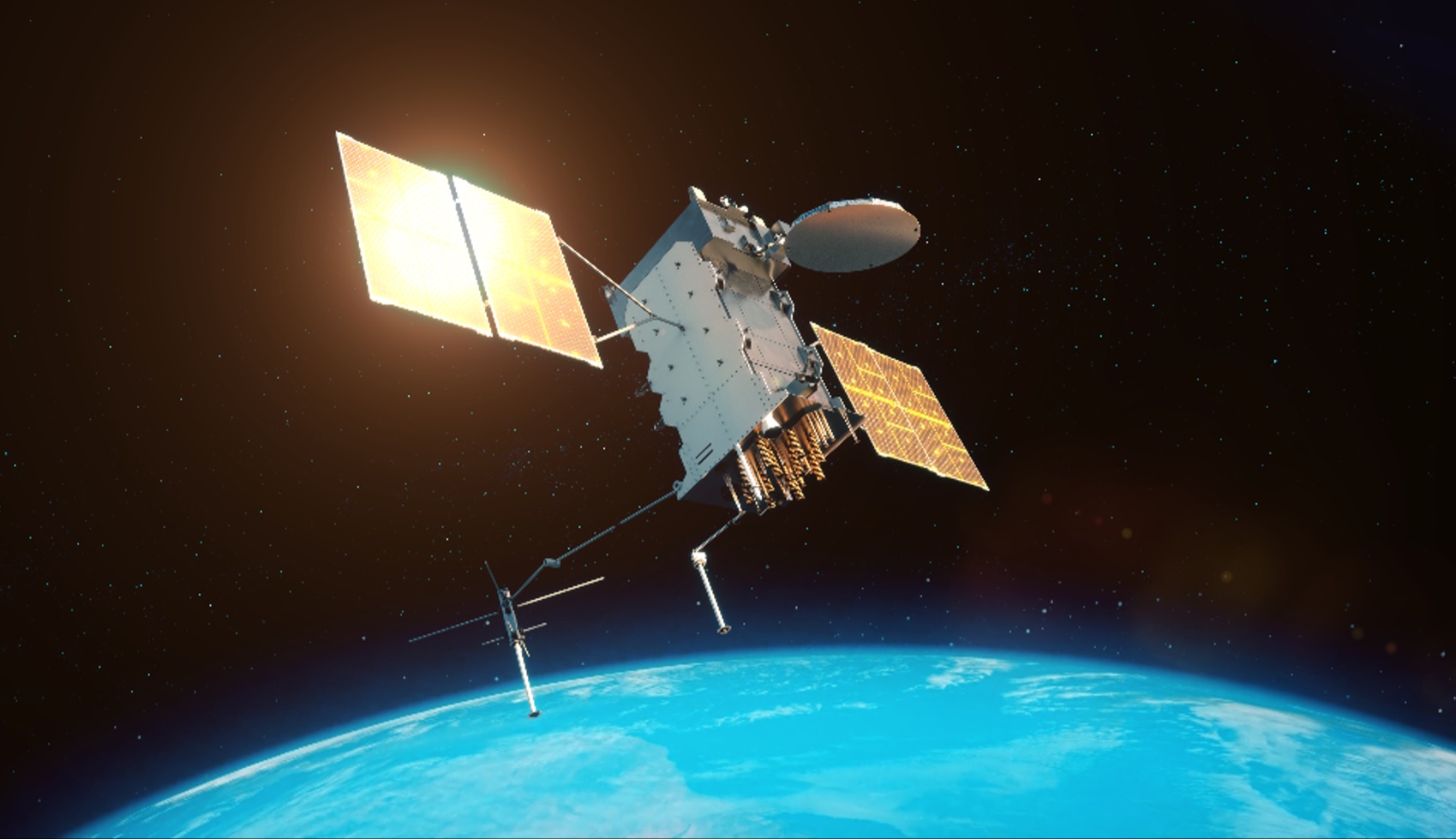
Lockheed Martin said GPS remains the foundation of global navigation and continues to support billions of civilian users as well as military operations worldwide. The company manufactures the current GPS III satellites and is developing the next-generation GPS IIIF spacecraft, both designed to improve resilience in contested environments.
The satellites are engineered to withstand severe space weather, high-radiation environments, cyberattacks, kinetic threats, and the effects of nuclear detonations. During ground processing, they are also designed to tolerate harsh environmental conditions, including hurricane-force winds. Their modular architecture allows future technologies and capabilities to be integrated as operational requirements evolve.
For military users, the satellites provide enhanced M-Code signals with secure anti-jamming and anti-spoofing protection. GPS III delivers up to eight times greater anti-jamming capability than previous generations, while GPS IIIF will introduce Regional Military Protection (RMP), using beam-focusing technology to provide up to 63 times greater anti-jamming capability in designated operational areas.
GPS IIIF will also support civilian search and rescue missions through specialized emergency signal processing and carry a nuclear detonation detection payload to support international treaty monitoring.
Quantum Navigation Development
Alongside GPS modernization, Lockheed Martin is investing in quantum navigation technology to improve positioning where satellite signals cannot be reliably received.
Unlike GPS, quantum sensors determine movement by measuring the physical properties of atoms, allowing them to calculate acceleration, rotation, and position without relying on external satellite signals. Because they operate independently of radio-frequency transmissions, quantum sensors are resistant to conventional jamming and spoofing.
The company said the technology remains in the beta stage but is moving toward operational deployment through partnerships with Q-CTRL and AOSense. These collaborations aim to transition quantum navigation systems from laboratory research to field-ready defense hardware.
Lockheed Martin is also participating in two U.S. Department of Defense-funded programs. The Defense Innovation Unit's Quantum Inertial Navigation System (QuINS) initiative is developing a quantum-enabled inertial navigation system capable of determining a platform's position, speed, and orientation using internal quantum measurements. In addition, DARPA's Robust Quantum Sensors (RoQS) program focuses on advancing next-generation quantum sensors for defense platforms operating in contested environments.
Integrated Navigation Approach
Lockheed Martin said GPS and quantum navigation are designed to complement each other rather than compete.
As an example, the company described a vehicle entering a multi-level parking garage, where concrete and steel structures block GPS signals. In this situation, GPS establishes the vehicle's initial location before signal loss, while an onboard quantum sensor continuously tracks its movement inside the structure, maintaining accurate positioning until satellite signals become available again.
According to the company, this layered PNT architecture combines GPS's global coverage with the continuous accuracy of quantum sensors, enabling reliable navigation for military platforms, autonomous systems, and civilian applications operating in challenging environments.
Lockheed Martin expects the integration of GPS and quantum navigation technologies to provide a more resilient navigation capability for next-generation operations while strengthening the reliability of positioning and timing services in increasingly contested environments.
——— End of Article ———