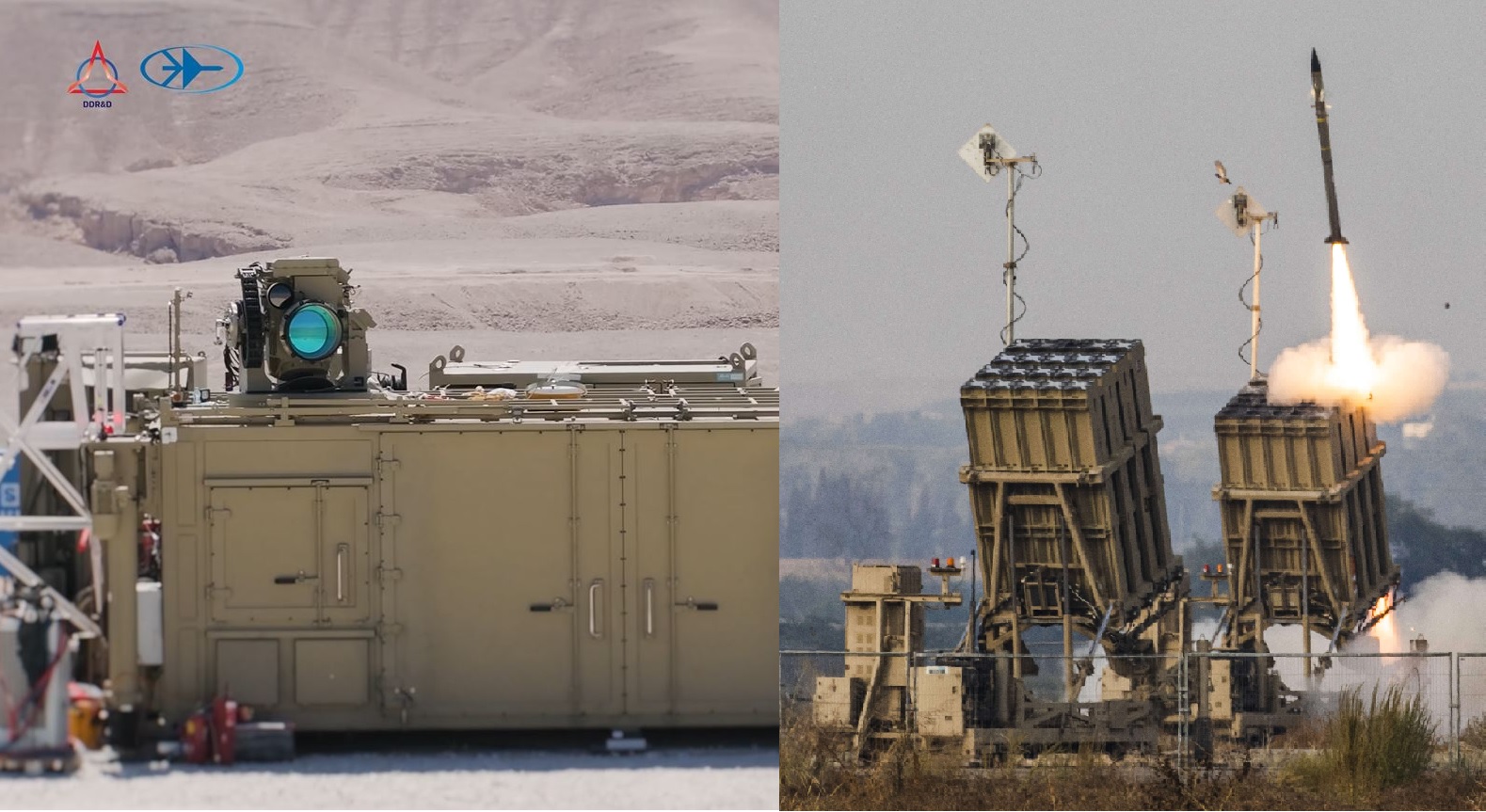
TEL AVIV, Israel, June 30, 2026 — The Israel Ministry of Defense (IMOD) and Rafael Advanced Defense Systems have successfully completed an extensive series of integrated tests combining the newly developed Iron Beam high-energy laser weapon system with the operational Iron Dome short-range air defense system.
The trials were led by the Ministry's Directorate of Defense Research & Development (DDR&D) in cooperation with Rafael. During the tests, Iron Beam and Iron Dome operated together from the Iron Dome command center, engaging a variety of advanced aerial threats, including rockets, cruise missiles, and unmanned aerial vehicles (UAVs).
Operational Upgrades Based on Recent Combat
According to the Defense Ministry, the test series incorporated operational lessons learned during recent combat operations, including the ongoing war and recent operations involving Iran. The upgrades were designed to improve the systems' ability to counter evolving threats, including saturation attacks and cluster munitions delivered by ballistic missiles.
The integrated command system was able to assess incoming threats in real time and assign the most appropriate and cost-effective interceptor, allowing the two systems to operate as a coordinated air defense network.
Iron Beam Complements Iron Dome
Iron Beam is a 100-kilowatt-class High Energy Laser Weapon System (HELWS) developed to complement Israel's existing missile defense architecture, which also includes David's Sling and the Arrow systems.
Unlike Iron Dome, which intercepts targets using radar-guided kinetic missiles, Iron Beam uses a directed-energy laser supported by adaptive optics to engage targets at ranges of up to 10 kilometers.
The combination enables Iron Beam to counter short-range rockets, mortars, and drone threats, while Iron Dome remains focused on heavier rockets, artillery projectiles, cruise missiles, and other more complex targets.
The laser system also offers significant operational and economic advantages. While Iron Dome relies on interceptor missiles that cost tens of thousands of dollars per launch and are limited by available missile stocks, Iron Beam uses electrical power, resulting in a negligible cost per intercept and the ability to continue operating as long as power is available. This allows the military to preserve interceptor missiles for higher-priority threats during prolonged conflicts.
Strengthening Israel's Air Defense
Rafael President and CEO Yoav Tourgeman and Moshe Patel, head of the Israel Missile Defense Organization (IMDO) under the DDR&D, said integrating Iron Beam with the proven Iron Dome system strengthens Israel's ability to counter both existing and emerging aerial threats.
The Ministry of Defense described the successful tests as a significant step toward improving readiness for future security challenges while maintaining the Israel Defense Forces' (IDF) qualitative advantage. Following the completion of combat-configuration testing, Iron Beam is continuing its transition into serial production and broader operational deployment within the IDF's air defense units.
——— End of Article ———