NEW DELHI, — The Indian Navy’s INS Khanderi is scheduled to become the first Kalvari-class submarine equipped with an indigenous Air-Independent Propulsion (AIP) system developed by the Defence Research and Development Organisation (DRDO). Installation is targeted for completion by December 2026, followed by sea trials in July–August 2027 and a return to operational service in early to mid-2028.
The system has been developed by DRDO’s Naval Materials Research Laboratory (NMRL) and uses phosphoric acid fuel-cell technology. Larsen & Toubro (L&T) is the principal industry partner for manufacturing and integration of the energy module, while Mazagon Dock Shipbuilders Limited (MDL) is responsible for the AIP plug and submarine integration. France’s Naval Group, the original designer of the Scorpène class, is also involved in the integration effort.
How the Indigenous AIP System Works
The AIP system generates electricity underwater through an electrochemical reaction between hydrogen and oxygen, producing water as a by-product. It generates hydrogen on demand, avoiding the need to store hydrogen gas onboard, while oxygen is carried in liquid form.
Conventional diesel-electric submarines must periodically use a snorkel or surface to operate diesel generators and recharge their batteries. The indigenous AIP system is expected to extend INS Khanderi’s submerged endurance to around 13–15 days, with some projections indicating up to 21 days depending on operating conditions. This would reduce the need to approach the surface and help the submarine maintain a lower-detection profile.
Why INS Khanderi Was Selected
The Navy initially planned to install the first AIP system on INS Kalvari, the lead submarine of the class. However, the technology was not ready during Kalvari’s scheduled refit window, prompting the Navy to select INS Khanderi for the first installation.
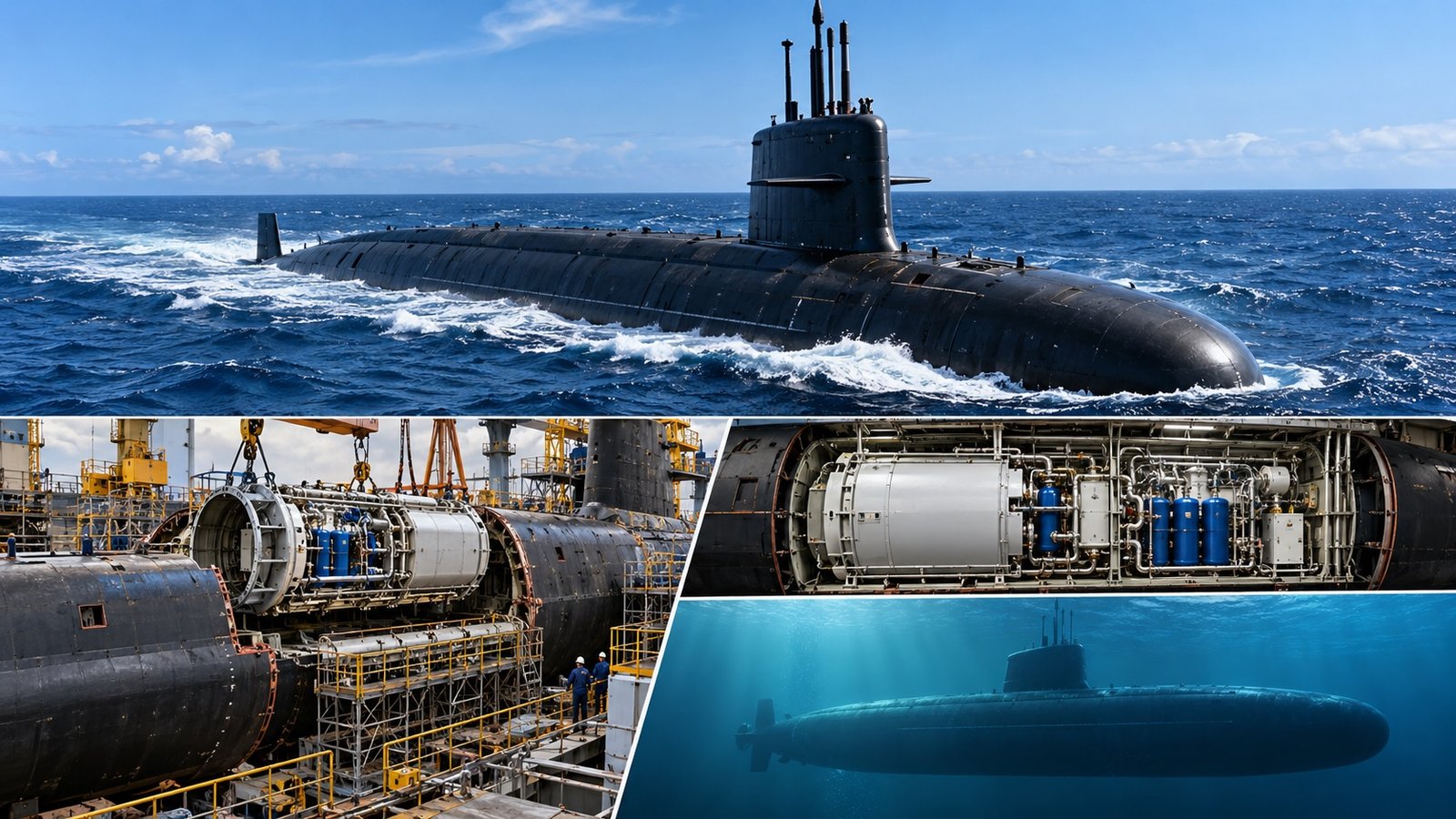
The integration requires an additional hull section, known as an AIP plug, to accommodate the energy module. In December 2024, the Ministry of Defence awarded MDL a contract worth approximately ₹1,990 crore for construction of the plug and its integration into Kalvari-class submarines. The submarine’s pressure hull will be opened during refit to insert the module before being sealed and tested.
The refit is scheduled to begin around mid-2026, with integration targeted for completion by December. Harbour and sea trials are planned for July–August 2027, followed by further testing and validation before the submarine returns to service.
Development Progress and Future Plans
The land-based AIP prototype completed endurance and maximum-power trials in 2021. In April 2026, INOXCVA flagged off a simulated liquid oxygen (LOX) storage module for factory acceptance testing. The component forms part of the energy module being assembled by L&T, while AIP plug fabrication is progressing through coordination between L&T and MDL.
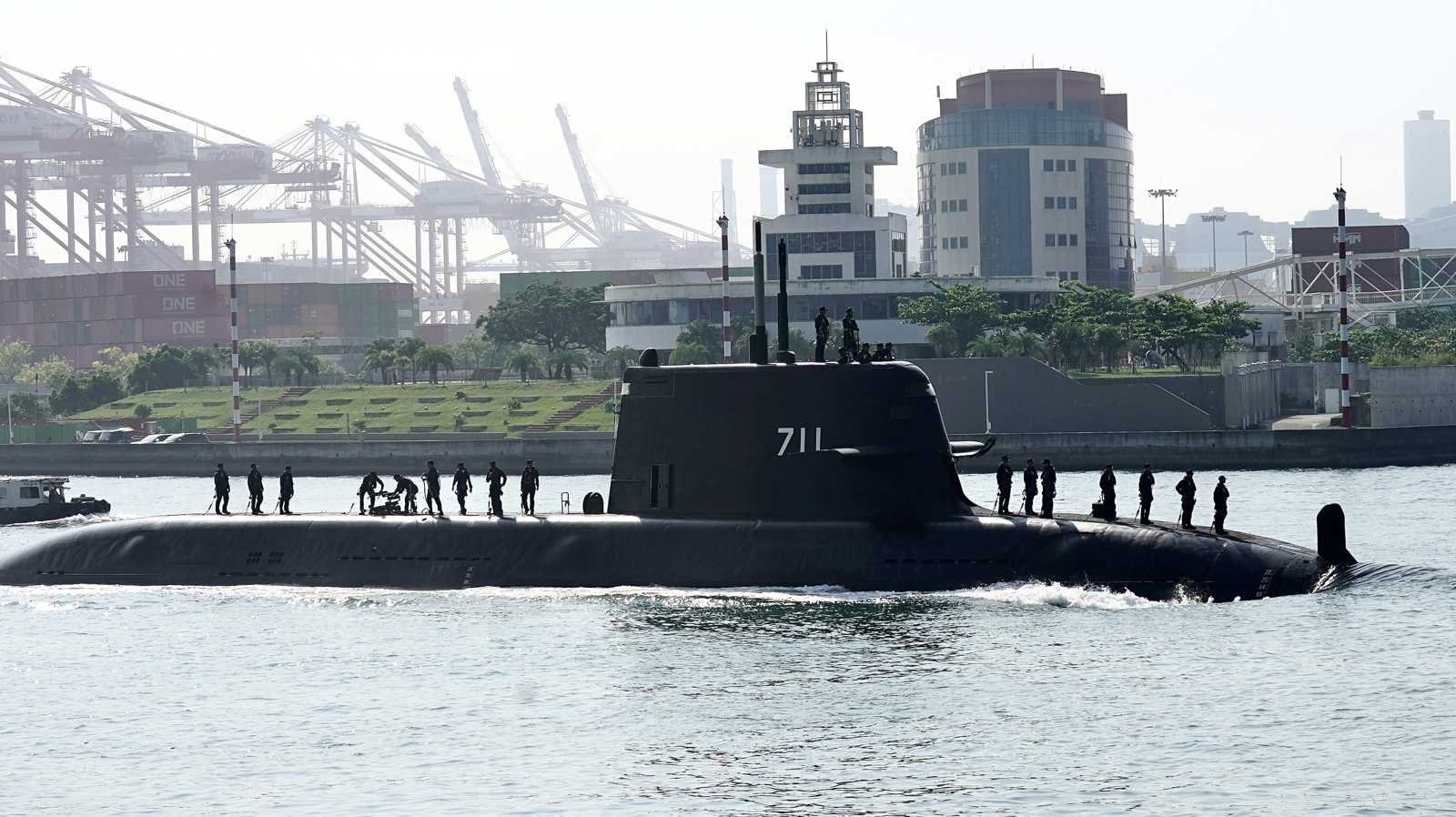
INS Khanderi (pennant number S22) was commissioned on 28 September 2019. Built by MDL under Project 75 in collaboration with Naval Group, it is a diesel-electric attack submarine based on the Scorpène design. The Kalvari class comprises six submarines. INS Khanderi displaces approximately 1,615 tonnes on the surface and 1,775 tonnes submerged, measures 67.5 metres in length and carries around 43 personnel. Its armament includes six 533 mm torpedo tubes capable of launching torpedoes or SM-39 Exocet anti-ship missiles.
The Indian Navy plans to install the indigenous AIP system on all six Kalvari-class submarines during their respective mid-life refits. The technology is also intended to support future conventional submarine programmes. Successful installation and sea trials aboard INS Khanderi will be an important step towards introducing India’s domestically developed fuel-cell AIP capability into operational service.
——— End of Article ———