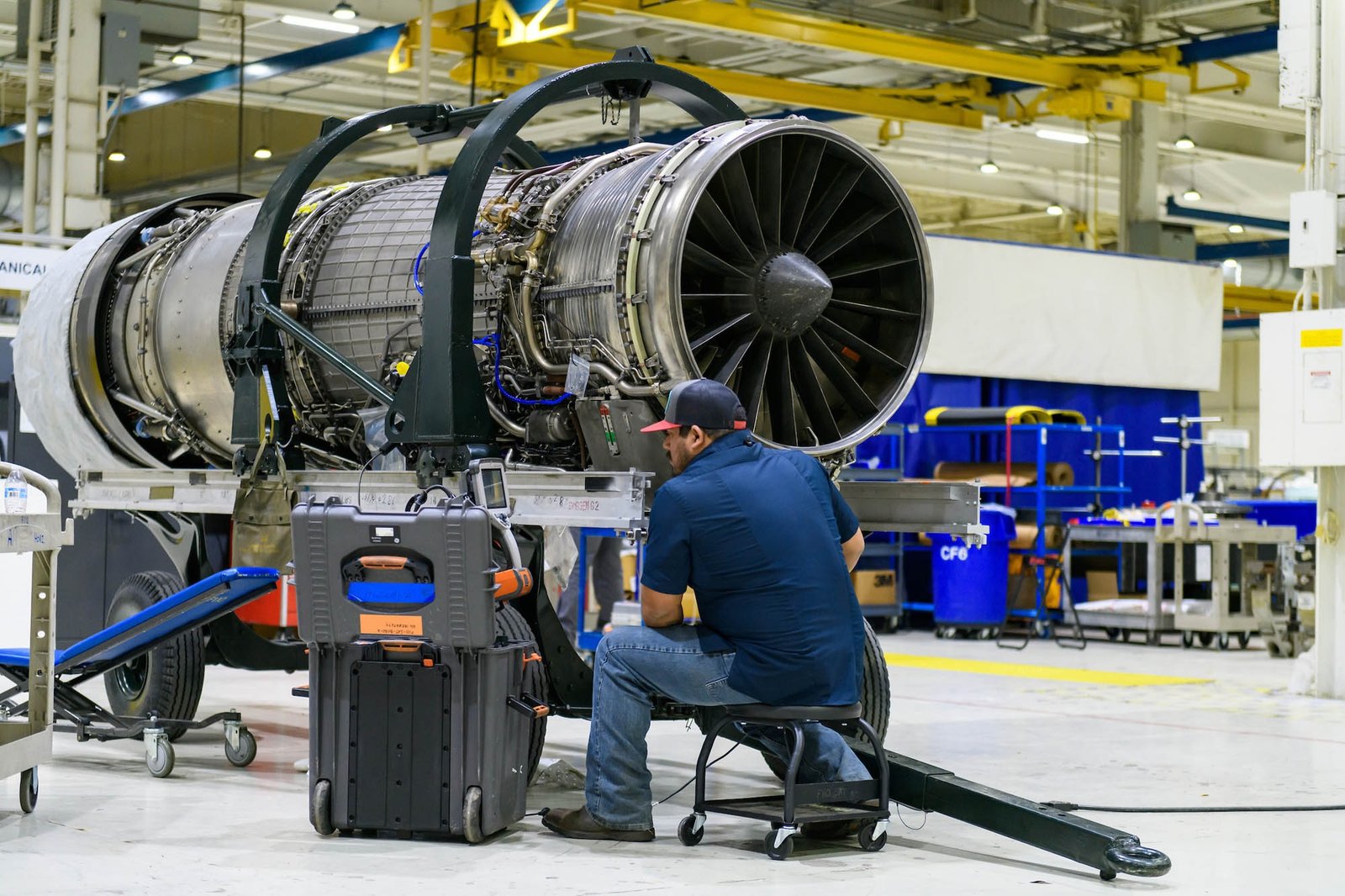
Cincinnati, United States — GE Aerospace has increased production of its F110 fighter engine by 50% year over year since the second quarter of 2025, supported by manufacturing investments, supply chain improvements, and artificial intelligence (AI). The company also reported a 15% increase in overall defense engine output during the first half of 2026.
The F110 powers F-16 fighter aircraft and the F-15EX. The production increase is intended to help meet demand from the U.S. Air Force and allied customers.
Manufacturing Investments and Supply Chain Expansion
Since 2023, GE Aerospace has invested more than $600 million in its defense manufacturing facilities and committed over $100 million to external suppliers for tooling and equipment. Over the past two years, the company has deployed engineering and quality personnel to supplier facilities to address bottlenecks, improve demand forecasting, and prevent component shortages from delaying deliveries.
To address an industry-wide shortage of specialized castings, GE Aerospace announced a definitive agreement to acquire Consolidated Precision Products (CPP) in a transaction valued at $11.75 billion. The acquisition is intended to strengthen access to critical components, although external suppliers will remain important to meeting production demand.
AI Integration and Manufacturing Improvements
GE Aerospace has introduced AI tools on its F110 and F404 production lines to identify supply chain risks, material shortages, and scheduling conflicts before they disrupt manufacturing. According to the company, these tools have improved material flow, supplier readiness, and production coordination.
Through an expanded partnership with Palantir Technologies, GE Aerospace is also deploying agentic AI to support production decisions, predictive maintenance, and long-term aircraft sustainment.
Shawn Warren, vice president and general manager of combat and trainer engines at GE Aerospace, said AI helps teams identify problems before they cause delays while maintaining the reliability required by military customers.
The company is also applying its FLIGHT DECK lean manufacturing model to reduce waste and improve production efficiency. During a recent weeklong improvement effort, engineers reduced the production lead time for the F110's high-pressure compressor forward shaft by approximately 60%. They achieved this by consolidating manufacturing processes and reducing the distances operators travel inside the facility. Further production-line improvements are planned.
Four Decades of F110 Engine Development
The F110 has accumulated more than 11 million flight hours over approximately 40 years of service. GE Aerospace reports that 90% of the engine's parts have been upgraded over its service life through new materials, advanced coatings, and improved manufacturing and inspection processes.
The production line also uses additive manufacturing, or metal 3D printing. In 2021, the U.S. Air Force certified an F110 sump cover produced using this technology. GE Aerospace describes it as the first metal 3D-printed engine component to receive airworthiness approval from a U.S. Department of Defense entity.
Warren said continued investment has helped modernize the F110 and that improvements in AI and manufacturing are intended to deliver engines faster and keep military aircraft flying longer.
GE Aerospace detailed these production improvements in a release published on October 1, 2026.
——— End of Article ———