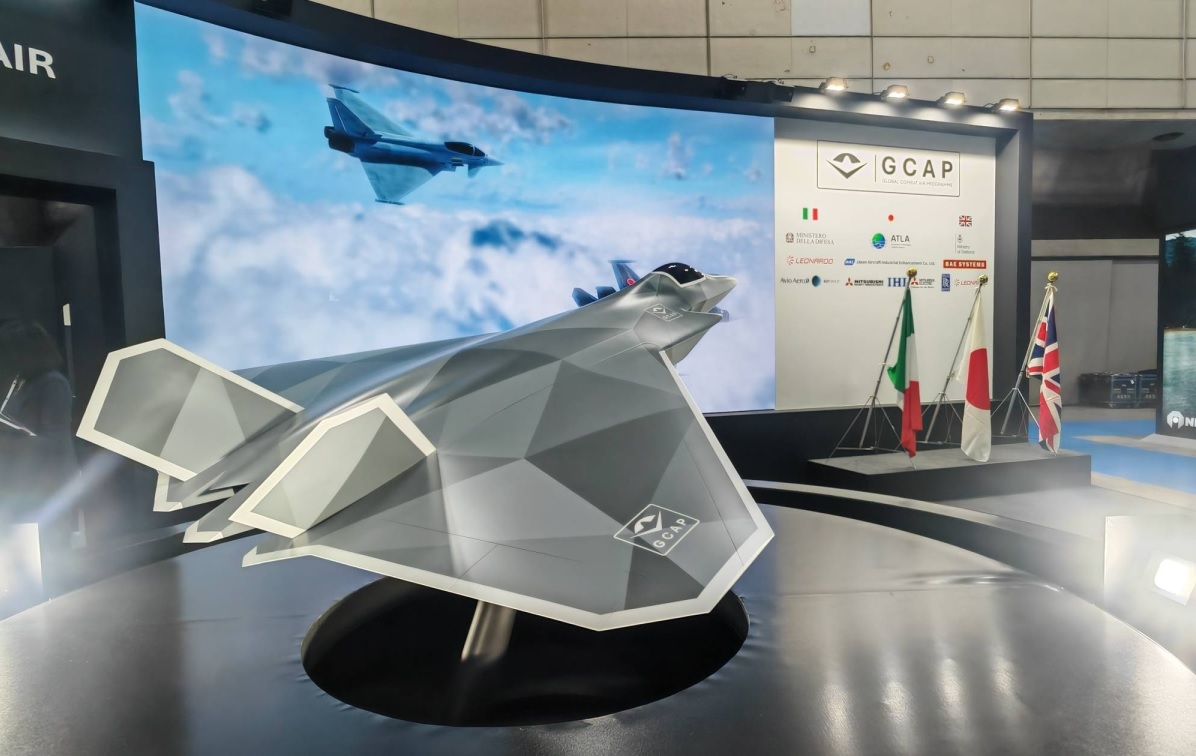
ROME, June 25, 2026 — Italian Defence Minister Guido Crosetto has confirmed that the Global Combat Air Programme (GCAP) is preparing to expand as the sixth-generation fighter initiative enters its operational phase, with Canada, Germany, and Saudi Arabia emerging as leading candidates for future participation.
The programme, jointly led by the United Kingdom, Italy, and Japan, is developing a next-generation stealth combat aircraft scheduled to enter service by 2035, replacing the Eurofighter Typhoon in the UK and Italy and the Mitsubishi F-2 in Japan. Italian Prime Minister Giorgia Meloni recently confirmed that GCAP has formally transitioned from the planning stage into its operational phase, marking the start of fully integrated international development.
Crosetto said Canada is currently the closest country to joining the programme, initially as an observer, while Germany and Saudi Arabia are also being considered as potential partners. He noted that adding new members would strengthen the programme's industrial base, increase funding, improve long-term prospects, and reduce development costs through broader cost-sharing. Any new participant, however, would require unanimous approval from the three founding nations.
Canada has already begun formal discussions on possible involvement. Canadian Defence Minister David McGuinty described GCAP as a promising initiative following talks with Japanese Defence Minister Shinjiro Koizumi in Tokyo, confirming that Canadian officials are evaluating the framework for potential participation.
The programme is being managed by the Edgewing joint venture, bringing together BAE Systems of the United Kingdom, Leonardo of Italy, and Mitsubishi Heavy Industries of Japan. In April 2026, the partners awarded a £686 million contract for initial design and engineering work, keeping the project on schedule for its 2035 target.
GCAP's steady progress comes as Europe's separate Future Combat Air System (FCAS), led by France, Germany, and Spain, continues to face uncertainty due to industrial disagreements over leadership and intellectual property. Defence analysts believe Germany's potential participation in GCAP could significantly enhance the programme's industrial capabilities, although it would require negotiations on governance and workshare arrangements.
In addition to Canada, Germany, and Saudi Arabia, countries including Poland and India have also expressed interest in different forms of cooperation with the programme. Discussions on future expansion are expected to continue as GCAP advances toward its next development milestones.
——— End of Article ———