WASHINGTON, June 28, 2026 — Production constraints affecting the General Electric (GE) F404 engine family are creating challenges for multiple military aviation programs, with delays already impacting India's Tejas Mk1A fighter and potentially affecting the Boeing T-7A Red Hawk advanced trainer, according to U.S. defense analyst Dr. Michael Harrington.
Dr. Harrington said the current situation demonstrates how manufacturing bottlenecks within the F404 production ecosystem can influence defense programs across different countries. Although the F404 is a proven and reliable turbofan engine, increased global demand and supply chain constraints have slowed production. Shortages of specialized castings, forgings, and other critical components, along with the challenges of ramping up production lines, have limited GE Aerospace's manufacturing output.
Tejas Mk1A Program Faces Engine Delivery Delays
The production slowdown has had a direct impact on India's Tejas Mk1A fighter program. Hindustan Aeronautics Limited (HAL) has continued assembling aircraft, but deliveries of the F404-IN20 engines have remained behind schedule, delaying induction into the Indian Air Force (IAF).
Under a 2021 contract, GE Aerospace is supplying 99 F404-IN20 engines for the Tejas Mk1A fleet. Since April 2025, HAL has received only six engines, and in May 2026 the sixth engine developed a technical issue during routine post-delivery quality checks. The issue, reportedly linked to a transshipment or acceptance parameter fault, required inspection by GE engineers before acceptance.
The delays have also drawn attention from India's Ministry of Defence. During a review meeting in June 2026, the ministry warned HAL that continued delays in aircraft deliveries could lead to contractual financial penalties because they affect the IAF's planned fighter induction schedule.
To strengthen long-term fleet support, GE Aerospace and the Indian Air Force signed an agreement in April 2026 to establish an in-country maintenance, repair, and overhaul (MRO) facility for the F404-IN20 engine. While the depot will reduce dependence on overseas maintenance in the future, it does not immediately address the current production backlog. GE expects engine deliveries to gradually improve during the second half of 2026.
T-7A Red Hawk Could Also Be Affected
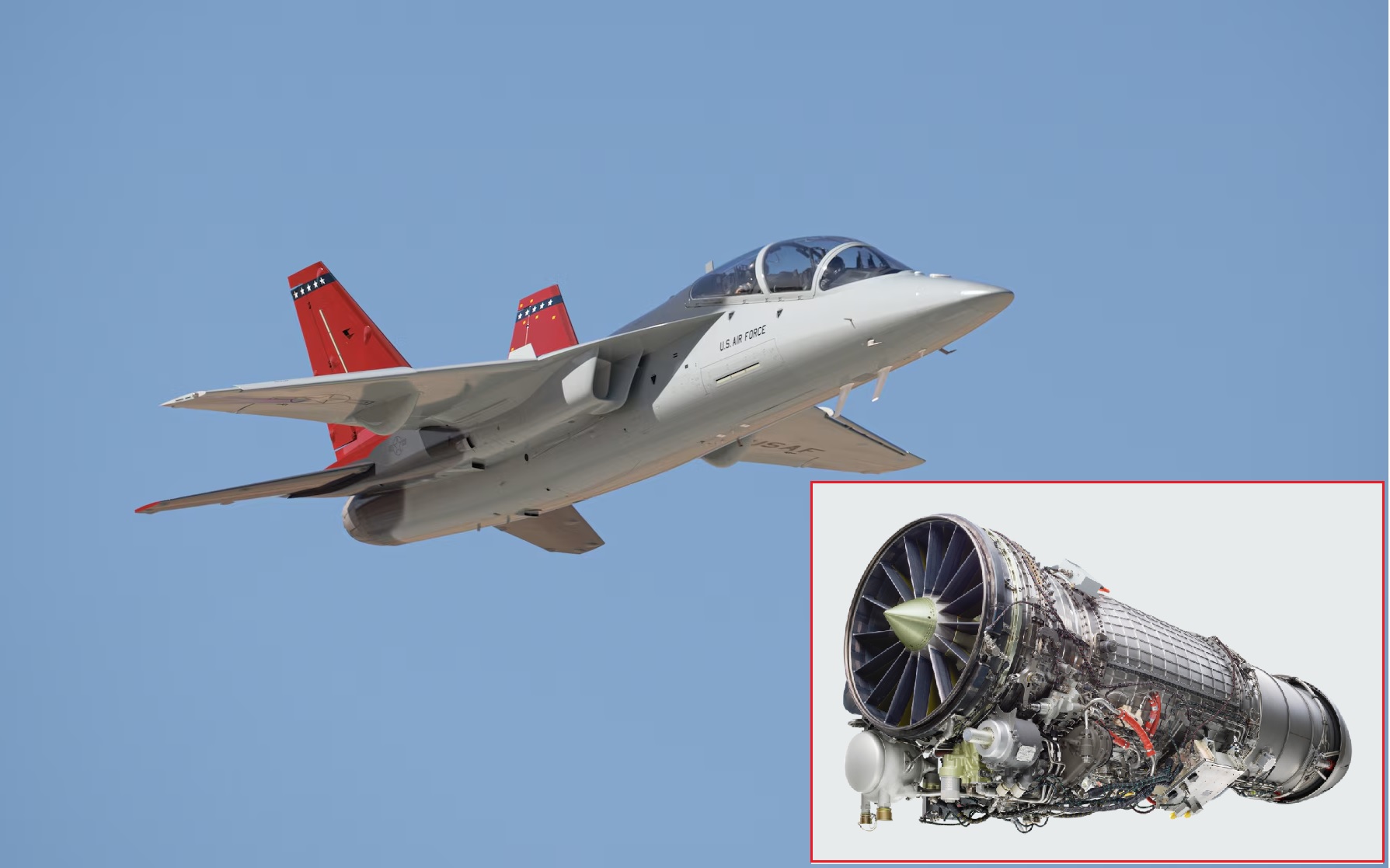
According to Dr. Harrington, the same supply chain challenges affecting Tejas engine deliveries could also influence Boeing's T-7A Red Hawk program because it uses the F404-GE-103 engine variant.
The F404-GE-103 incorporates a Full Authority Digital Engine Control (FADEC) system derived from F414 technology, improving engine management and single-engine safety for pilot training. However, the T-7A program has already faced contractual, financial, and logistical challenges, resulting in adjustments to flight testing schedules. Continued engine supply constraints could place additional pressure on the program as production expands.
The T-7A is being developed to replace the U.S. Air Force's aging T-38 Talon trainer fleet, with plans for 351 aircraft and potential additional orders. Full-rate production has not yet begun, and engine deliveries remain aligned with the aircraft's phased testing and initial production schedule.
Boeing Focuses on Air Force Requirements
Boeing recently withdrew the T-7A from the U.S. Navy's Undergraduate Advanced Jet Training System (UJTS) competition after determining that meeting the Navy's carrier-operation requirements would require significant modifications.
The Navy required enhanced corrosion resistance, improved throttle response, and other changes needed for carrier operations. Adapting the existing aircraft and engine configuration would have required substantial engineering work, leading Boeing to focus its resources on the U.S. Air Force program.
Engine Supply Remains a Key Challenge
Dr. Harrington said the current situation illustrates how production constraints affecting a common engine family can influence multiple defense programs simultaneously. As demand for trainer aircraft and light combat fighters continues to increase, expanding manufacturing capacity remains a key challenge for the aerospace industry.
GE Aerospace, Boeing, HAL, and military authorities continue working to stabilize engine production and meet contractual commitments. Progress in resolving supply chain bottlenecks over the coming months will be important for maintaining the planned timelines of both the Tejas Mk1A and T-7A Red Hawk programs.
——— End of Article ———