TALLINN, Estonia, June 29, 2026 — Estonian soldiers have successfully demonstrated a new portable airborne signals intelligence (SIGINT) capability by integrating an autonomous passive radio frequency (RF) sensor with a lightweight First-Person View (FPV) drone during Exercise Spring Storm, the country's largest annual military exercise. The system detected hostile electronic emitters at distances beyond the reach of conventional ground-based sensors, providing frontline units with improved battlefield intelligence.
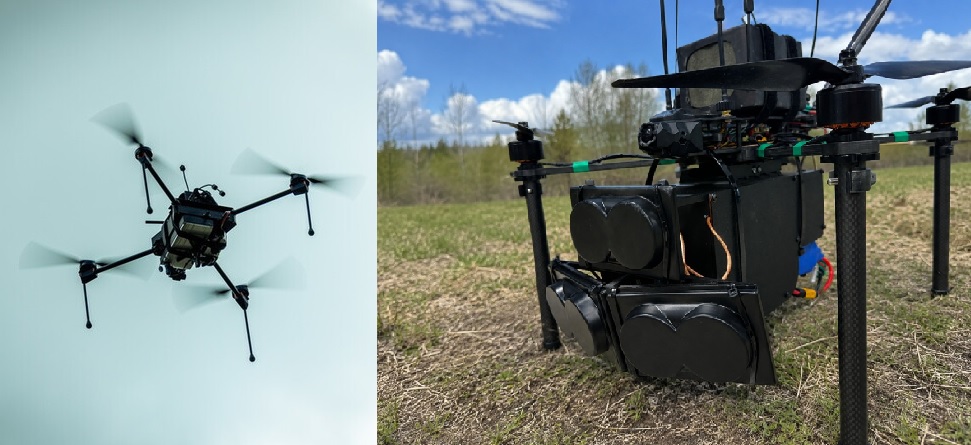
The demonstration combined the SkyAgent 001 autonomous passive RF sensor, developed by Estonia-based Sky Spy, with the MRM2-10 FPV drone platform built by Croatian drone manufacturer Orqa. The integrated system creates a compact airborne electronic intelligence capability that can be carried, deployed, and operated by a single soldier within minutes.
The evaluation was conducted with Estonia's 131st Infantry Battalion in a simulated electromagnetic attack scenario organized by the Estonian Defence Forces' Force Transformation Command. According to the participating companies, it was the first confirmed operational demonstration of the combined system with NATO forces.
Airborne SIGINT Extends Detection Range
Signals intelligence (SIGINT) involves detecting and analyzing radio frequency emissions from military systems such as radars, electronic warfare equipment, drone control stations, and communication networks. Identifying these electronic emitters enables commanders to locate enemy assets and employ countermeasures, including electronic jamming, artillery, or anti-drone systems.
Ground-based SIGINT sensors are often limited by terrain features such as hills, forests, and buildings that obstruct radio signals. Mounting the sensor on a lightweight drone significantly improves line-of-sight, allowing electronic emissions to be detected over greater distances.
According to Sky Spy, the test scenario incorporated lessons from the ongoing conflict in Ukraine, where drone-related attacks have become a major battlefield threat. The company said drone-related causes now account for an estimated 85 percent of battlefield casualties, making the rapid detection of drone control stations an increasingly important tactical requirement.
"Sky Spy was established to identify the archer, before the arrow is fired," said Arsenii Hurtavtsov, CEO of Sky Spy.
Passive Sensor Processes Intelligence Onboard
Instead of transmitting signals, the SkyAgent 001 passively monitors the radio frequency spectrum, making it difficult for adversaries to detect. The system autonomously processes and classifies detected signals onboard, identifying emitter types such as radars, jammers, and drone control stations while providing actionable intelligence directly to frontline units without requiring real-time analysis by specialist operators.
The MRM2-10 FPV drone was designed for military applications and adapted for intelligence missions by replacing offensive payloads with the passive RF sensor, enabling rapid deployment in contested electromagnetic environments.
"Working in partnership with Sky Spy, we've shown that combining passive RF sensing with our lightweight UAVs is a practical solution to the challenge of gathering intelligence in hostile electromagnetic environments," said Srdjan Kovacevic, co-founder and CEO of Orqa.
"As the largest drone manufacturer in the EU to build both integrated systems and components, we are proud to support the Estonian Defence Forces," he added.
Exercise Spring Storm Supports Technology Evaluation
Exercise Spring Storm 2026 was held from May 4 to June 1 across Estonia and parts of northern Latvia, bringing together more than 12,000 NATO personnel from over 20 nations. The exercise focused on realistic multi-domain operations and provided an opportunity to evaluate emerging military technologies under operational conditions.
Sky Spy also stated that the SkyAgent 001 uses a modular architecture with a standardized interface, allowing integration with multiple unmanned aerial vehicle (UAV) platforms rather than a single airframe. The company is expanding compatibility with additional drone manufacturers to support broader adoption by allied forces.
Estonia, which joined NATO in 2004 and shares a 330-kilometre border with Russia, continues to prioritize defence modernization and the rapid integration of new technologies. While the successful demonstration confirmed the operational capability of the portable airborne SIGINT system, the participating companies did not disclose detailed performance data or detection ranges.
——— End of Article ———