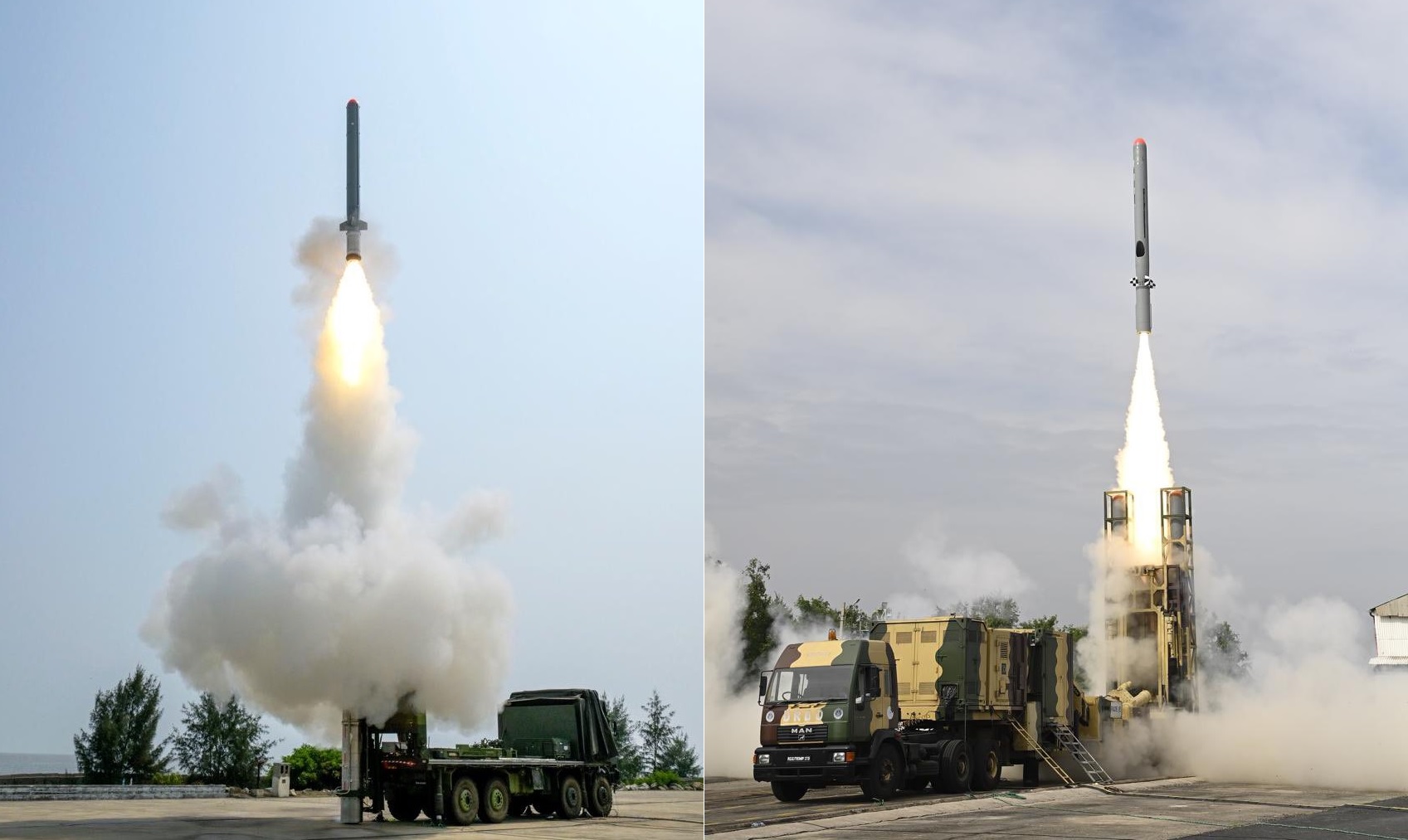
CHANDIPUR, ODISHA, — June 15, 2026 : India’s Defence Research and Development Organisation (DRDO) on Monday successfully conducted the flight test of the indigenously developed Long Range Land Attack Cruise Missile (LRLACM) from Dr APJ Abdul Kalam Island off the coast of Odisha.
According to the Ministry of Defence, the missile successfully achieved all mission objectives during the trial. The launch was monitored by tracking instruments deployed by the Integrated Test Range (ITR) at Chandipur, including radar systems, electro-optical sensors, and telemetry stations. Data collected during the flight confirmed that the missile followed its planned trajectory and performed within all expected parameters.
Key Technologies Validated
The flight test validated critical technologies related to propulsion, navigation, guidance, control systems, and warhead delivery.
A major highlight of the test was the successful performance of the indigenous Manik turbofan engine, which powers the missile during its cruise phase. DRDO also validated the missile’s navigation and guidance systems, including a Ring Laser Gyroscope (RLG)-based inertial navigation system integrated with GPS and NavIC support.
The missile successfully demonstrated its precision guidance capabilities and completed the planned flight profile.
Long-Range Precision Strike Capability
The LRLACM is an advanced subsonic cruise missile developed as an evolution of the Nirbhay program. Designed to strike land targets at ranges exceeding 1,000 kilometers, the missile is reported to have a range of up to 1,500 kilometers.
The missile incorporates terrain-following and low-altitude flight capabilities, enabling it to evade enemy radar systems and improve survivability in contested environments. It is also equipped with Terrain Contour Matching (TERCOM) technology and advanced autonomous flight control systems for accurate navigation and targeting.
Indigenous Development
Development of the LRLACM was led by DRDO’s Aeronautical Development Establishment (ADE) in Bengaluru, with contributions from multiple DRDO laboratories and Indian industry partners, including Bharat Dynamics Limited (BDL).
According to officials, the missile and its major subsystems have been developed indigenously, supporting India's efforts to strengthen domestic defence manufacturing and reduce dependence on foreign technologies.
Multi-Platform Deployment
The missile has been designed for launch from ground-based mobile launchers as well as naval platforms. Naval variants are expected to be compatible with Universal Vertical Launch Module (UVLM) cells installed on frontline warships.
Senior officials from DRDO, along with representatives from the Indian Navy and Indian Air Force, witnessed the launch. Both services are expected to operate the missile following its induction into service.
Official Reactions
Following the successful test, Defence Minister Rajnath Singh congratulated DRDO scientists, engineers, and industry partners involved in the project.
Defence Secretary and DRDO Chairman Rajesh Kumar Singh also congratulated the project teams, stating that the successful test represents an important milestone for the Aatmanirbhar Bharat initiative and India's indigenous defence capabilities.
The successful flight test marks another step forward in the development of India's long-range precision strike systems, with further trials expected before the missile enters operational service.
——— End of Article ———