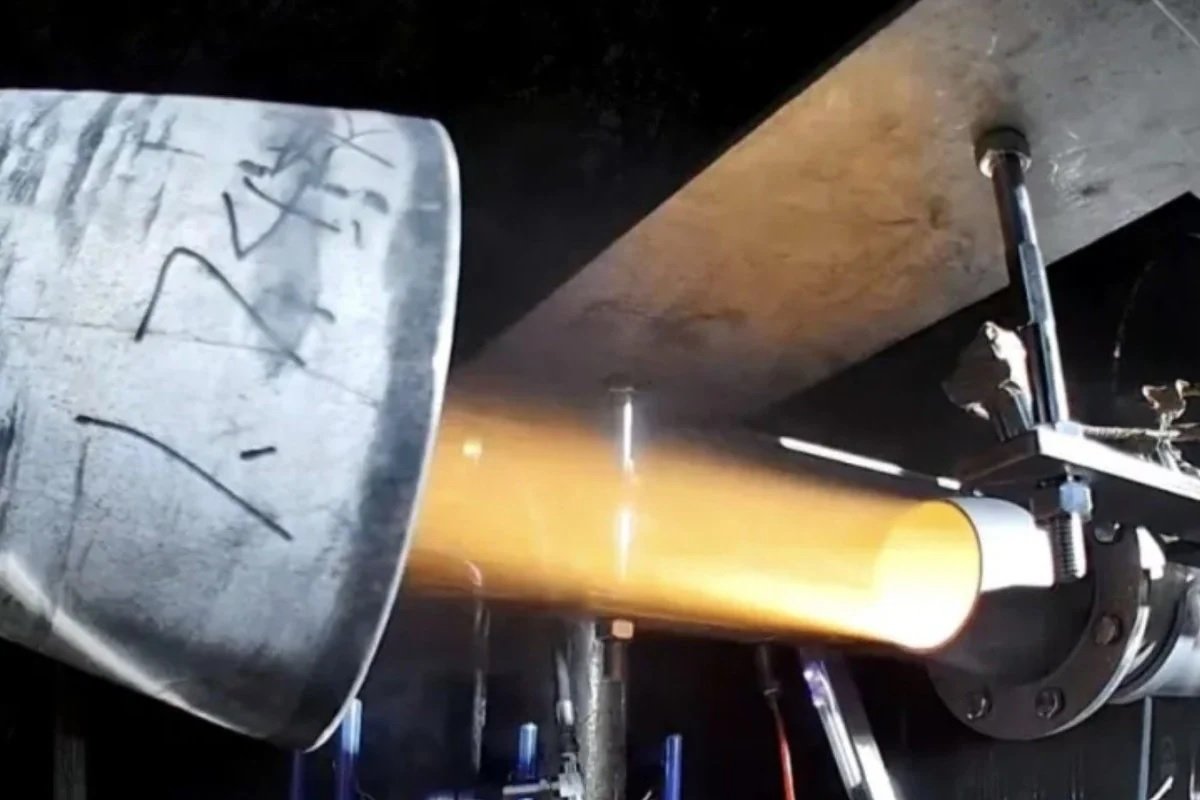
Jiangxi, China, November 29, 2026 — Chinese researchers have completed ground ignition tests of a prototype turbojet engine that uses metal powder instead of conventional aviation kerosene in its afterburner. The test, reported by China's state-run Science and Technology Daily, is being described as the world's first successful demonstration of this technology.
The four-year project was led by Sun Haijun at the School of Power and Energy at Nanchang Hangkong University in Jiangxi province. It received funding support from a provincial research and development programme. During ground trials, the prototype achieved stable combustion and met its design targets.
Why Use Metal Powder Instead of Kerosene?
A conventional afterburner injects additional fuel into hot exhaust gases behind the turbine. This creates extra thrust for high-speed flight, climbing and takeoff.
The new system uses solid metal powder for this additional combustion. Researchers believe metal fuels could offer higher energy density than kerosene. Aluminium contains around 84 megajoules of chemical energy per litre, compared with approximately 34 megajoules per litre for aviation kerosene.
Metal particles can also react with oxygen, carbon dioxide and water vapour in engine exhaust gases. These reactions could release additional heat and potentially increase thrust.
Key Engineering Challenges
Using solid fuel in an afterburner requires specialised systems. The research team developed equipment for powder delivery, precise flow control and flame stabilisation under high-speed airflow.
Several challenges remain:
-
Fuel delivery: Metal powder must be supplied at controlled rates to prevent blockages and uneven combustion.
-
Exhaust residue: Metal combustion produces solid oxide particles that could damage engine components or accumulate inside the exhaust system.
-
Flame stability: The system must maintain combustion during changes in engine speed and operating conditions.
-
Stealth: Metal combustion can produce a bright exhaust plume, potentially making military aircraft more visible to cameras and other detection systems.
Potential for Hypersonic Aircraft
The researchers believe the technology could eventually support aircraft capable of sustained flight at Mach 5 or higher. Metal-powder combustion is being investigated as a possible way to overcome thrust limitations in high-speed propulsion systems.
However, the prototype has only completed ground testing. The team has not disclosed the exact metal composition, particle size or measured thrust figures.
Next Development Steps
The research team plans to improve powder-feed control, combustion stability and high-thrust performance. Further testing will examine throttle transitions and engine operation under different conditions.
The researchers also plan to work with aerospace engineering organisations on potential applications.
The successful ground test establishes an early demonstration of metal powder as afterburner fuel. Flight testing, engine durability and practical performance remain unproven.
——— End of Article ———