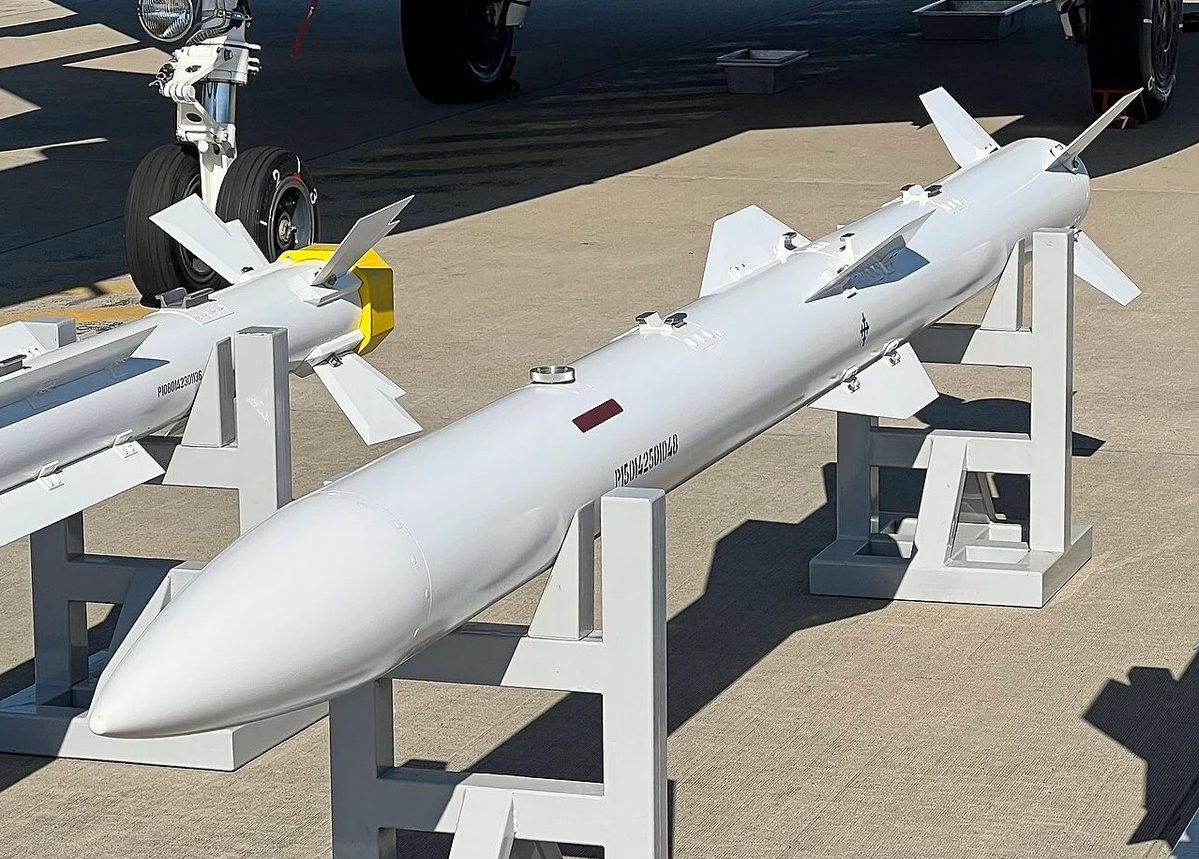
BEIJING, June 27, 2026 — China is continuing to expand its long-range air combat and airborne surveillance capabilities with the reported development of the PL-16 beyond-visual-range air-to-air missile and the advanced KJ-3000 airborne early warning and control (AEW&C) aircraft. Defense analysts and recent Pentagon assessments indicate that the two programs are being developed as complementary systems to strengthen the People's Liberation Army Air Force (PLAAF) ability to detect, track, and engage targets across extended distances while improving integrated command and control.
The PL-16 is a next-generation long-range air-to-air missile with an estimated engagement range of 200 to 300 kilometers, while some assessments suggest it could reach as far as 350 kilometers under favorable launch conditions. The missile is viewed as China's counterpart to the U.S. AIM-260 Joint Advanced Tactical Missile (JATM), which is being developed to replace the AIM-120 AMRAAM in U.S. service.
According to recent technical briefings and defense analyses, the PL-16 incorporates a variable-thrust or dual-pulse solid-rocket motor. Unlike conventional single-burn rocket motors, this propulsion system enables the missile to conserve energy during the cruise phase before initiating a second burst of thrust during the terminal stage of flight. The additional propulsion is intended to improve maneuverability and maintain speed when engaging distant or evasive targets.
The missile is designed primarily to engage high-value airborne support assets, including airborne early warning aircraft, aerial refueling tankers, and reconnaissance or maritime patrol aircraft that provide critical support for combat operations. Such platforms generally operate behind frontline fighter formations and play an essential role in extending the operational reach of air forces.
Defense analysts believe the PL-16 builds upon the capabilities of the PL-15, which has a reported range of approximately 200 kilometers and is currently China's principal long-range air-to-air missile. The newer missile is also reported to feature compact dimensions that allow it to be carried internally by China's stealth fighters, including the J-20 and the forthcoming J-35, preserving the aircraft's low observable characteristics and aerodynamic performance.
Alongside the PL-16 program, China is also advancing development of the KJ-3000 airborne early warning and control aircraft. The platform is based on the domestically developed Y-20B strategic transport aircraft and is powered by four indigenous WS-20 high-bypass turbofan engines. Compared with the older Il-76-based KJ-2000, the new platform is expected to provide greater endurance, higher electrical power generation, and increased payload capacity.
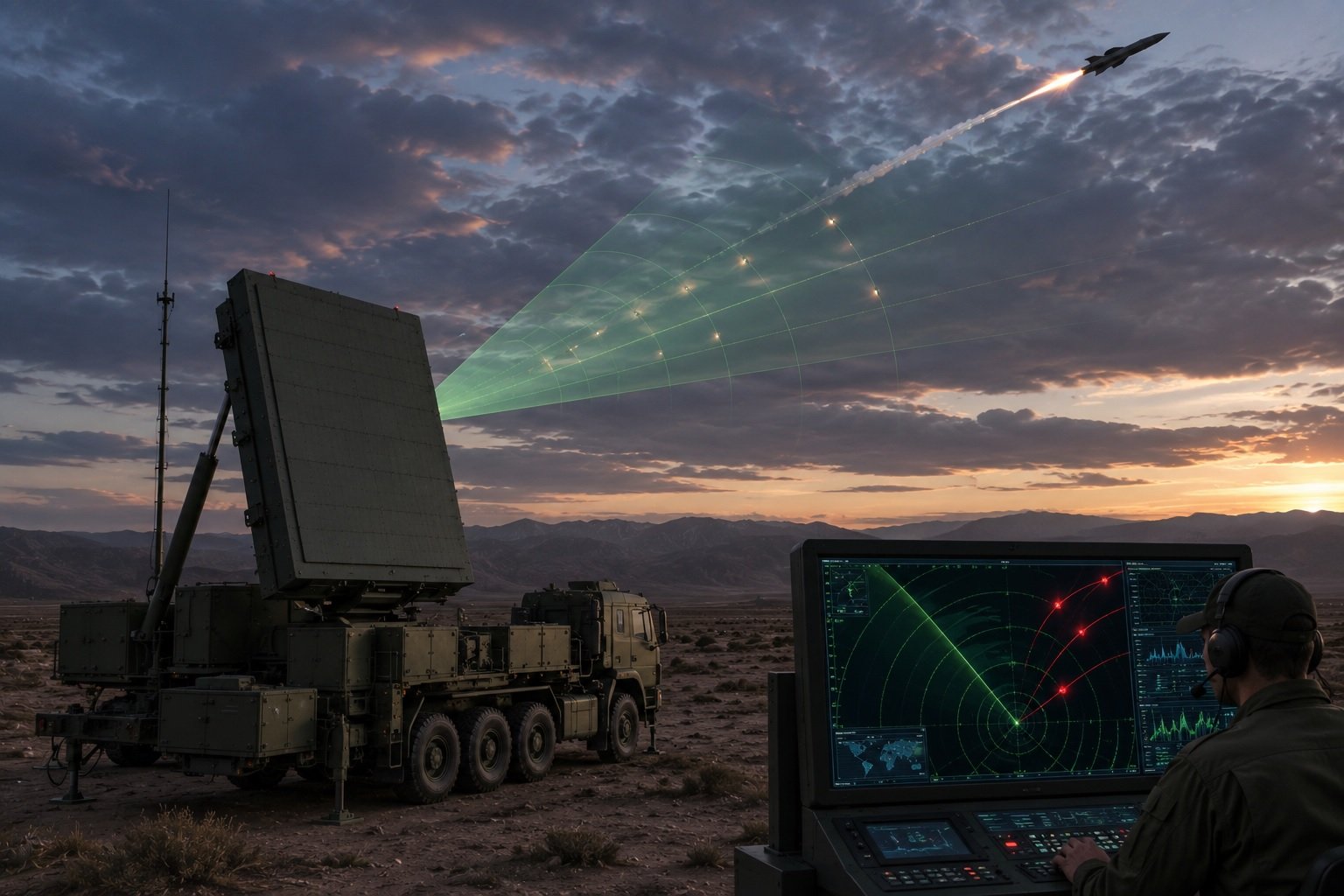
Photographs of KJ-3000 prototypes undergoing flight testing have revealed a large rotating dorsal radome mounted above the fuselage. According to Pentagon assessments, the aircraft is expected to become the world's first AEW&C platform designed around a fully digital radar architecture. The advanced Active Electronically Scanned Array (AESA) radar is expected to provide continuous 360-degree coverage while improving resistance to electronic jamming and increasing the ability to detect low-observable or stealth aircraft at extended ranges.
The KJ-3000 is also projected to incorporate passive detection capabilities, advanced target identification functions, and significantly enhanced onboard data processing. These features would allow the aircraft to process large volumes of sensor information collected from multiple sources simultaneously and distribute targeting data across connected military platforms.
Chinese military commentary describes the KJ-3000 as a central airborne command post within an integrated "kill web" architecture. The aircraft is intended to fuse real-time information received from satellites, fighter aircraft, naval vessels, unmanned aerial systems, and ground-based sensors into a unified operational picture. This network-centric approach would enable commanders to coordinate long-range engagements while directing weapons such as the PL-16 against targets across wide operational areas.
The combination of long-range missile capability and advanced airborne surveillance represents an important step in China's ongoing modernization of its air combat network. While the PL-16 extends the engagement range available to Chinese fighter aircraft, the KJ-3000 provides the sensor coverage, command-and-control functions, and data-sharing capabilities required to detect, identify, and assign targets at long distances.
Defense experts note that as both systems mature and enter operational service, they could increase the distance at which U.S. and allied airborne support aircraft operate from contested areas. Greater stand-off distances for tankers, airborne early warning platforms, and reconnaissance aircraft could affect the operational planning of long-range fighter and bomber missions in the Indo-Pacific region.
The Pentagon has highlighted the KJ-3000's development as part of China's broader effort to strengthen its integrated sensor and command capabilities, while the PL-16 reflects continued investment in extending the reach of Chinese air-to-air weapons. Although official information regarding deployment schedules and detailed performance specifications remains limited, analysts expect additional details to emerge as flight testing, evaluation, and system integration continue.
Together, the PL-16 missile and KJ-3000 AEW&C aircraft illustrate China's continued focus on developing an interconnected airborne combat network capable of combining long-range detection, data fusion, and precision engagement across multiple military domains.
——— End of Article ———